

China’s Green Great Wall is one of the world’s largest and most persistent ecological restoration projects. Launched in 1978 as the Three-North Shelterbelt Forest Program, it seeks to contain desertification across the country’s northwest, north and northeast, where droughts, overgrazing, agricultural expansion and strong winds left soils vulnerable to sandstorms and vegetation loss.
In areas such as the Kubuqi Desert, the intervention combines simple techniques with large-scale planning. One of the best known is the use of straw checkerboards, which stabilize shifting sand, reduce erosion and help shrubs, grasses and trees take root. Restoration does not begin with a mature forest, but with the ability to fix the soil so plant life can return.
The accumulated results are significant. Since 2000, official reports have recorded an annual reduction of more than 1,000 square kilometers in desertified land in northern China. The program is reported to have created nearly 500,000 square kilometers of forested areas and mobilized more than 300 million rural workers, mostly through paid or part-time tasks.
That scale points to a central lesson: reversing land degradation does not depend on a short campaign, but on decades of investment, governance and territorial presence. Afforestation alone is not enough. Correct species selection, water management, grazing control, plantation maintenance, grassland restoration, scientific monitoring and coordination with local communities are also required.
Specialists also warn about the limits of success. Some restored ecosystems may become more self-sustaining over time, but they are not automatically free from risk. If investment, surveillance or community management decline, dunes can become active again, vegetation can degrade and progress achieved over decades can lose stability.
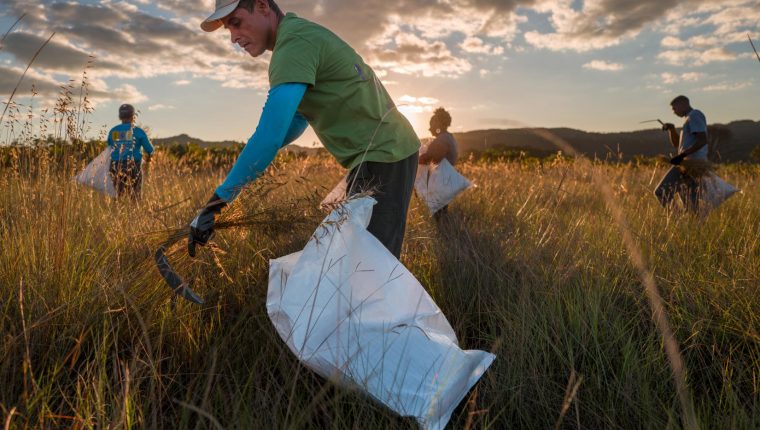
Integrating ecological restoration with local livelihoods is essential. In different provinces, environmental organizations and rural communities work so that tree planting, environmental education and desertification control are not perceived as a choice between economic growth and nature protection. Restoration lasts only when it creates social, productive and cultural benefits.
China’s experience is relevant for South America because desertification and land degradation also affect arid and semi-arid regions of our continent. In Argentina, soil, native forest, watershed, grassland and productive activity management requires long-term policies, environmental data, adequate incentives and territorial participation. The issue is not only planting; it is sustaining living systems.
From Fundación Argentina ASE’s perspective, China’s Green Great Wall confirms a core idea: environment, production and community must be thought together. Ecological restoration is infrastructure for sustainable human development because it protects soils, water, biodiversity, health and local economies. Its success depends less on isolated gestures than on institutional continuity, applied science and social commitment.