
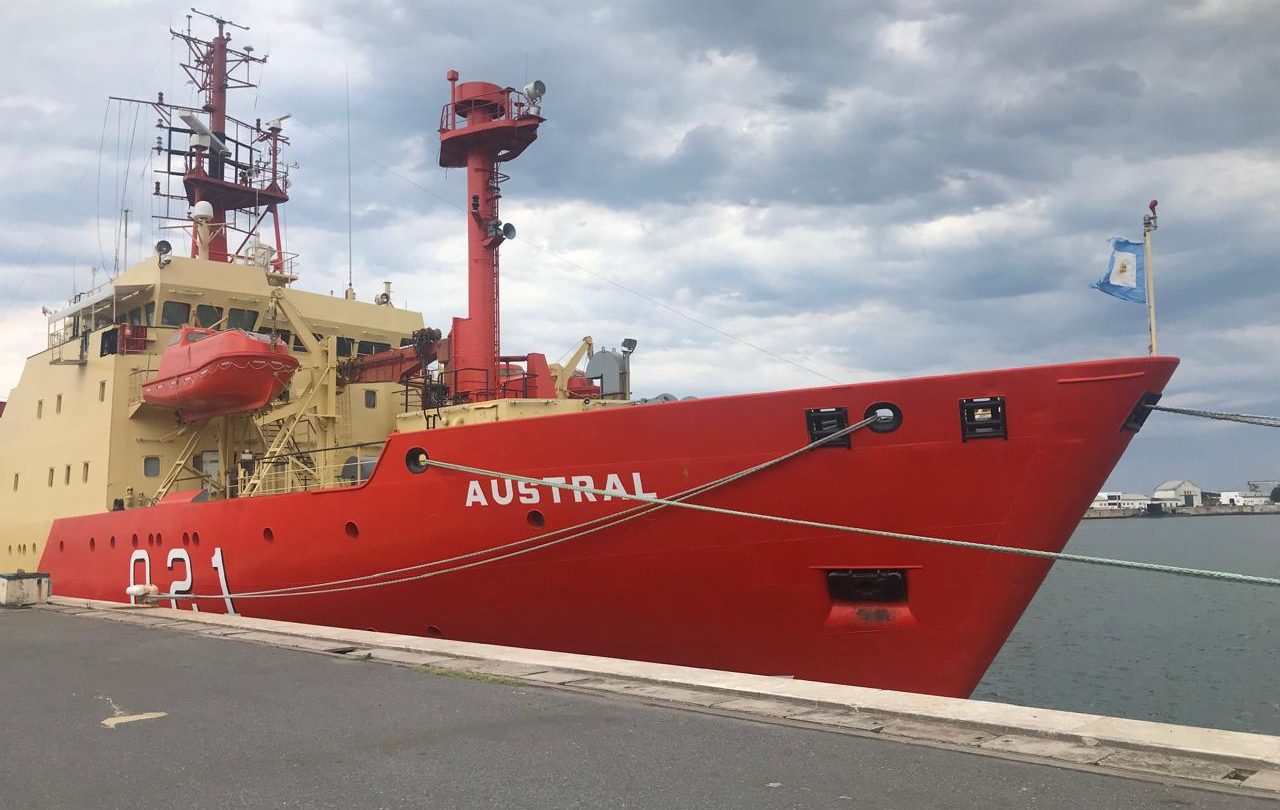
Argentina's oceanographic research vessel ARA Austral hosted a visit by scientific and government authorities in Mar del Plata on November 20, 2026. The meeting highlighted national capabilities to study the Argentine Sea and support knowledge relevant to environmental management and productive development.
Innovation, Science and Technology Secretary Adriana Baravalle visited alongside CONICET president Daniel Salamone and other officials. The vessel is operated by CONICET together with the Naval Hydrographic Service, connecting researchers, technical teams and naval specialists. An institutional visit is not an announcement of a new completed research voyage. It nevertheless highlights the requirements of a sustained oceanographic policy.
The delegation examined laboratories, research instruments and operational capacity for marine campaigns. Oceanographic platforms can collect information about water, seabeds and ecosystems that is difficult to obtain from land, thereby complementing satellites and coastal monitoring systems.
Scientific information at sea helps characterize physical and biological processes, identify environmental changes and inform decisions about marine resources. Such knowledge can support fisheries, conservation and maritime planning without amounting to authorization for any particular extraction project. Laboratories at sea enable samples and measurements far from shore, but scientific value depends on consistent protocols, skilled crews and repeat expeditions. In the South Atlantic, information about currents, ecosystems and the seabed can support conservation, fisheries management and navigation.
Maintaining oceanographic capacity requires trained crews, reliable instruments, logistics and consistent scientific funding. A single institutional visit neither establishes new research results nor demonstrates that every planned expedition has already taken place.
The official communication concerned the ship's capabilities and the dialogue with its personnel. It did not report a new quantified assessment of marine stocks or a specific environmental discovery emerging from the visit; claims must remain within that scope. This does not mean every discovery has an immediate commercial application; some findings identify ecological limits. Cooperation between CONICET and the Naval Hydrographic Service combines distinct scientific and operational capacities. The vessel's strategic value will be measured in the evidence produced and maintained over time.
The strategic challenge is to convert research infrastructure into sustained public data and scientific cooperation. The ARA Austral exemplifies how domestic technical capacity can serve a wider understanding of the South Atlantic when campaigns and results are transparently documented.