
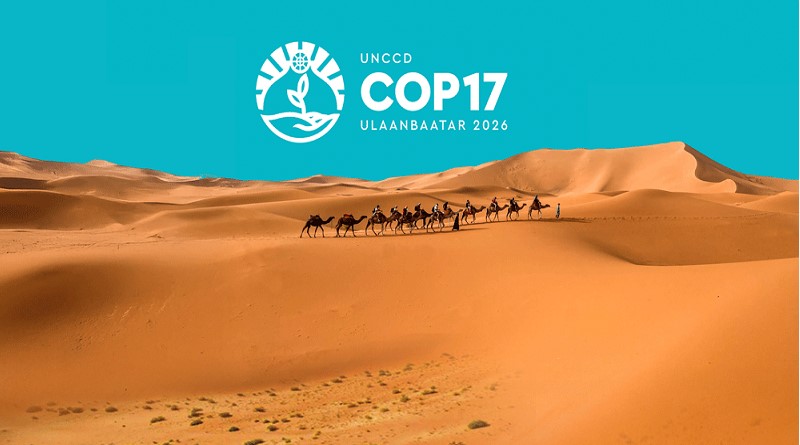
The 17th Conference of the Parties to the United Nations Convention to Combat Desertification will take place in Ulaanbaatar, Mongolia, from 17 to 28 August. Under the theme “Restoring Land. Restoring Hope,” COP17 arrives with an extensive agenda but no outcomes yet: commitments, decisions and resources remain subject to negotiation when the meeting opens.
Delegates from the Convention's 197 Parties will join governments, businesses, civil society, scientists, young people, Indigenous Peoples, pastoralists and smallholders. That range matters because degradation is not solely an environmental issue: it changes rural incomes, water availability, food security, migration and exposure to drought and dust storms.
UNCCD says up to 40% of the world's land is degraded. The estimate covers different processes, including loss of fertility and organic matter, erosion, salinization, vegetation decline and reduced capacity to support production and store carbon. Restoration therefore requires land rules, local knowledge, investment and sustained monitoring rather than one isolated intervention.
Mongolia makes the challenge visible. The country covers 1.56 million square kilometres and nearly 77% of its territory is degraded, according to official conference information. Grazing, aridity, climate variability and pressure on soils intersect across a landscape where land decisions directly affect mobile and rural communities.
Rangelands will be central during the International Year of Rangelands and Pastoralists. These ecosystems cover more than half of Earth's land surface, directly support the livelihoods of about 500 million people and provide one-sixth of global nutrition. Restoring them cannot be reduced to planting trees; it requires protecting soil, water, biodiversity and pastoral mobility.
The programme includes ministerial dialogues and thematic days on finance, water, land and people, food systems and soil health. It also addresses land security and migration, sand and dust storms, participation by youth, women, Indigenous Peoples and local communities, and business initiatives. The key discussion is how to turn priorities into financeable, verifiable instruments.
Mongolia will present its campaign to plant one billion trees by 2030 and the Youth4Land and Business4Land platforms, while the presidency promotes a Riyadh–Ulaanbaatar Action Agenda. Announcements, however, are not restoration. The post-conference test will be agreed targets, mobilized finance, protected rights, common indicators and proof of durable improvements on the ground.