
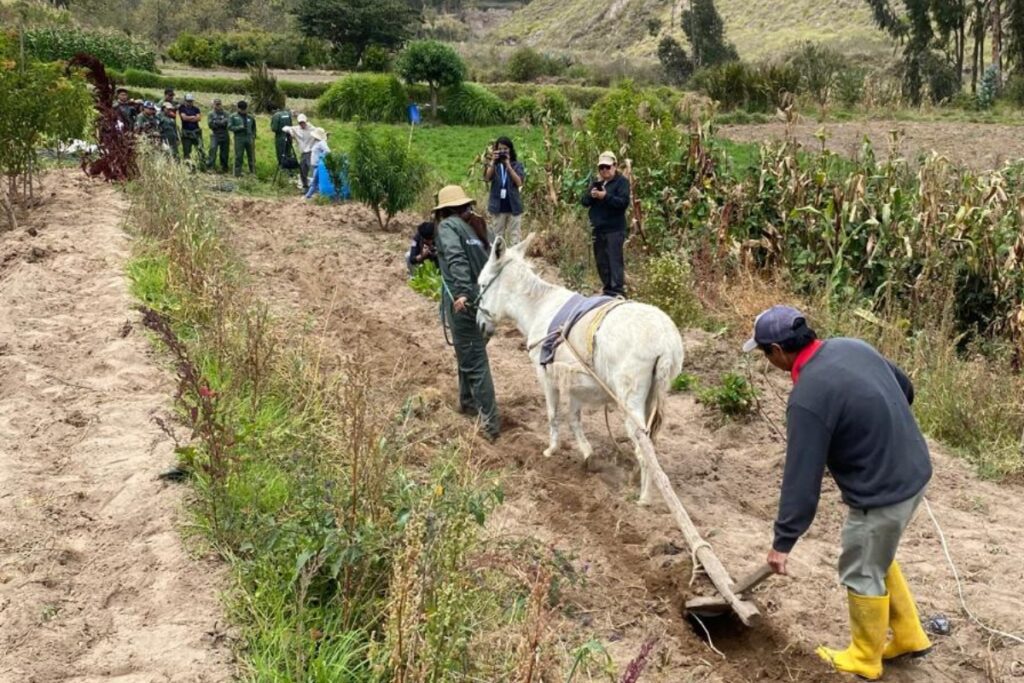
Ecuadorian geological engineer Paul Andrés Jiménez is studying restoration of eroded farmland in Cotopaxi and Tungurahua, where topsoil loss and exposed cangahua reduce yields and water availability. His soil-science doctorate at the Federal University of Lavras works inside family plots so practices are tested under real slopes, climate and management.
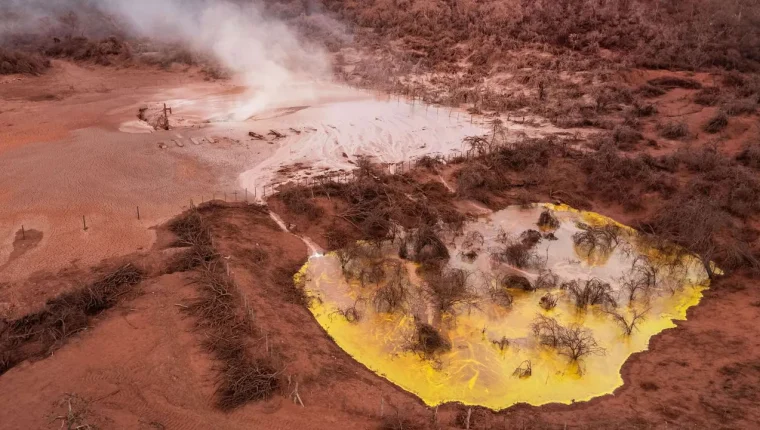
Across a 1,557,587-hectare strip of the northern highlands, eroded land rose from 473,503 hectares, or 30.4%, in 1986 to 724,476 hectares, or 46.5%, in 2017. Severe erosion expanded from 4,760 to 142,541 hectares, with especially sharp increases in Cotopaxi and Tungurahua.
Loss is far faster than natural formation. One centimetre of soil may take 500–1,000 years, while bare slopes can lose it in a few seasons. Jiménez cites annual losses of 30–90 tonnes per hectare and an indicative 30% drop in plant-available water, depending on soil and degradation.
Living laboratories involve farming families in plot history, diagnosis and solution design. The work assesses cover, crop diversity, organic amendments, barriers and Andean terraces, while adding proximal sensors, machine learning for soil attributes and biochar for structure and carbon storage.
Early comparisons show improvements of up to 150% in infiltration and organic matter over degraded plots, with favourable productivity signals. The data remain under analysis: the figure does not apply to every site or mean centuries of soil formation have been restored in one season.
On October 16, Jiménez received a two-year, €30,000 IPCC Scholarship Programme award financed by the Cuomo Foundation, reportedly the first for an Ecuadorian. It supports fieldwork, analysis and study; it is competitive research funding, not IPCC certification of a final method.
The next test is which combination works by soil, slope, crop and cost, and whether gains persist through drought and heavy rain. Scaling needs training, monitoring and access for family farmers rather than uniform recipes. The project's strength is joining advanced measurement with local knowledge.