

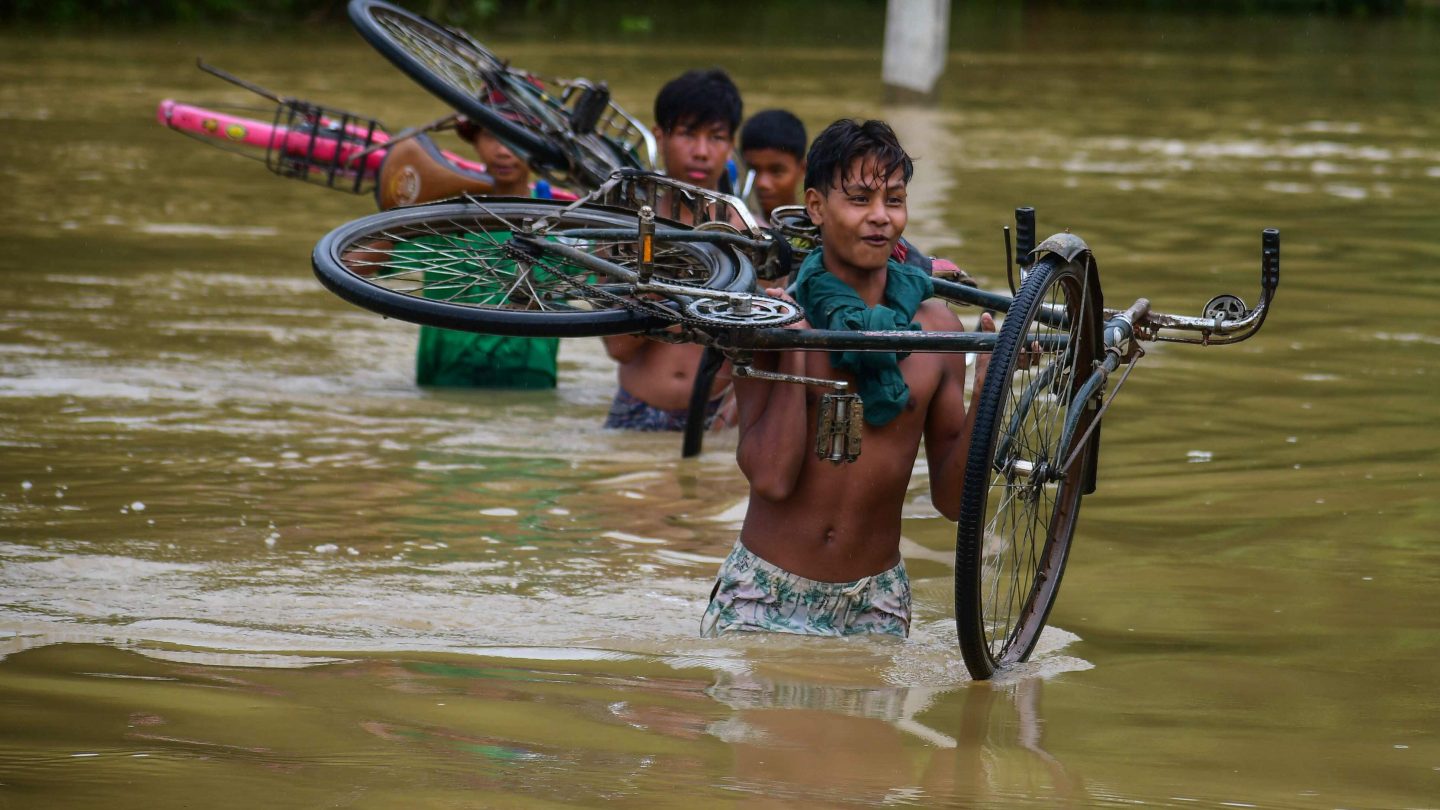
The flood crisis in Assam, northeastern India, reached 100 deaths on August 10 after authorities reported two additional fatalities. Several rivers remained above danger levels, and the state disaster management agency warned that vulnerable areas could face renewed flooding even as water began to recede in some locations.
Intense monsoon rain has pushed the Brahmaputra and its tributaries over their banks since July. The Brahmaputra rises in China's Tibet region and flows roughly 900 kilometers through Assam, where its vast floodplain supports farms and settlements but also exposes entire communities when water rises rapidly. Roads, homes, fields and other infrastructure were damaged.
More than 700,000 people were displaced during the episode, and nearly 300,000 passed through government relief camps. At the August 10 cutoff, at least 49,000 remained in 125 camps and distribution centers. Those numbers describe different points in the emergency and must not be added together: fewer people in shelters reflects returns, not complete recovery.
In Sivasagar, one of the worst-hit districts, families returned to homes covered by two to three feet of silt. In Nepali Khuti village, which had about 100 households before the floods, residents said only a few houses remained. Livestock losses were especially severe for dairy-farming families, removing both assets and daily income.
Return creates a second emergency. Removing sediment, checking structural safety, restoring safe water and preventing disease require time and support. Lost animals, crops and tools mean that access to a house is not the same as a restored livelihood. Reconstruction must address both physical damage and the interruption of rural income.
Authorities began distributing roofing sheets and other materials and ordered assessments to be completed quickly so rehabilitation support could follow. About 50,000 affected people had received interim cash compensation, according to the state government. The original source corrected that number from 500,000; it is neither the final beneficiary count nor an estimate of total losses.
Flooding recurs during Assam's monsoon, but exposure does not make each disaster inevitable. Regional evidence shows that human-caused warming increases the atmosphere's capacity to deliver extreme rain and makes some monsoon patterns more erratic. Risk reduction needs warnings, shelters, water and health services, alongside floodplain planning, adaptable infrastructure and recovery designed for the next high-water event.