
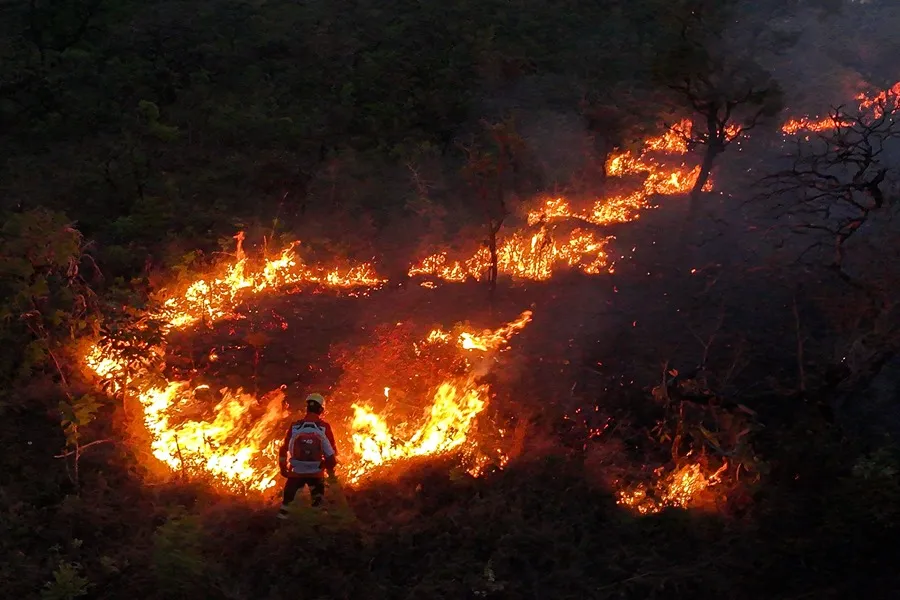
Brazil has recorded about 2 million burned hectares in 2026, 33% below the historical average for this point of the year, which exceeds 3 million. Brazil's Fire Bulletin provides an encouraging signal as of August 12, but it remains a partial balance: several critical months of the fire season still lie ahead.
Burned area is down from both last year and the thirteen-year average across nearly every biome. The Caatinga is the exception, with an area 8% above its historical average. That divergence prevents the national improvement from being treated as uniform and makes biome-level observation essential.
Tocantins currently has the largest affected area, followed by Mato Grosso, Maranhão and Mato Grosso do Sul. The distribution shows how the national indicator combines very different territorial conditions. A lower total can coexist with intense pressure in particular states, municipalities or vulnerable ecosystems.
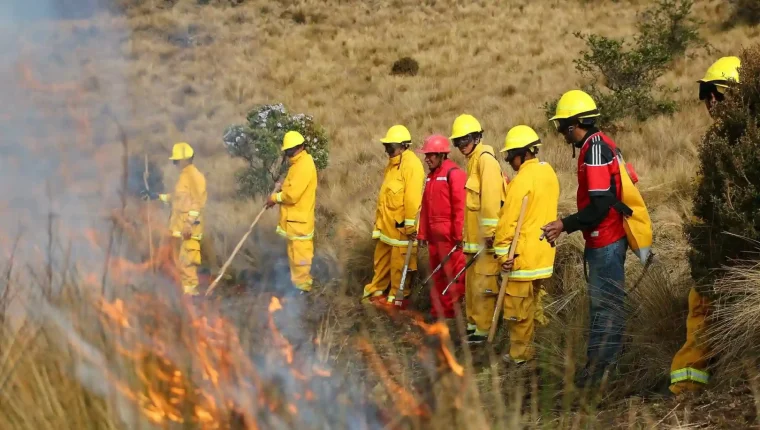
The Environment Ministry links the improvement to more than 300 million reais released for firefighting agencies, frequent monitoring and prevention campaigns. Nearly 4,000 Ibama and ICMBio personnel are working this season, supported by 24 vessels and 26 aircraft deployed in operations.
The overlap between stronger operations and less burned land matters, although the headline figure alone cannot separate the effects of prevention, weather, fuel moisture, response speed or fewer ignitions. Measuring effectiveness requires comparing detection and containment times, repeated fires and ecological severity, not only hectares.
The ministry warns that the prospect of a strong or very strong El Niño could increase fire risk in several regions through the end of the year. A forecast is not an observed fire, but it changes preparedness needs. The partial result does not justify reducing crews or resources before rainfall, heat and dry vegetation evolve.
The final assessment must show whether the reduction lasts through the rest of 2026 and reaches the most exposed territories. Final area, the share of native vegetation, repeated damage and restoration speed will matter. Stable funding, transparent data and local capacity are essential if a positive interim signal is to become lower annual environmental loss.