
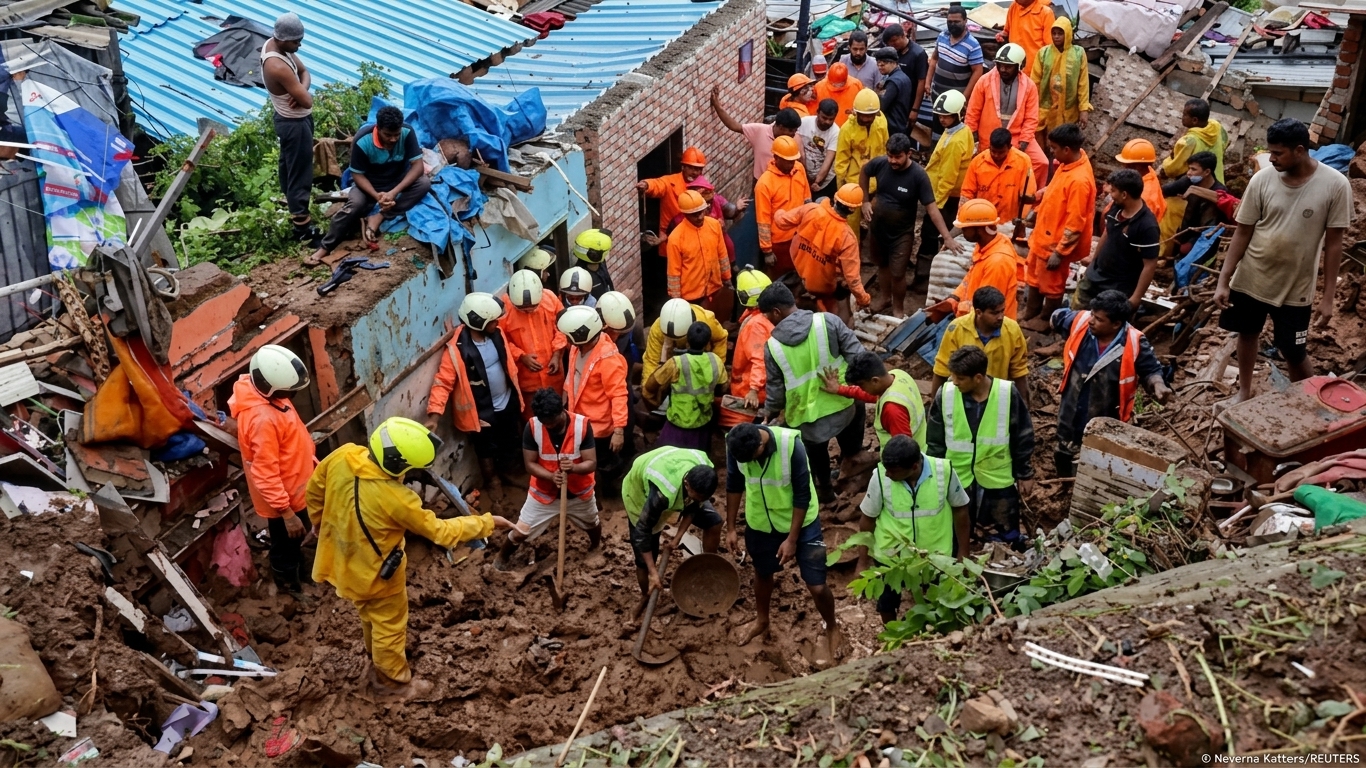
Heavy monsoon rain triggered a landslide before dawn on August 12 in Ghatkopar, a Mumbai suburb. Part of a hillside collapsed onto two or three homes within a densely occupied settlement. Authorities raised the death toll to seven while debris removal and rescue work continued.
Firefighters, police, civic workers and National Disaster Response Force teams joined the operation. Narrow lanes prevented heavy machinery from reaching the site and forced crews to work under difficult conditions. Rescuers pulled at least ten people from the debris and took them to a government hospital.
Six victims, including two children and two teenagers, were declared dead on arrival at the hospital. A seventh body was recovered later. Four people remained hospitalized and were receiving treatment. Residents still believed one person had not been located, leaving the count open at the end of the day.
Mayor Ritu Tawde visited the site and announced financial compensation for victims' families. Immediate relief must be followed by slope inspections, support for people who lost homes and safe conditions for return. Compensation addresses losses but does not remove the exposure that allowed a hillside failure to strike housing.
India's weather service forecast more active monsoon conditions across the country's west, and authorities urged vigilance in flood- and landslide-prone areas. Mumbai, a city of more than 20 million, receives its heaviest rainfall from June to September; downpours regularly flood roads, disrupt transport and destabilize slopes.
Experts have long identified three overlapping vulnerabilities: rapid urbanization, construction on fragile hillsides and inadequate drainage. Climate change adds pressure by bringing heavier and less predictable rainfall, but that broader risk context does not replace a site-specific investigation into what caused the Ghatkopar collapse.
The immediate priorities are locating anyone missing, stabilizing the hillside and caring for injured people and families. The next stage must document ground conditions, drainage, housing safety and emergency access. Preventing future deaths requires alerts and evacuation, as well as infrastructure, land-use controls and housing alternatives that do not shift risk onto the most vulnerable.