
Honduras's risk-management agency told residents of Las Lajas, Comayagua, not to drink or use water from a stream under investigation for contamination. The advice covers all uses until inspection and laboratory results establish safety. It is a precaution for a specific source, not proof that all municipal water is contaminated.
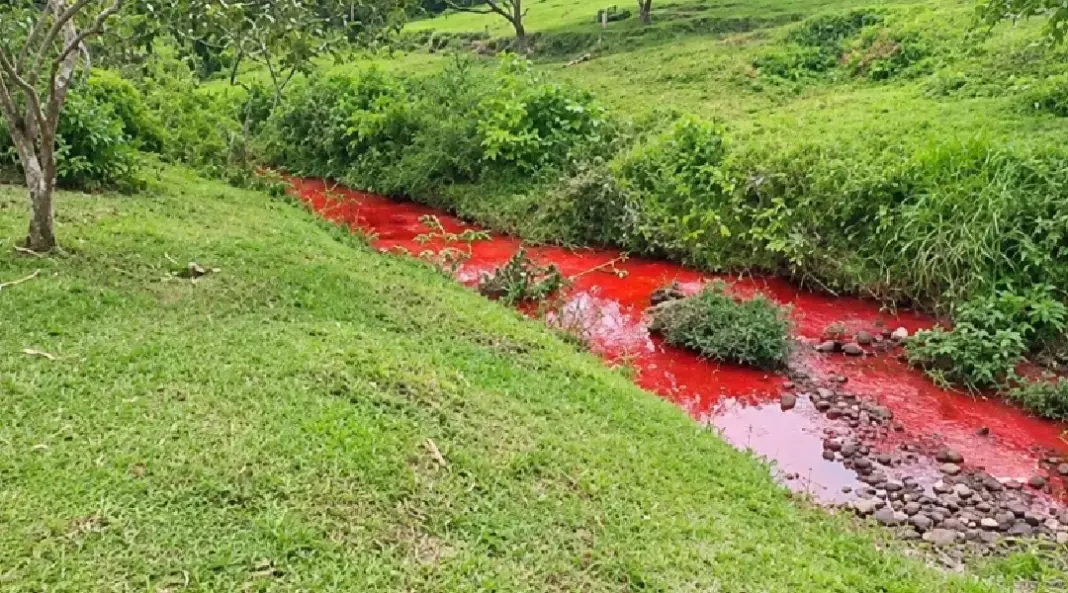
The stream through the Suyapa neighbourhood turned red. Mayor Manuel de Jesús Urbina preliminarily linked it to washing barrels containing paint and chemical residues at a carwash; an overflowing drain pit may have carried material into the channel. This guides the inquiry but still requires sampling and source tracing.
COPECO scheduled a November 2 inspection with its environmental-risk directorate, SERNA and local authorities. Testing should identify substances and concentrations, compare upstream and downstream water, inspect sediment and wildlife, and determine whether contamination reached the Yunque River.
The temporary ban matters because the stream supports farming and daily activities and feeds fish ponds or other reservoirs. Risk depends on paint chemistry, additives, cleaners, dose, contact time and exposure route. Visible colour cannot measure toxicity, while clear-looking water does not establish safety.
The municipality proposed using two water tankers to increase flow and dilution. This may lower concentrations locally but cannot replace source control, residue recovery and disposal. Dilution without tracking can move the burden downstream into the river, sediment, crops and communities.
Response should include safe alternative water, marked affected points, frequent information and medical access after contact or consumption. Evidence must be preserved and responsibilities investigated with due process. An accidental discharge still creates duties to report, prevent and repair.
Restrictions should end only after laboratory results, explicit health criteria and repeated verification, not because colour fades. Authorities must then publish the extent, remediate damage and monitor the stream and Yunque River. Until then, residents should not use the water and should follow official channels.