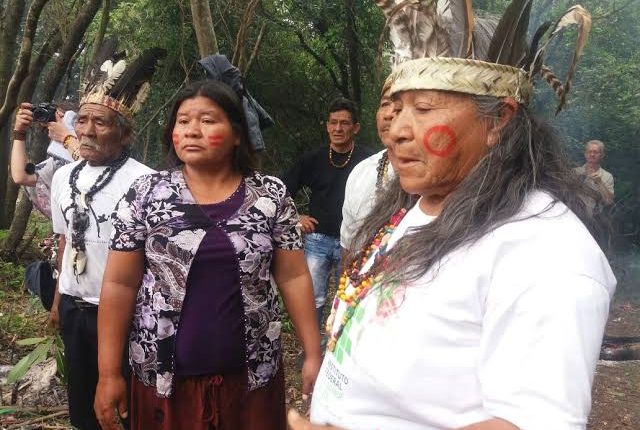

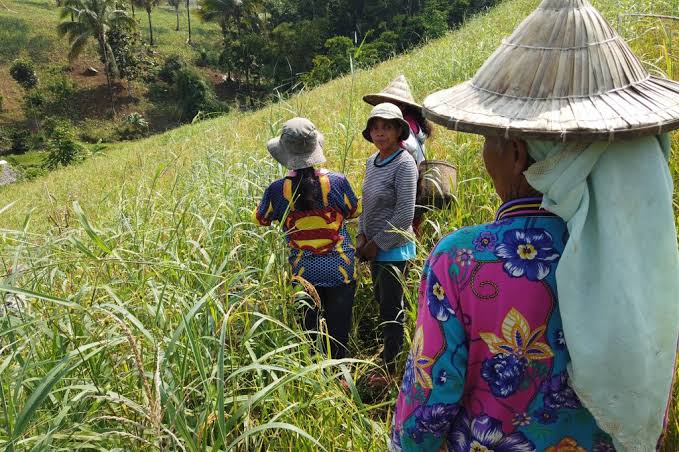
In Lake Sebu, Mindanao, Indigenous T’boli farmers began measuring soil loss in their cornfields to examine how agricultural management affects steep land exposed to heavy rain. Their community-led study compares traditional cultivation with genetically modified corn grown under a glyphosate-based system, after residents noticed sediments collecting in a nearby lake.
The Lem Bulul farmers’ association worked with MASIPAG, a network linking farmers and scientists. Participants installed erosion-measuring rods in test plots and sampled vegetation and soil organisms. Rather than relying only on external assessments, the farmers designed observations around changes they had seen in their own landscape. The comparison is local and does not show that every genetically modified seed causes erosion. Land management, ground cover, slope and rainfall all matter when interpreting the contrast: measured soil loss was more than five times greater in one test plot than the other.
Between March and July 2025, researchers recorded 7.59 cubic meters of soil loss per hectare in the traditional plot and 39 cubic meters in the conventional plot. The difference exceeded fivefold in this specific comparison, but cannot be extrapolated as a national rate for every Philippine cornfield.
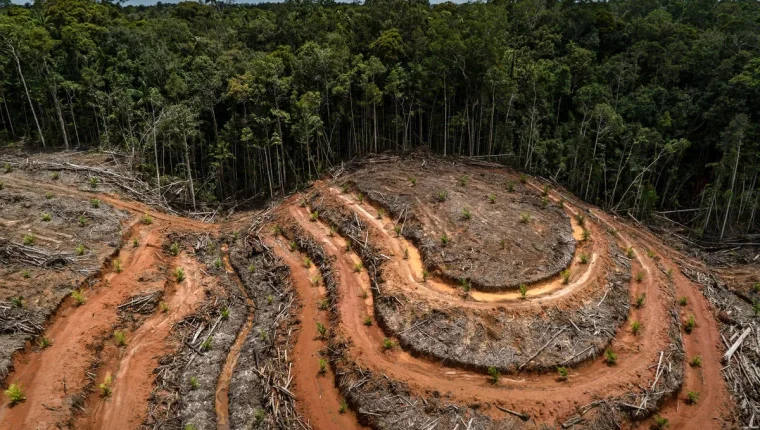
Earthworms appeared at 13 of 15 sampling points in the traditional field and six of 15 in the conventional one. Collected ground vegetation weighed 620 grams versus 220 grams. Vegetation cover helps protect slopes from runoff, although soil conditions are influenced by several interacting factors. Sediment moving downhill may also affect the lake and the people who depend on it. Farmers' participation in collecting measurements gives the community evidence with which to question agricultural practices and request further testing.
The study also raises economic questions for small farmers: commercial seeds, herbicides and fertilizers increase input costs, while traditional systems can preserve seeds and combine crops. Switching production methods again is not instantaneous, particularly where soil structure and established farm practices have already changed.
Bayer Philippines defended glyphosate safety when used according to instructions and said it would need the complete study before commenting on its findings. The field comparison alone cannot establish that one chemical caused every observed difference; slope, cover, rainfall and cultivation methods also matter. Broader studies would be needed before generalizing the finding to other farms or technologies. Keeping vegetation on vulnerable slopes is an immediate soil-conservation consideration.
MASIPAG and participating farmers hope the evidence can inform discussion of glyphosate restrictions near waterways and encourage further participatory research. The immediate outcome is not a government ban but a locally documented case showing how communities can investigate erosion and food security.