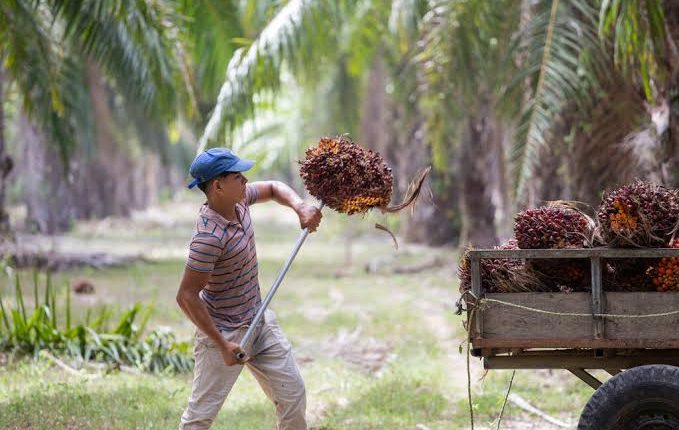

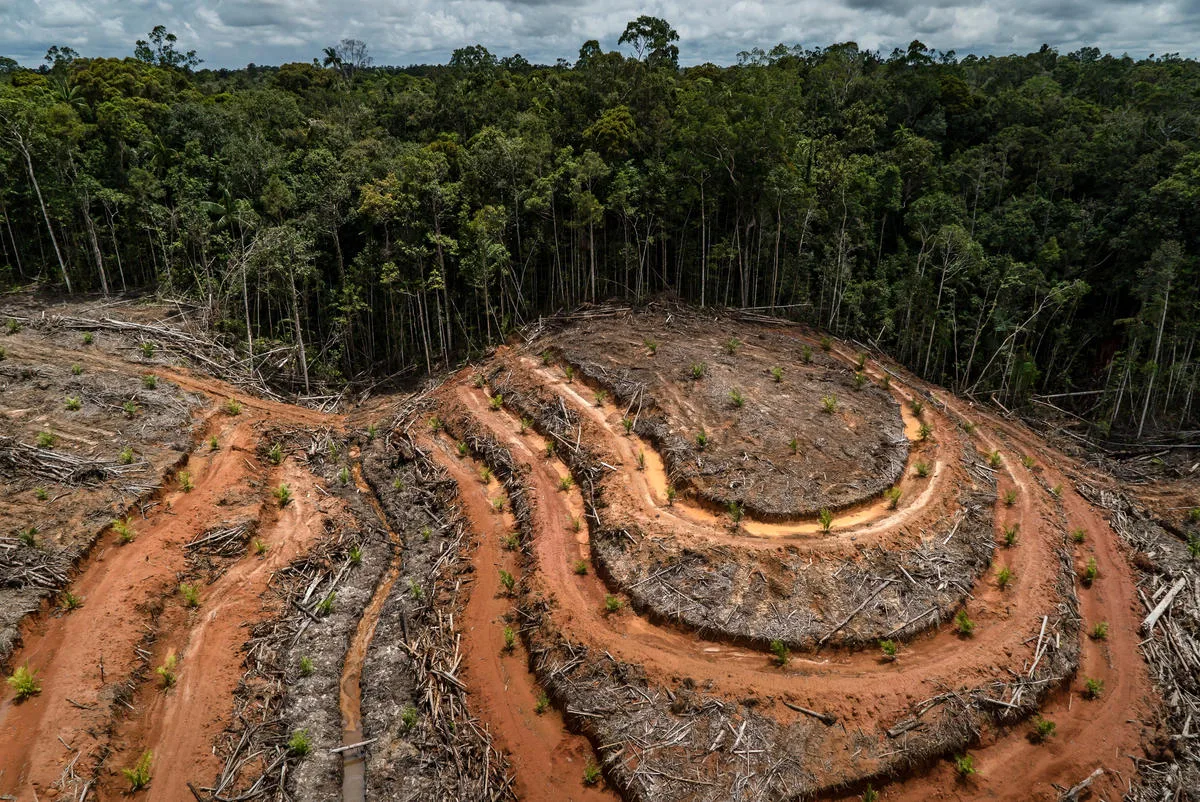
Indonesia consumed more than half its own palm oil in 2024; Trase assigned 629,000 hectares of deforestation exposure, two-thirds of the chain's total, to domestic demand.
The model allocates satellite-observed clearing by sourcing volume over a ten-year attribution window. It does not mean 629,000 hectares were cleared in 2024 or caused directly by each buyer.
Adelina Chandra says domestic demand is rising under weaker transparency. China had the highest foreign exposure rate, 20.3 hectares per 1,000 tonnes.
Annual old-growth conversion fell from 343,000 hectares in 2001-2015 to 80,000 in 2016-2024, while palm's share of rainforest loss fell from 12.2% to 2.2%.
Yet Papua's palm clearing doubled to 7,300 hectares in 2025, Kalimantan held 56% of Indonesia's total, and peat subsidence emitted an estimated 148 million tonnes CO2e in 2024.
The B50 biodiesel mandate raises domestic demand. An NGO assessment puts an environmentally supportable plantation ceiling at 18.15 million hectares versus 17.8 million planted.
Replanting seven million ageing hectares and supporting smallholders who produce 35% require tenure, finance and income support alongside domestic traceability.