
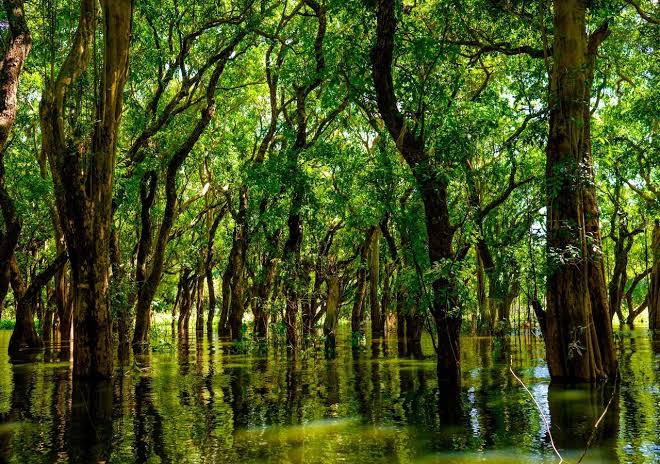
A seven-year camera-trap study confirmed that southwestern Cambodia's mangroves shelter threatened mammals while showing warning signs. Fishing Cat Ecological Enterprise monitored 156 sites in Peam Krasop Wildlife Sanctuary and the Koh Kapik Ramsar site from 2017-2023.
Cameras recorded fishing cats, smooth-coated otters, leopard cats, hairy-nosed otters, large-spotted civets and other mammals. Mangroves therefore support wildlife as well as carbon storage, storm buffering and fisheries.
Four threatened species declined in detections: endangered long-tailed macaques and large-spotted civets, plus vulnerable fishing cats and smooth-coated otters. Detection trends are not automatic population censuses, but they provide a consistent warning.
Sunda pangolins and hairy-nosed otters were difficult to detect. Species used mangroves, Melaleuca swamp and mixed riverine vegetation, so protecting only one cover type would leave ecological routes incomplete.
Some threatened mammals appeared near villages. Vanessa Herranz Muñoz sees potential coexistence, but photographs alone do not prove an absence of conflict; losses, attitudes, hunting and seasonal use need study.
Threats include poaching, fire, urbanization and conflict. Effective protection needs patrols, fire prevention, construction limits, hydrological restoration and tangible benefits for fishing communities.
The central lesson is that repeated monitoring can reveal disappearance before it becomes final. Consistent methods, species trends and threat investigation can turn photographs into accountable conservation.