
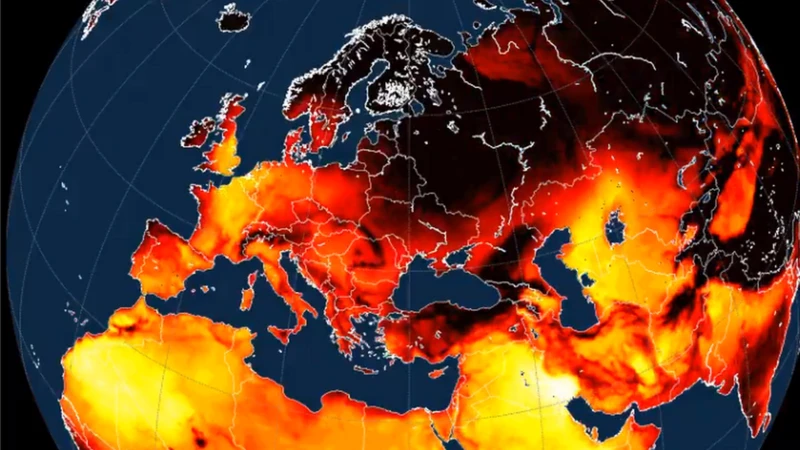
The heatwave that struck Europe in late June left a health toll that confirms the human dimension of climate change. Preliminary assessments from several national systems recorded at least 12,000 additional deaths across the continent, with impacts concentrated in the most extreme days and especially affecting older people and patients with pre-existing conditions.
The most critical period fell between June 22 and 28. During that week, Germany, France, Belgium, Spain, the Netherlands, Switzerland and Luxembourg recorded close to 10,000 deaths above expected levels, while England and Wales added estimates of heat-related deaths over a slightly wider period. The data remain provisional because mortality records require consolidation and each country uses different methods.
The regional signal also appears in EuroMOMO, the European mortality monitoring network supported by international health institutions. Its week 27 bulletin showed increased mortality around week 26 of 2026, mainly in age groups above 45 and with marked effects in several participating countries. The reading must be cautious, but the scale of the episode is already unmistakable.
The World Health Organization has been warning that extreme heat must be treated as a public health emergency, not merely as a weather event. In Europe, the organization noted that heatwaves are recurring crises, becoming more frequent, intense and prolonged, and that many deaths can be prevented through action plans, early warnings, cooling spaces, outreach to vulnerable people and prepared health systems.
Heat kills directly and indirectly. It can cause heatstroke, dehydration and exhaustion, but it also worsens cardiovascular, respiratory and kidney diseases, diabetes and mental health conditions. Hot nights are especially dangerous because they prevent the body from recovering, increase demand for ambulances and hospitals, and affect workers, older adults, children, homeless people and households without adequate cooling.
Climate attribution reinforces the diagnosis. Recent research on the June European heatwave indicated that the observed temperatures were made much more likely and intense by global warming caused by fossil fuel emissions. Across large areas of Western Europe, temperatures reached 5 to 12 °C above seasonal averages, with daytime highs and nighttime temperatures that can no longer be read as isolated anomalies.
For South America and Argentina, the European case offers a concrete warning. Cities, health systems, power grids, workplaces, schools and low-income neighborhoods must incorporate extreme heat as a structural risk. Issuing alerts is not enough: they must be translated into protocols, climate shelters, local communication, health monitoring and urban planning capable of reducing heat islands.
From a sustainable human development perspective, the central point is that prevention saves lives. Climate adaptation is not an environmental luxury, but a policy of health, infrastructure and social protection. Turning meteorological information into rapid, coordinated and verifiable public action is one of the decisive tasks for protecting communities on a planet already entering more dangerous summers.