

Solid waste management in Latin America and the Caribbean is beginning to incorporate digital tools that can change how cities recover materials, organize services and reduce losses in sorting plants. An innovation pilot developed by the Inter-American Development Bank in Brazil offers a concrete case for observing that process.
The experience took place at the Consorcio Intermunicipal do Medio Vale do Itajai, known as CIMVI, which brings together 14 Brazilian municipalities. The consortium is responsible for the collection, sorting, recovery and final disposal of municipal waste, and one of its central challenges was to improve the separation of recyclable materials managed together with a grassroots recyclers' cooperative.
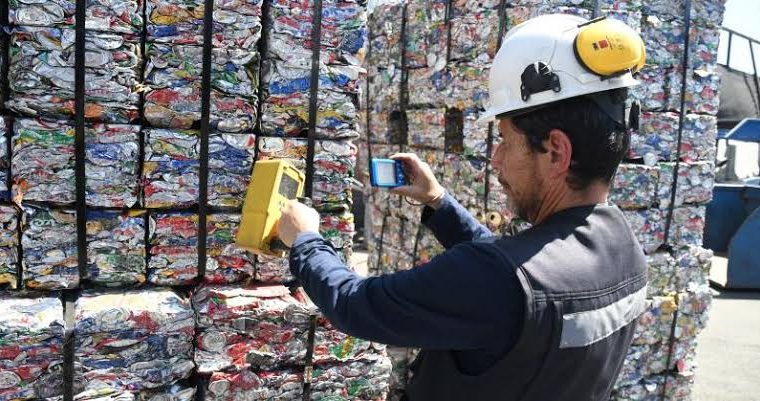
To address that issue, a material-recognition artificial intelligence model based on a deep convolutional neural network was implemented. The system used cameras and scanners to observe recyclable waste moving along the sorting plant's conveyor belt, especially at the reject output, with the objective of identifying opportunities to increase material recovery.
During the seven months of the project, images of 153 million objects were captured, analyzed, classified and quantified by volume according to the categories required by CIMVI. The technology identified 111 types of recyclable materials and organized the information in interactive data dashboards, allowing operators to detect bottlenecks and guide corrective measures.
Among the reported results, the pilot designed an alert system to warn when more than four items per minute were being lost or when losses exceeded 2% of the total processed in that interval. Those alerts, sent in real time by text message or email, helped reduce reject generation by 5%.
The information also made it possible to prioritize materials by market value, frequency and size, as well as to reorganize the cooperative's work. Data analysis facilitated the implementation of three work shifts, reduced overtime and improved operational performance. The incorporation of artificial intelligence increased by 30% the amount of recyclable waste sent to commercialization.
The case shows that environmental innovation does not depend only on new machines, but on the ability to produce useful data, interpret it and translate it into management decisions. For cities in the region, this approach can help improve services, strengthen recyclers, reduce waste and move toward a more robust circular economy, provided that technology is integrated with institutions, infrastructure and adequate working conditions.
The tool developed by Greyparrot was presented as modular, scalable and replicable across different geographies, with basic requirements such as an operating sorting belt, electricity and internet access. The challenge for Latin America and the Caribbean will be to turn this type of pilot into sustained, accessible capacities adapted to the territorial realities of each waste management system.