
A research team co-led by the UCLA Samueli School of Engineering and Ewha Womans University has demonstrated a chemical process that converts mixed plastic waste into high-purity hydrogen without requiring prior sorting by plastic type. The research was published in Proceedings of the National Academy of Sciences and sits at an important frontier between circular economy, waste management and clean hydrogen.
The problem it seeks to address is well known: much conventional recycling requires plastics to be separated by type, a costly and labor-intensive step that limits the actual recovery of discarded material. UCLA’s communication notes that only 9% of discarded plastic is recycled, while 79% ends up in landfills and 12% is incinerated, releasing carbon dioxide.
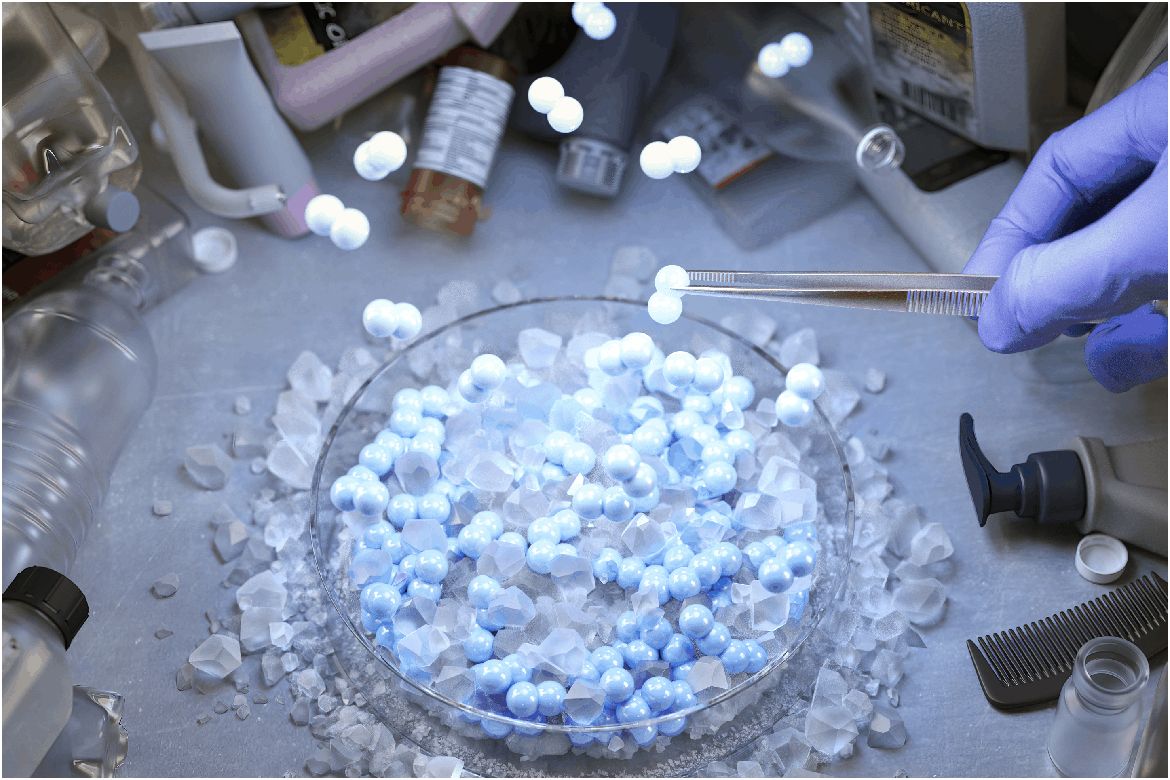
The innovation is based on alkaline thermal treatment, known as ATT, in which sodium hydroxide reacts with organic material under heat to drive hydrogen production. In laboratory tests, the method processed in a single reactor a mixture of three very common plastics: polyethylene terephthalate, or PET; polyethylene, or PE; and polypropylene, or PP.
The reported result is significant: the process produced hydrogen with purities above 90% and operated at temperatures 300 to 400 degrees Celsius lower than traditional steam gasification. That thermal difference may matter for efficiency, costs and emissions, although system optimization and economic viability still need to be assessed before any deployment at scale.
The method also addresses a technical obstacle. While PET responds more readily because it contains oxygen in its structure, PE and PP are more inert under alkaline conditions. To activate them, the researchers added a mild thermal oxidation pretreatment in air, introducing oxygen-containing functional groups into the polymer chains and creating reactive sites for the main treatment.
Carbon management is another central point. During the reaction, part of the released carbon is captured by sodium hydroxide and converted into solid sodium carbonate instead of escaping as atmospheric carbon dioxide. Post-reaction analysis showed that more than 75% of the original plastic carbon ended up as stable carbonate or liquid organic residues, while less than 13% appeared in gaseous form.
For Fundación Argentina ASE, this line of research shows how technology can help rethink waste and energy without turning it into a magical solution. Converting plastics into hydrogen does not replace consumption reduction, material redesign, reuse or mechanical recycling where those are viable. But it may expand alternatives for complex waste fractions that currently have low recovery rates.
For southern, South American and emerging countries, the agenda is to assess these innovations with productive, environmental and territorial criteria. If processes of this kind advance, they will need to demonstrate energy balance, costs, chemical safety, carbon traceability, reagent management and compatibility with local waste management systems. The challenge is not only to discover technologies, but to turn them into real capacities for sustainable development.