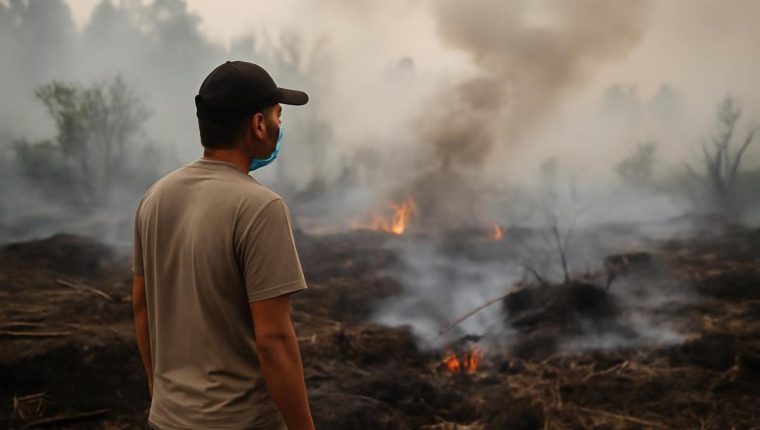

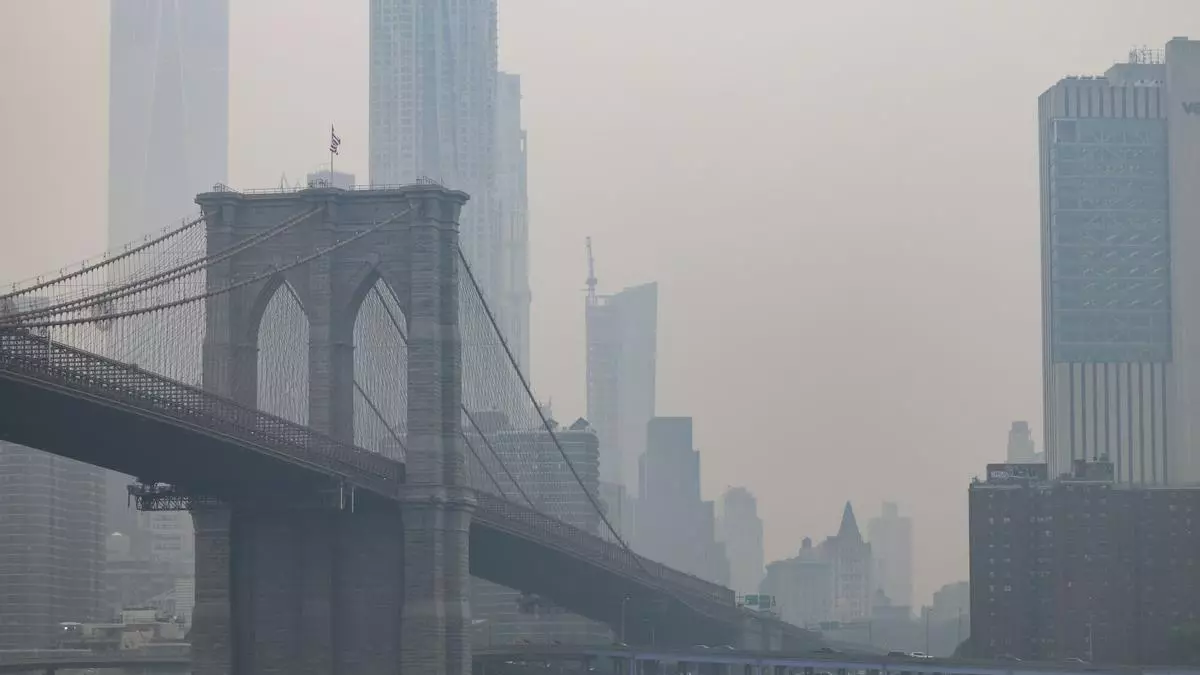
The possibility that poor air quality in the New York and New Jersey area could affect a World Cup final highlights a reality that can no longer be treated as exceptional: the environmental crisis directly shapes urban life, public health and the organization of mass events. Smoke from wildfires in Canada has once again placed the Air Quality Index, or AQI, at the center of public concern.
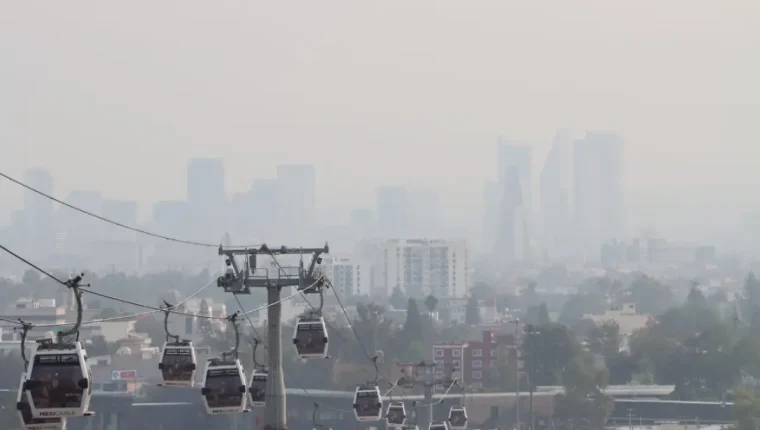
The episode is taking place amid active fires, atmospheric transport of particles and health alerts in cities across the northeastern United States. When smoke moves over densely populated areas, it does more than reduce visibility: it increases exposure to fine particles that affect people with respiratory conditions, older adults, children and those engaged in intense physical activity.
In elite sport, that exposure has a specific dimension. Athletes breathe large volumes of air during training and competition, so a severe deterioration in air quality can increase respiratory and cardiovascular risks. This is why health protocols often use AQI thresholds to adjust hydration, medical support, oxygen availability and, in critical scenarios, the postponement or suspension of an activity.
Values above 100 already call for precautionary measures, especially for sensitive groups. When the index exceeds 150, conditions are considered unhealthy and require stronger medical coordination. Near the 180 to 200 range, the decision becomes a critical field assessment; above 200, health guidance points toward suspending or delaying the competition.
Beyond any specific final, the case shows how extreme climate events and air pollution require environmental science to be integrated into sports management. Venues, calendars, mobility plans, warning systems and health operations must include scenarios involving smoke, extreme heat, storms, floods and other risks that are becoming more frequent or more intense.
The situation also reminds us that air quality is an environmental indicator with immediate impact. Unlike other climate processes that evolve slowly, smoke pollution can change within hours depending on wind direction, rainfall or the arrival of cold fronts. That variability requires continuous monitoring, clear public information and decision criteria defined in advance.
For Fundación Argentina ASE, this agenda reinforces the importance of connecting environmental education, prevention and evidence-based decision-making. Protecting health and biodiversity requires institutions capable of reading environmental data in real time and translating it into concrete measures for communities, schools, organizations and local governments.
Major sporting events attract global attention, but the same question extends to everyday life: what air we breathe, who is most exposed and what policies are needed to reduce risks. The answer combines climate mitigation, responsible land management, wildfire prevention, sustainable mobility and warning systems that enable action before an emergency becomes unavoidable.