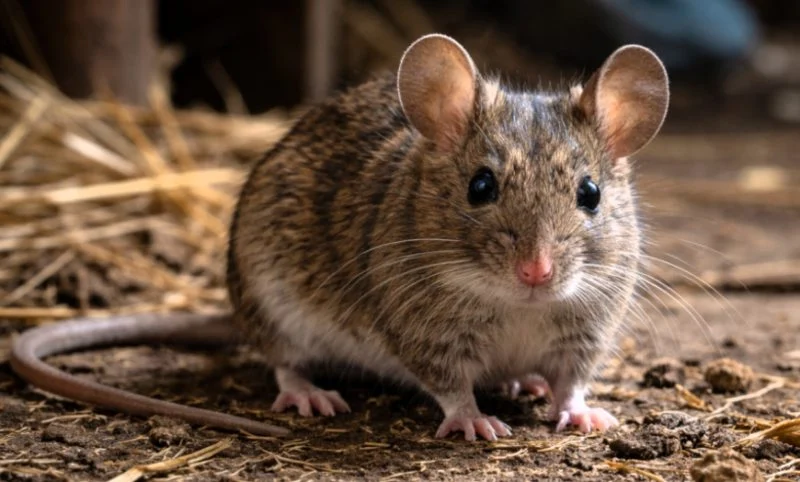
A scientific commentary published in Microbiome and One Health brings a central idea in today’s environmental agenda back to the forefront: human health, animal health and ecosystem health cannot be managed as separate compartments. The work links biodiversity loss and land-use change with a higher risk of hantavirus transmission from animal reservoirs to people.
The article, titled Hantavirus on the South Atlantic: A One Health and Microbiome Perspective on an Emerging Ecological Alert, was written by Jiahai Lu and disseminated by Chinese scientific institutions. Its starting point is an alert involving a South Atlantic cruise, where a vessel carrying 147 people from 23 countries became a confined space that amplified risk, even though no rodents were found on board.
The event matters because it shows that zoonotic emergence does not depend only on direct contact with wildlife. International travel, ecotourism, stopovers in remote sites and closed spaces can connect territories, people and pathogens in ways that are difficult to anticipate. Within that framework, the One Health approach proposes integrating human, animal, environmental and climate surveillance.
The ecological dimension is strongly reflected in evidence cited from Shaanxi, China. There, land consolidation processes reduced rodent diversity by 53% and favored a scenario in which a dominant hantavirus host species became prevalent. The simplification of biological communities can remove ecological barriers and allow certain reservoirs to gain relative presence.
The commentary also highlights the role of the microbiome. Recent studies indicate that hantavirus infection can alter the lung microbiome of rodent reservoirs, opening a preventive surveillance pathway: observing microbial changes in hosts before risk reaches people. This is not a single solution, but an additional early signal for more complete monitoring systems.
For Fundación Argentina ASE, this type of evidence reinforces an agenda in which biodiversity, environment, production, tourism and public health must be considered together. Prevention of zoonotic diseases does not begin only in hospitals; it also begins with territorial planning, ecosystem conservation, responsible management of rural and peri-urban environments, and the capacity to produce reliable data.
The work proposes four lines of action: multisectoral One Health coordination; surveillance of reservoir microbiomes; warning systems that combine biodiversity, climate and human mobility; and travel health regulations informed by ecological criteria, especially for cruise ships and ecotourism. The key is to anticipate risk without automatically discouraging tourism or scientific activity, but rather managing it with evidence.
The lesson for southern, South American and emerging countries is direct. In territories with high biodiversity, growing mobility and rapid land-use change, ecosystem protection is also health infrastructure. Integrating environmental monitoring, laboratories, climate information, public health and community work can turn scattered signals into concrete prevention.