
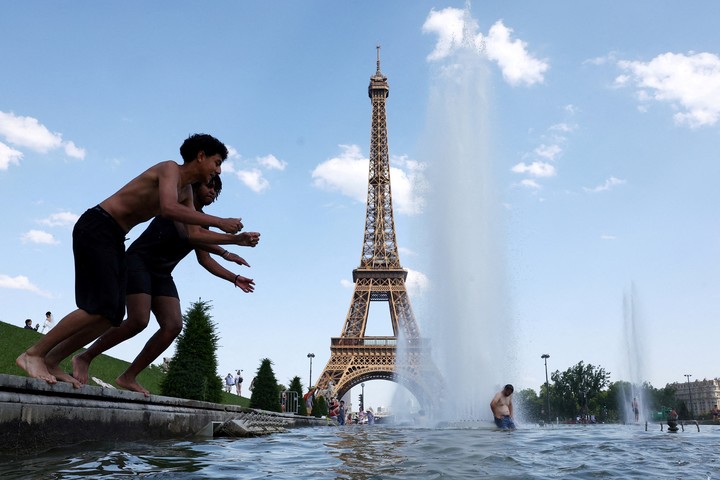
France recorded its hottest summer in 2026 since national measurements began in 1900. Meteo-France said the combined day-and-night average for June, July and August was 24C, 3.6C above normal. It surpassed 2003, whose anomaly was 2.7C, and confirms a seasonal jump felt across the country.
The heat was not a single episode. France counted 53 heatwave days across three events during the season, compared with 33 days in 2022. Very hot spells also occurred outside meteorological summer, in May and early September. A longer exposure period increases pressure on health, water, farming, energy and ecosystems even when one day’s maximum falls.
Rainfall was nearly 40 per cent below normal, making 2026 the second-driest summer in the record. Heat and low rainfall accelerate soil moisture loss and dry vegetation available as fuel. The combination supports more difficult fires, but it does not establish the ignition source of each blaze, which requires specific investigation.
Firefighters tackled wildfires throughout the season, including normally cooler and wetter northern areas and Brittany. A historic fire near Bordeaux consumed forests and forced the temporary evacuation of about 250,000 people. This figure describes preventive and emergency movement, not destroyed homes or permanent displacement.
Coastal waters also reached record temperatures around mainland France and Corsica. Marine warming can increase ecological stress, shift species and weaken the ocean’s moderation of coastal extremes. Without local series on duration, depth and anomaly, a thermal record should not automatically become a uniform estimate of biological damage.
France’s balance fits a continental trend. The Copernicus Climate Change Service says Europe has warmed at roughly twice the global average rate since the 1980s. A particular season retains weather variability, but repeated records in heat, dryness and marine temperature are consistent with an increasingly warm climate baseline.
The response must connect adaptation and emission cuts. Health plans, cooling spaces, water management, forest prevention, labour protection, urban shade and warnings reduce immediate exposure. Measuring mortality, farm losses, river flow, burned area, ecological severity and marine temperature will show the full cost. The 2026 thermal record is closed; complete impacts still require sectoral assessments.