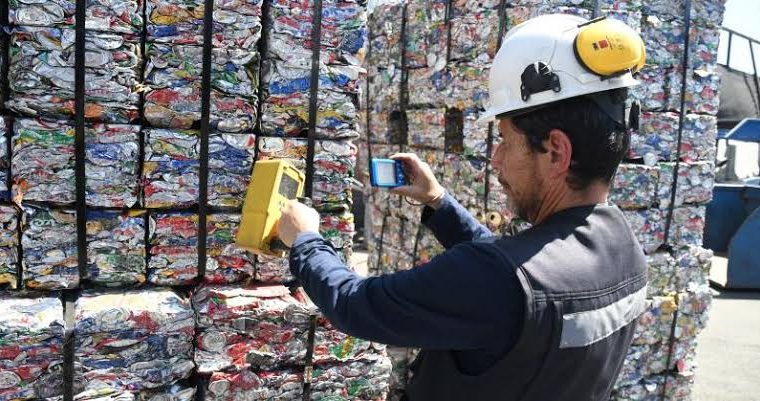

VinMetal Production and Trading plans to import about 950,000 tonnes of steel scrap each year by sea for a future steel complex in Ha Tinh, central Vietnam. The volume appears in documents submitted for environmental assessment, and the material would be stored outdoors on site. The project is still awaiting authorization, so these imports and production are not yet operating.
Scrap would be one input in an integrated chain including coke making, pellets, sintering, iron smelting, steelmaking, continuous casting and rolling. This matters environmentally: secondary material can displace virgin ore and recover metal, but it does not by itself make the complex low-carbon while coal- and energy-intensive processes remain.
Declared capacity totals five million tonnes of steel products a year: three million tonnes of hot-rolled steel, 1.4 million tonnes of bars and 600,000 tonnes of wire rod. These are nameplate figures for a future plant, not sales forecasts or guaranteed utilization, and depend on permits, construction, markets, energy and supply.
The filing also projects more than 2.5 million tonnes of by-products annually, including about 1.7 million tonnes of ground granulated blast-furnace slag and 800,000 tonnes of cement made from processed slag. Valorization may replace construction inputs and avoid disposal, but quality, safety, traceability, stable demand and industrial performance must be demonstrated.
VinMetal, a Vingroup subsidiary, received its investment registration certificate in February. The reported budget is about 80 trillion Vietnamese dong, or €2.755 billion. The developer expects to provide around 15 per cent and obtain 85 per cent from lenders and other sources, a structure still to be secured and exposed to financial conditions.
The environmental application says construction could begin in the fourth quarter of 2026, last roughly 48 months and lead to commercial operation in the first quarter of 2031. A memorandum with Primetals Technologies covers cooperation on two long- and flat-product lines. Those dates and capacities are not an environmental approval or a completed plant.
Assessment must examine scrap origin and contamination, shipping, outdoor storage, water and energy, coke and blast-furnace emissions, air quality, effluent and the actual market for slag. The key measure will be how much secondary steel displaces virgin inputs and emissions within verified limits. For now, this is a large industrial proposal whose benefits and burdens remain unproven.