
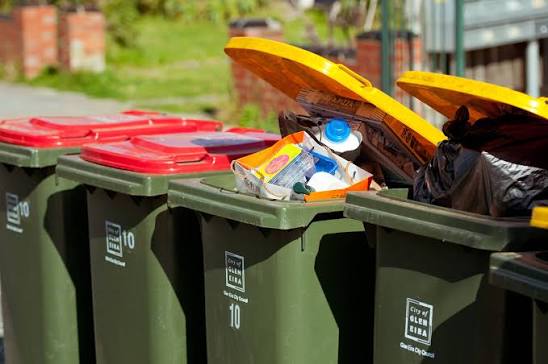
Household rubbish collection has become a state-election issue in the Australian state of Victoria. Opposition leader Jess Wilson promised that under a Liberal government every council's red general-waste bin would be emptied weekly. The proposal is not yet law or an approved service: it is an election commitment that would shift a traditionally local decision to state level and still needs to explain funding, authority and implementation.
More than thirty Victorian councils have already moved red-bin collection to every two weeks, generally while collecting the green food-and-garden-organics bin, or FOGO, weekly. That combination — weekly organics and fortnightly residual waste — is described as recommended practice in Australian national reports. Removing food and wet material reduces the red bin's volume, weight and much of its odour, while diverting biodegradable waste from landfill.
Waste composition explains the logic. A New South Wales kerbside audit found organics were 51% of rubbish-bin contents by weight, paper 18%, and glass and metals 6%; only 25% was non-recoverable. Sorting those materials correctly can leave little in the red bin. Less frequent residual collection also encourages green-bin use, reduces truck travel, noise and emissions, and can contain the cost of adding new recycling streams.
The Liberal pledge combines more pickups with lower household waste charges but has not publicly detailed how both would be funded. Every extra round requires labour, vehicles, fuel or electricity and logistical capacity. Councils warn that a mandate without sufficient state funding could raise fees or displace other services. Comparing options requires publishing cost per household, kilometres driven, material actually recovered and emissions, rather than assuming more service is free or that one frequency fits every area.
Hygiene and accessibility concerns are genuine for some households. Large families, homes with children in nappies, people managing incontinence or medical waste, and residents of some apartment buildings may be underserved by fortnightly collection. The response need not be universal: larger bins, subsidized extra pickups, dedicated services and apartment-specific design can meet needs without doubling routes everywhere. Measures should avoid charges that penalize disability, care responsibilities or poverty.
The debate comes during implementation of four streams: green for organics, yellow for mixed recycling, purple for glass and red for residual waste. The statewide completion target is 1 July 2027. So far, 42 of 79 councils have kerbside glass, 65 have introduced FOGO and about 33 use fortnightly rubbish service. The opposition also proposes removing the mandated purple bin, opening a wider discussion about statewide consistency and local adaptation.
Good policy should judge outcomes, not a bin's colour or frequency in isolation. Indicators include kilograms per resident sent to landfill, organics and recycling recovery, contamination in each stream, odour complaints, coverage for special-needs households, costs and transport emissions. A comparative pilot, open council data and well-designed exceptions would support an evidence-based decision. The goal is not merely to empty red bins more often, but to generate less waste, sort better and provide a fair sanitary service.