
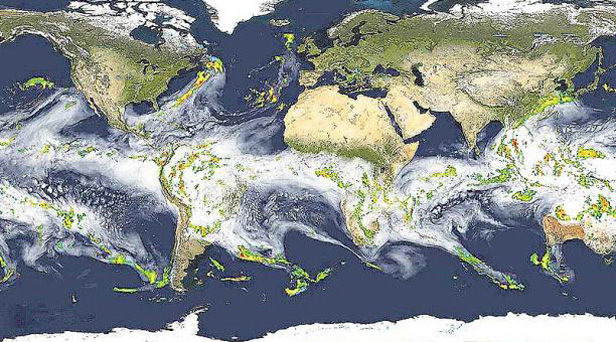
An analysis of the Amazon's flying rivers proposes directing conservation toward the forests that make the greatest contribution to recycling and carrying moisture from the Atlantic Ocean to the Andes. These atmospheric corridors cross national borders and sustain rainfall that is essential for ecosystems, communities and productive activities across the Amazon Basin, making the condition of Brazil's forest directly relevant beyond Brazil.
The work mapped three seasonal moisture routes and identified a particularly sensitive point in western Brazil. In the state of Acre, all three flows converge before continuing toward Peru and Bolivia. This concentration turns the corridor into a bottleneck in the water cycle: losing forest cover there could weaken the system's ability to support precipitation in territories hundreds of kilometers away.
Dependence is especially high in the southwestern Amazon. In parts of Peru and Bolivia, flying rivers provide more than 70% of annual precipitation. During the dry season, when available moisture is lower and vegetation faces greater stress, the continuity of forests that recycle water becomes even more important to prevent prolonged drought conditions from reinforcing themselves.
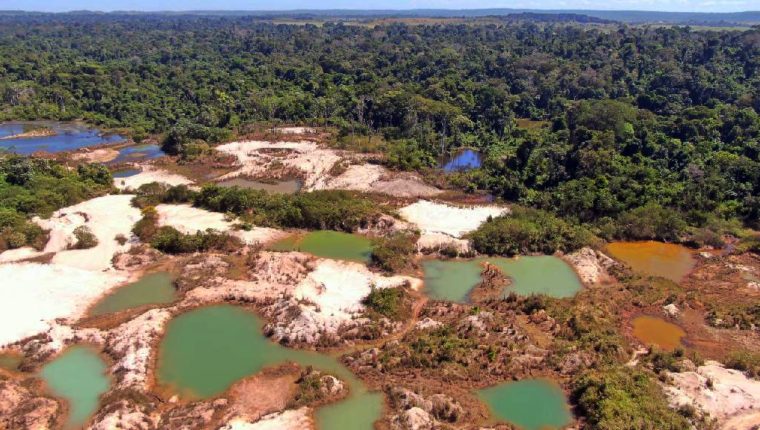
Priority areas include Brazilian public forests that have not yet received a defined legal designation. More than 12 million acres of public rainforest without formal protection overlap with critical moisture paths. That uncertainty facilitates pressure from land grabbing, logging, mining, fires and infrastructure expansion, leaving an ecosystem service of continental scale exposed.
Planned roads can also disrupt forest connectivity. Paving the BR-319 highway is among the risks identified because it could induce more than 12 million acres of additional deforestation. The problem extends beyond the cleared land: every loss reduces evapotranspiration, decreases the water returned to the atmosphere and may weaken rainfall for forests, cities, crops and hydropower systems located downwind.
The extreme drought of 2023-2024 demonstrated the social and productive reach of this vulnerability. Alongside impacts on rivers, electricity generation and forest economies, the episode coincided with a 75% decline in soybean production in Santa Cruz, Bolivia, and severe potato losses in Puno, Peru. Those consequences show why conserving Amazonian moisture is also a matter of water, food and energy security.
The proposal introduces the concept of Critical Moisture Territories to guide protection, restoration and adaptation decisions. Recommendations include formally protecting public forests, maintaining connections between the Andes and the lowlands, strengthening science and technology for monitoring, and coordinating policies across countries. The central challenge is to turn a transboundary atmospheric process into a practical criterion for licensing, infrastructure and land-use planning.