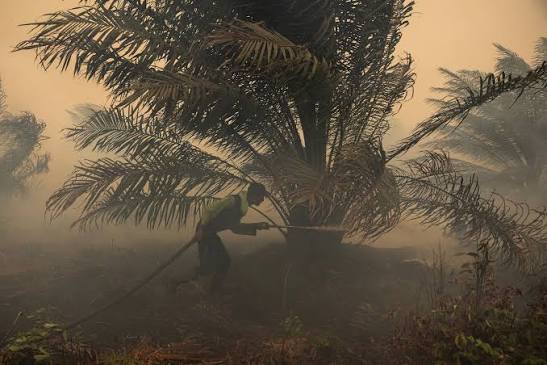
Smoke from forest and land fires pushed air pollution to hazardous levels in parts of Central and West Kalimantan on Indonesia’s side of Borneo. IQAir showed Palangkaraya at an air quality index of 780 at noon on August 31 and Pontianak at 593. These were point-in-time readings from a monitoring platform, not daily averages or uniform measurements across each province, but both far exceeded the hazardous threshold of 300.
The emergency has a regional health dimension. Deputy Health Minister Dante Saksono Harbuwono said more than five million people in Borneo and Sumatra were directly exposed to haze from dozens of fires. Around 13,500 people had been treated for respiratory infections in July and August. This is an accumulated consultation figure and does not show that every case was caused solely by one identified fire.
During severe haze, fine particles can penetrate deep into the lungs and worsen asthma, heart disease and respiratory illness. Children, older people, pregnant women and outdoor workers face greater vulnerability. Immediate precautions include limiting exposure, following local alerts, protecting indoor air and using suitable respirators when health authorities advise them.
Indonesia deployed military forces and civilian agencies to fight fires and rehabilitate burned areas in East and North Kalimantan. The VI/Mulawarman regional command announced gradual tree planting on degraded land and riverbanks, alongside improvements to water sources. Drilled wells are intended to provide clean water and support both prevention and firefighting during the dry season.
Emergency response and ecological restoration must remain distinct. Extinguishing fires, protecting residents and securing water require immediate action; restoring peatlands, forests and soils requires ecological assessment, suitable species, control of new ignitions and long-term monitoring. Tree planting may help, but it cannot replace hydrological recovery or remove the pressures that caused the fires.
Japan is preparing its first overseas firefighting mission under an agreement signed by the two defence ministries in May. A Self-Defense Force transport ship left Hiroshima and was expected within one or two weeks. The announced mission involves about 600 personnel and three CH-47 helicopters; it will add capacity, although its effect depends on where and when it is used.
Public assessment should combine active fires, burned area, PM2.5, medical visits, school and work disruption, water availability and repeated burning by territory. Extreme readings justify urgent protection, but lasting results require burn prevention, surveillance, enforcement and management of flammable landscapes. Without those indicators, temporary clearer air could be mistaken for the end of a season that remains open.