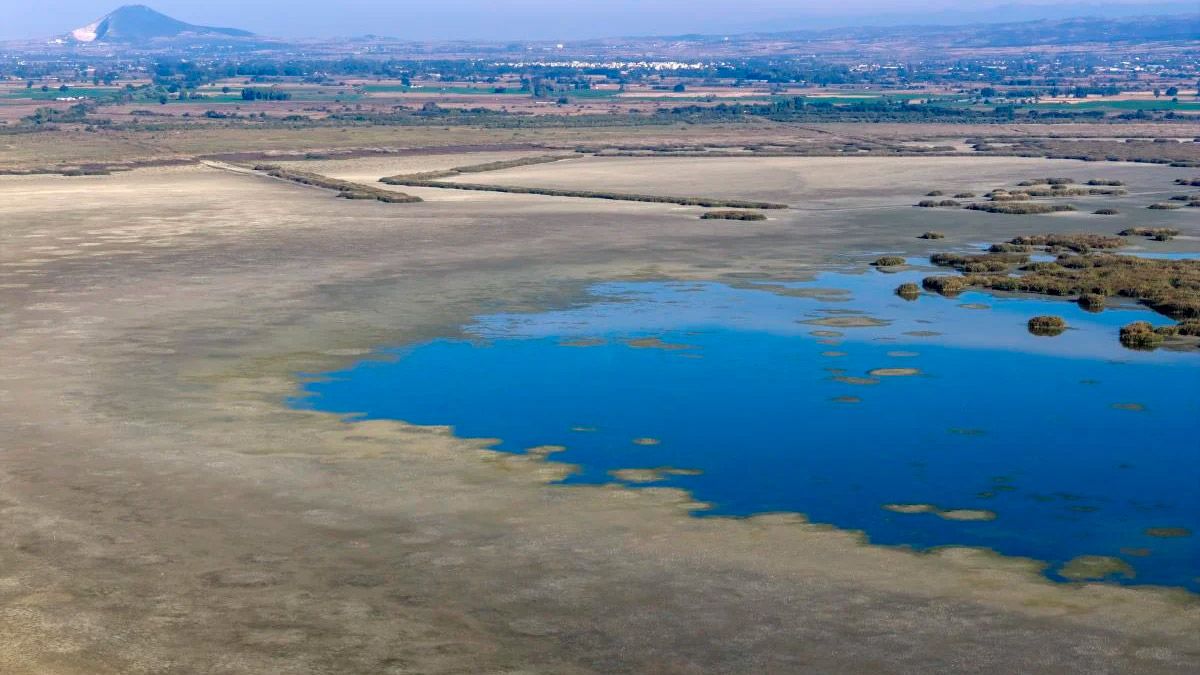
Lake Koroneia in northern Greece has become murky ponds and cracked mud. National Observatory satellite data show its surface falling from 34.4 square kilometers in 2016 to 2.7 in 2026, less than one tenth. It was once Greece’s fifth-largest lake, a protected wetland and bird refuge.
The decline followed a wet 2015-2016 season. Rainfall averaged about 400 millimeters over at least five years, 150 below previous decades. Higher temperatures added 100–150 millimeters of annual evaporation, reducing inflows and drying springs.
Climate is not the only cause. Farmers facing less rain withdraw water for crops and livestock, deepening a deficit. Climate change raises background pressure, while the scale, legality and efficiency of withdrawals shape local collapse.
An EU court ruled in 2013 that Greece failed to protect Koroneia from over-irrigation, illegal drilling and pollution. Authorities now cite stronger monitoring, but formal control is not ecological recovery. Public data on wells, flows, penalties and compliance are needed.
Loss of open water affects birds, fish, plants, tourism, fishing and communities. Isolated ponds can heat, lose oxygen and concentrate pollutants. A wet patch is not a functional lake; depth, quality, connectivity and seasonal inflow also matter.
Responses include withdrawal limits, illegal-well closure, efficient irrigation, crop changes, spring and wetland restoration and support for farmers. Rules without viable rural alternatives may increase noncompliance.
Koroneia symbolizes a European water crisis driven by hot summers, erratic rain and competing demand. Recovery will take multiple seasons. Success means a stable water balance, compatible withdrawals, restored quality and returning ecological and social functions.