
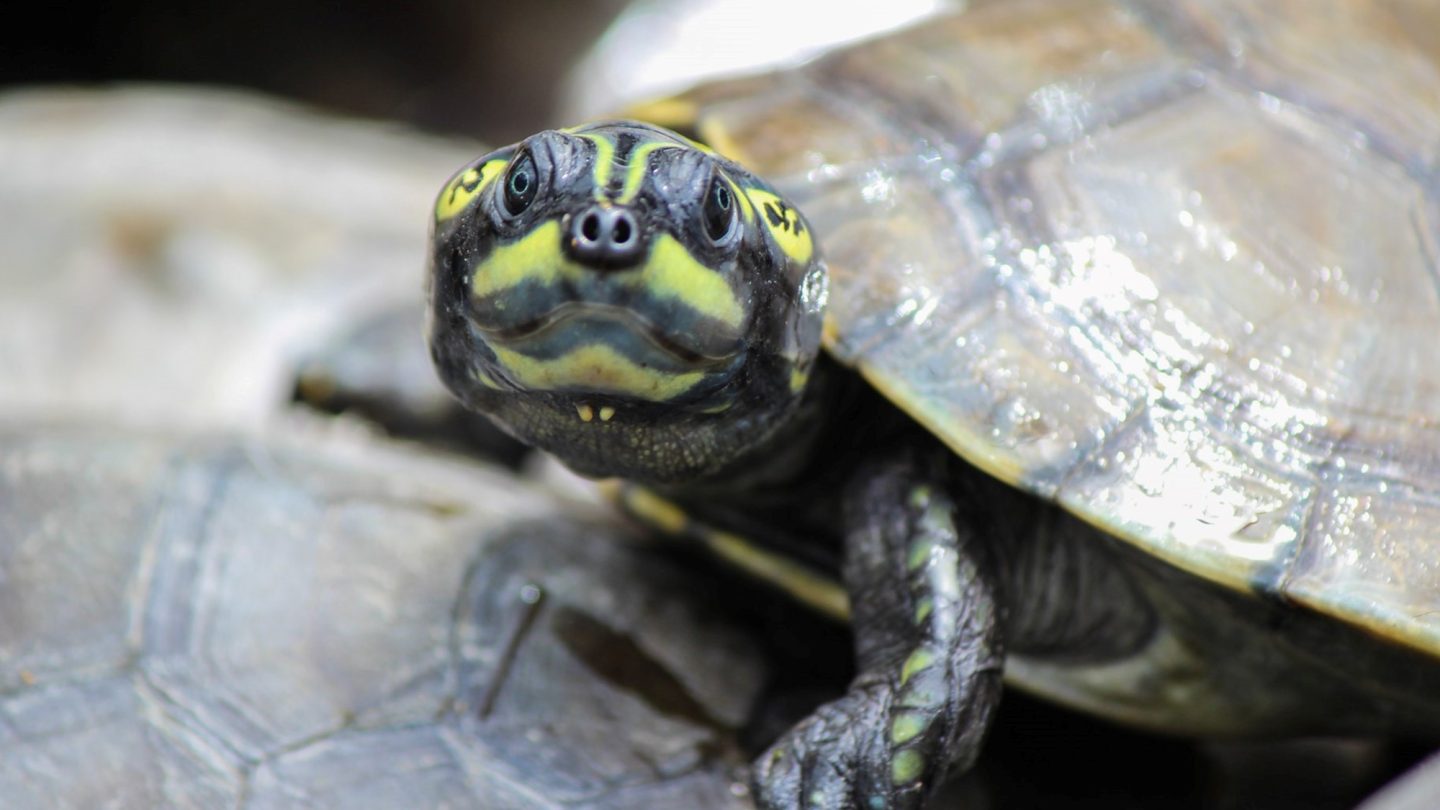
Brazil has listed the six-tubercled Amazon river turtle, Podocnemis sextuberculata, as endangered on its national threatened fauna list for the first time. The species, locally known as iaçá, pitiú or jurará-pitiú, was considered near threatened in the previous assessment.
The new category is based on a population decline of more than 50% over 36 years in Amazonas and western Pará, where roughly 70% of its Brazilian range is concentrated. This marks a high national extinction risk and should not be confused with the giant South American river turtle, Podocnemis expansa, which is a different species with a different status.
Podocnemis sextuberculata is among the smaller Amazon river turtles: females reach about 34 centimeters and roughly 3.5 to 4 kilograms. Six bumps visible on the plastron of juveniles give the species its name; during the dry season, females lay eggs on beaches and sandbanks exposed as rivers fall.
This reproductive concentration makes protection possible but also facilitates capture. Eggs, juveniles and adults are eaten or illegally traded, while degraded riverbanks, pollution and altered hydrological regimes reduce the quality of feeding and nesting sites. Because turtles mature slowly, the loss of adult females is particularly difficult to replace.
The species forms part of the food systems and culture of Indigenous peoples and river communities, so a response based only on bans can shift costs onto those who depend on the river. The challenge is to distinguish sustainable traditional use from trade that empties populations, while strengthening local agreements to watch nesting beaches, manage nests and record adults rather than count only released hatchlings.
Brazil's update added 180 species or subspecies and removed 150 after new assessments. The list includes 790 threatened terrestrial species and, when aquatic species are added, brings the official total to 1,280; it guides action plans, research, licensing and funding, but a category alone cannot restore populations.
Next steps fall to the Environment Ministry, ICMBio, Amazonian states and community organizations: identify critical beaches, maintain monitoring over several generations, reduce trafficking and unsustainable harvest and protect natural river dynamics. Recovery must be measured through juvenile and adult survival and stable breeding populations, not only annual egg or hatchling-release totals.