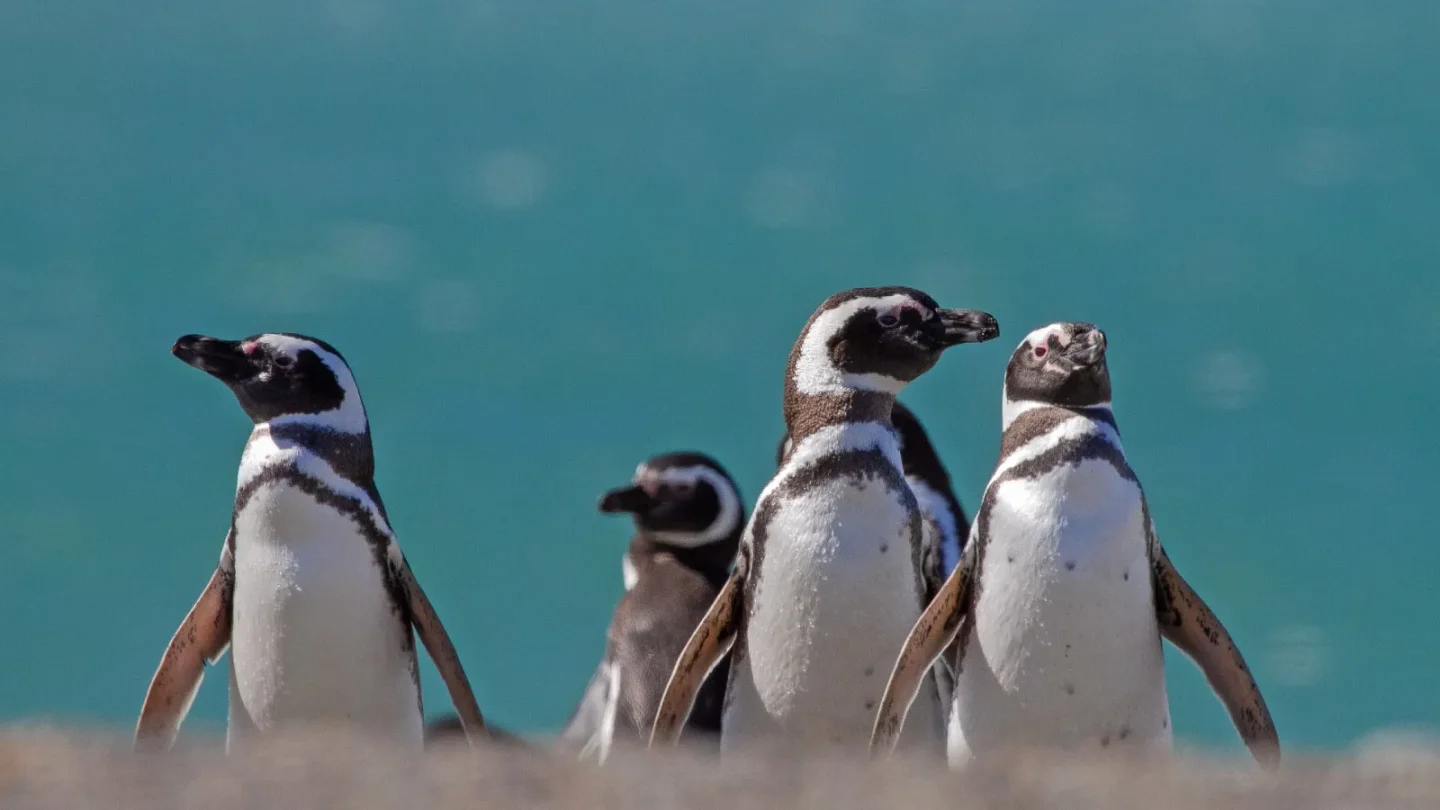
Eight GPS-tagged Magellanic penguins at Cabo Vírgenes, Santa Cruz, showed a breeding-season marine range larger than expected. Feeding trips reached about 70 kilometers from nests and at least 130 kilometers round trip. Their combined core area was 5,543 square kilometers, more than twice earlier estimates.
The 2025 tracking covers only eight trips by eight birds, so results are preliminary and routes can change with ocean conditions. Still, it identifies feeding and resting sites beyond the land reserve, relevant to fishing, shipping, tourism and offshore industry.
During chick rearing, adults alternate nest care and searches for Fuegian sardine and other prey. Some 2025 trips lasted a day and a half, about 12 hours longer than usual. This may indicate nearby food scarcity but does not alone prove a regional sardine decline.
The reported 3,000–3,500 kilometers refer to post-breeding dispersal, not each chick-feeding trip. Some adults remain at sea for six months to Uruguay or southern Brazil. Others stay within roughly 300–350 kilometers of the colony through autumn and winter.
Females appeared more often among nearby residents, while males tended to move north across the continental shelf. Eight birds cannot establish a universal sex rule. Larger samples must test age, condition, breeding success and annual variation.
The 2025 census counted about 120,000 pairs, or 240,000 penguins, at Cabo Vírgenes. Specialists describe a healthy, productive colony, but one sensitive to prey and marine-use changes. Abundance does not remove the need to protect supporting processes.
New censuses and tags will inform a possible marine area next to the reserve. The central finding is not that every penguin travels 3,500 kilometers, but that one colony uses multiple strategies and depends on waters outside current protection.