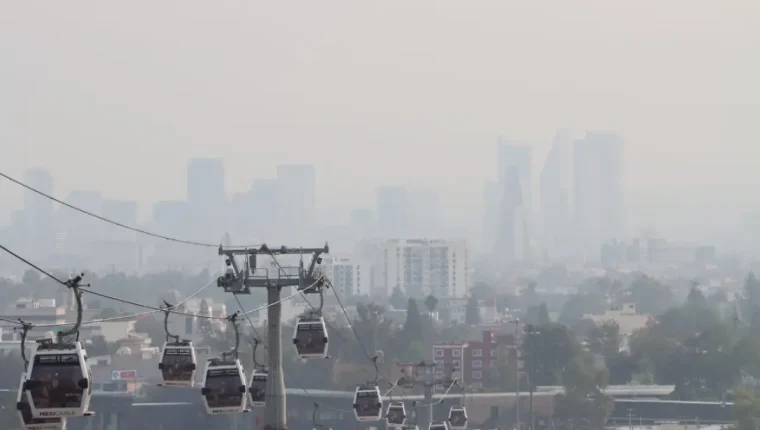


Viña del Mar recorded air quality classified as good for both reported particulate fractions on August 2, 2026. PM2.5 measured 7 micrograms per cubic meter, with a Chilean Particle Air Quality Index (ICAP) score of 14; PM10 reached 21 micrograms per cubic meter, with an ICAP score of 16.
Both scores were well within the 0-to-99 interval that Chile's system defines as good. The result describes a day with no particle-related alert, pre-emergency or emergency and therefore no extraordinary advice to restrict physical activity for that reason. It does not mean emissions were absent, nor does it predict that the same conditions will persist on following days.
The time scale matters when interpreting the figures. Chile's National Air Quality Information System reports online PM10 and PM2.5 concentrations as 24-hour moving averages and calculates them only when at least 75% of hourly data are available. Operational readings can be revised after validation by the station operator, making this a monitored and reviewable snapshot.
Jurisdictions must also be kept separate. Information published alongside the report listed restrictions on heaters, vehicles and agricultural burning that apply to Santiago Province and the Metropolitan Region. Those measures should not be portrayed as Viña del Mar rules: the verifiable local finding for the coastal city that day was the good category reported for both particle sizes.
PM10 consists of inhalable particles smaller than ten micrometers, while PM2.5 can penetrate more deeply into the respiratory system. Sources may include traffic, household and industrial combustion, resuspended dust and wildfire smoke. Concentrations shift with emissions, wind, humidity and atmospheric stability, which makes continuous monitoring more useful than an isolated value.
Chile has improved average air quality over the past two decades, but progress has not removed territorial inequality. Wet firewood still affects southern cities, while industrial centers in the north and center can experience acute episodes. Viña del Mar's favorable measurement belongs within this uneven national map and should not be treated as proof that the wider problem has been solved.
The next task is to maintain transparent local time series, identify the station supporting each figure and communicate measures according to the correct territory. Residents can check official updates before prolonged outdoor activity to respond to rapid changes; authorities must maintain equipment, validate readings and reduce structural emissions so monitoring becomes preventive policy.