
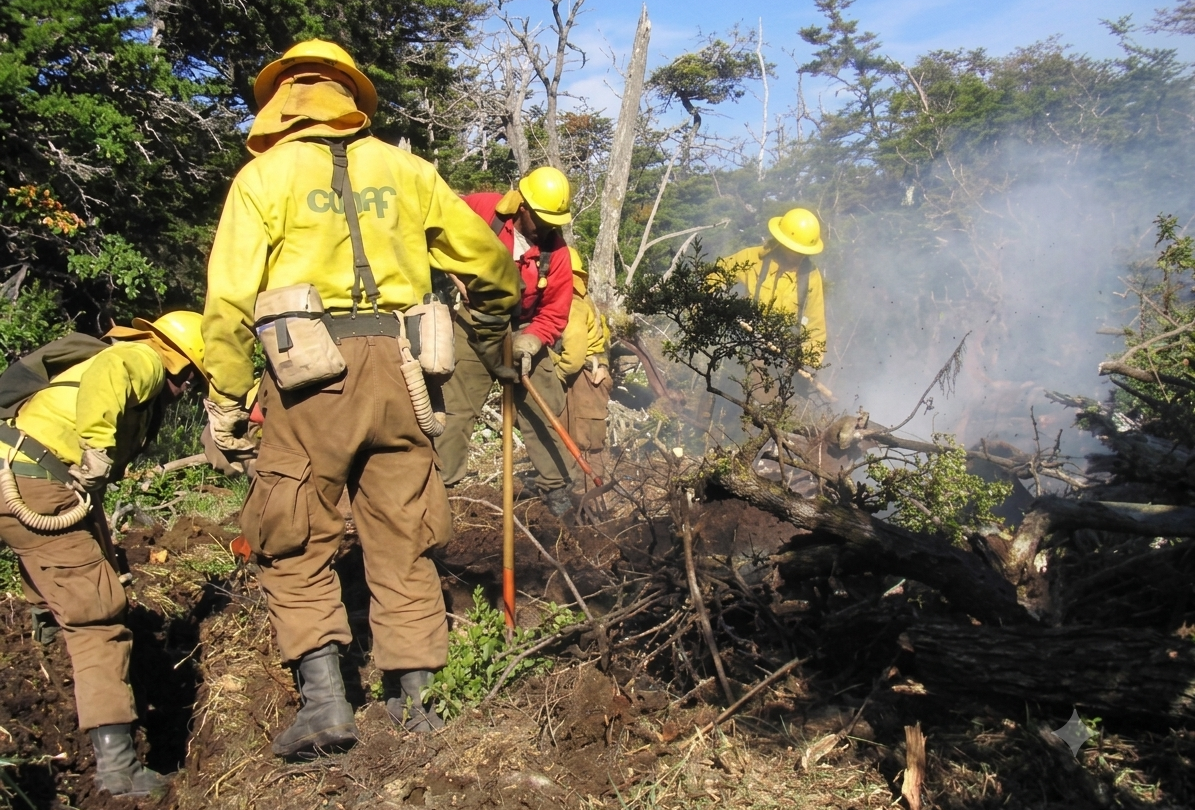
Chile's National Forestry Corporation and the La Araucanía Regional Prosecutor's Office reviewed the latest wildfire season and agreed to improve their exchange of information. The region recorded 935 wildfires, and CONAF's Analysis and Diagnosis Unit investigated 708, or 75.72% of the reported total. The meeting announced neither a new penalty nor a specific case; it strengthened the technical-to-criminal-investigation chain.
Investigative coverage reached all 32 municipalities in La Araucanía through teams based across the provinces of Malleco and Cautín. This deployment makes it possible to compare agricultural, livestock and forestry settings as well as fires in urban-rural interfaces, protected wildlands and heavily visited tourist areas. Territorial scale matters because ignition causes and conditions of spread are not uniform.
The Analysis and Diagnosis Unit seeks to determine causes, identify occurrence patterns and locate areas with repeated fires. Its reports can guide prevention campaigns, controls and mitigation while supplying technical evidence to prosecutors. That information is useful only when evidence is preserved, methods remain consistent and different levels of certainty are clearly communicated.
Coordinating wildfire prosecutor Nelly Marabolí Valdés said the Analysis Unit and the Criminal Analysis System maintain permanent contact with CONAF specialists. Regional CONAF director Héctor Tillería Flores said their evidence helps establish causation and possible responsibility. The coordination aims to prevent information from being lost between field inspection and judicial decisions.
Investigating a fire does not demonstrate that a crime occurred. The 708 cases measure the reach of technical examination but do not show how many causes were established, how many acts were accidental, negligent or intentional, or how many led to charges or convictions. That distinction prevents every wildfire from being labeled criminal and is essential for assessing the coordination's actual effectiveness.
CONAF said its territorial work can identify human actions associated with fire ignition in different settings. Turning that knowledge into prevention requires measures tailored to each pattern: fire management in productive activities, fuel reduction, interface protection, surveillance in protected areas or education at tourist destinations. Criminal enforcement may deter offenses, but it cannot replace this preventive architecture.
The next verifiable test is whether the exchange produces faster investigations, better-established causes and preventive measures focused on recurring locations. Measurement will require public data linking recorded fires, examined cases, determined causes, referrals to prosecutors and judicial outcomes. The meeting strengthens an important institutional capacity, but does not by itself prove that future fire occurrence will decline.