
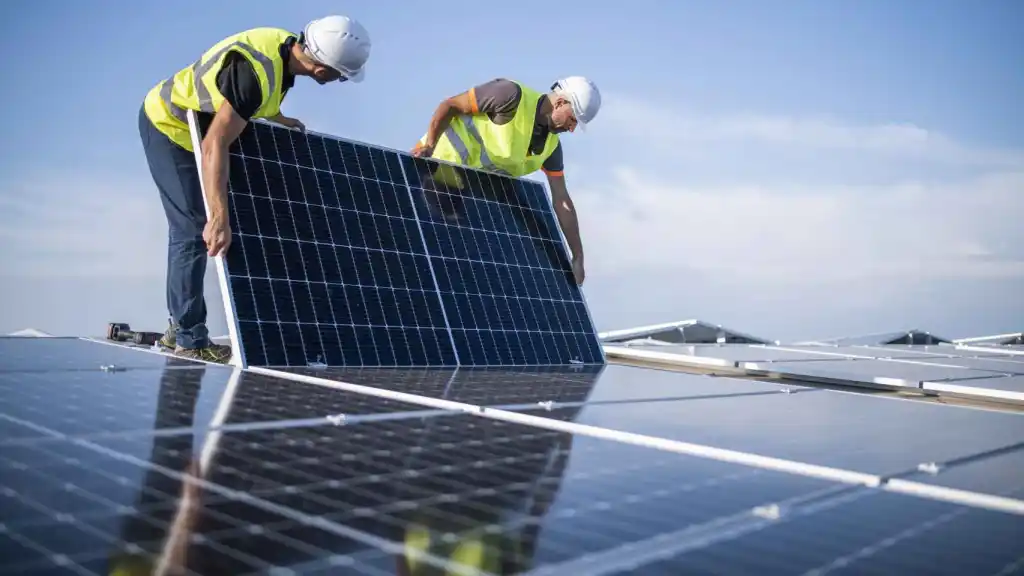
Solar expansion is opening a second transition: managing equipment after it stops generating. An international study reported by Times of India projects 297–402 million tonnes of cumulative photovoltaic waste by 2060. The range reflects different installation, lifespan and retirement scenarios and should not be treated as an inevitable volume.
Modules generally operate for 25 to 30 years. After two decades of rapid growth, the first major retirement wave will emerge after 2040; middle-income countries, particularly China, would generate much of the flow. Waiting for the peak would leave little time to permit plants, build logistics and train workers.
A panel contains large amounts of glass and aluminium, plus industrially valuable silicon, silver, copper and tellurium. It may also contain lead or cadmium requiring safe handling. Basic processes recover frames and glass but lose higher-purity materials; advanced technologies need investment, scale and environmental controls.
The China, Australia and Sweden team modelled 1,708 recycling combinations across 32 regions. It compared local facilities, material prices, international trade and subsidy policies. Results favour region-specific solutions and cross-border cooperation because distance, module composition, energy and industrial capacity alter actual costs.
Under favourable conditions, recoverable value could approach $1 trillion and recycling could avoid billions of tonnes of carbon-dioxide-equivalent emissions. These are modelled potentials, not guaranteed revenues: they depend on collection rates, technical yields, commodity prices, energy costs and buyers for secondary materials.
The globally cheapest option is not necessarily the fairest. Shipping waste to efficient plants can concentrate gains in wealthy economies and leave poorer regions with environmental burdens or no technology. The study proposes declining subsidies: early support while facilities mature, followed by gradual withdrawal once they become commercially viable.
Policy must begin before the waste wave through producer responsibility, traceability, repair and reuse standards, bans on abandonment and design for disassembly. Success should be measured by actual collection, material purity and destination, avoided emissions, worker safety and regional distribution of value, not merely tonnes delivered to a plant.