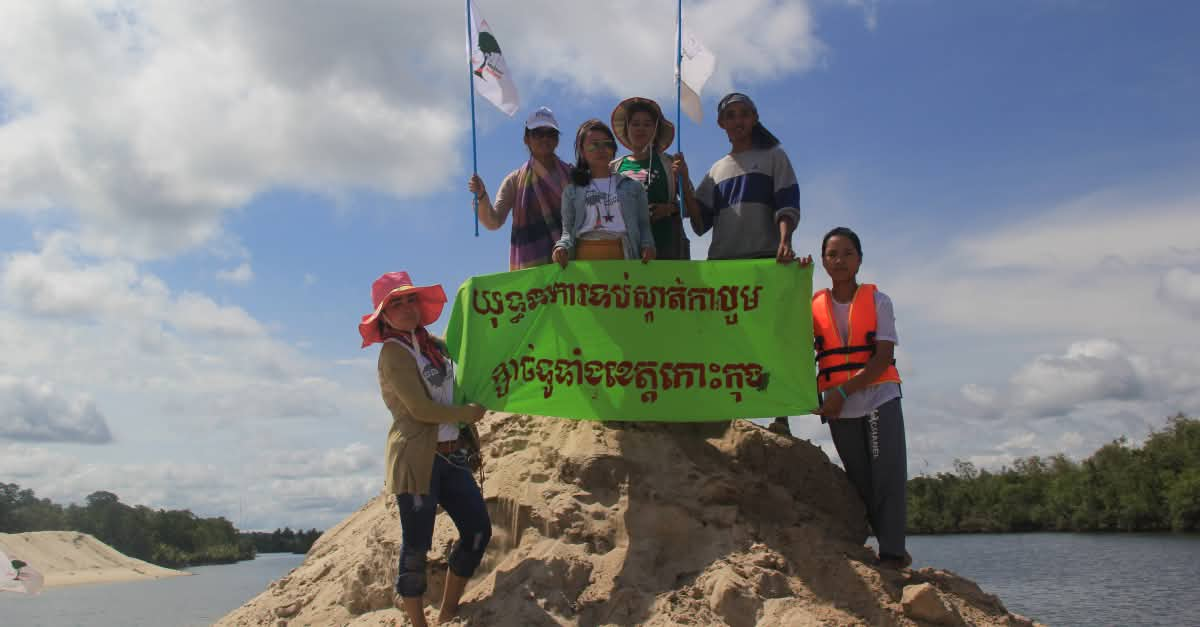
Sand barges returned in June to the Trapeang Rung River, about ten kilometres upstream from Koh Sralao in Cambodia's Koh Kong province. The restart follows the 2017 export ban imposed after ecological and livelihood damage; provincial officials say the new operation is authorised.
Cambodian trade data record 694,000 tonnes of natural sand shipped to Singapore from June through September 2026, worth $3.47 million. The Trapeang Rung share is unknown; Mongabay tracked fourteen voyages to Tuas Port, likely for reclamation, without matching Singapore data.
About 300 Koh Sralao families depend on crabs, fish and molluscs. Barges now block one fisher's former grounds, while another's daily earnings fell from $25 to about $7.50. The accounts prove access loss but do not alone quantify biological decline.
The river crosses four protected Cardamom areas and passes just three kilometres upstream of the Koh Kapik Ramsar boundary. A 2023 survey recorded more than 700 species, including Irrawaddy dolphins, fishing cats and hairy-nosed otters.
Dredging removes feeding and breeding substrate, raises turbidity and may promote salt intrusion. Residents report oil slicks and dead shrimp, warnings needing independent sampling; a review of over sixty studies found habitat, water-quality and food-web effects vary by river.
Consultation was uneven: Koh Sralao residents say they were not informed, while two fishers beside the site recall consultation but doubted refusal mattered. Promised community funds have produced only food supplies so far, and key agencies and the company did not answer.
Singapore gains land while Cambodian communities carry ecological and livelihood risk. Licences, volumes, vessel traceability, impact assessments and independent fishery, salinity, turbidity and spill monitoring must be public, with no-go rules for high-value ecosystems.