
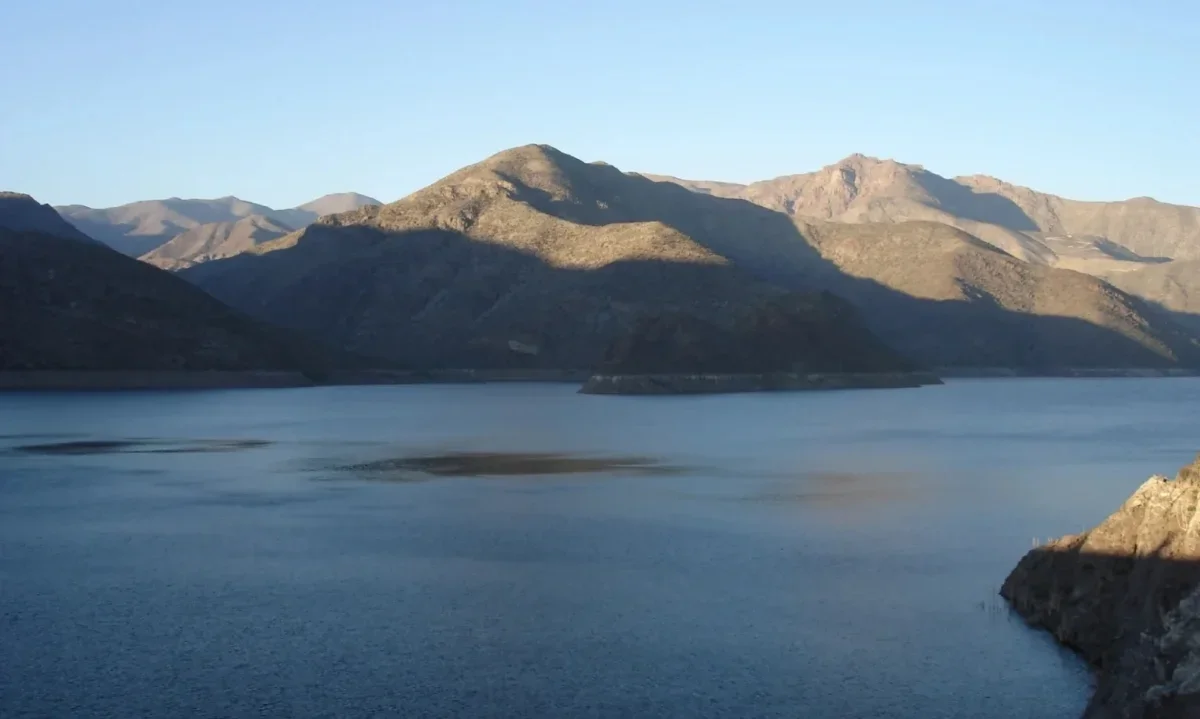
Puclaro reservoir in Chile's Elqui River basin could reach its 200-hectometre-cube operating capacity during the Southern Hemisphere summer. It stored 53.2 hm³, or 26.6%, on 14 August, and the Water Users Board recorded 59.3 hm³, or 29.65%, on the 20th. The increase is substantial, although most of the expected contribution still remains as mountain snow.
The PROMMRA laboratory at the University of La Serena projected flows from the La Laguna and Cochiguaz rivers and Estero Derecho. Its central scenario reaches 200 hm³ around 15 December, but the conditional interval runs from 24 November 2026 to 13 February 2027. The laboratory stresses that this is an analytical projection, not an official forecast or guaranteed date.
The hydrological signal is exceptional: projected volume from the three tributaries between September 2026 and August 2027 would be the third highest in the 38-year series studied. The Water Users Board recorded 6.99 metres of accumulated snow at La Laguna on 20 August. Yet snow depth is not directly available water; density, layers, temperature and losses determine how much reaches streams.
Filling does not depend on climate alone. Puclaro and La Laguna regulate water for consumption, irrigation and other uses, so monthly deliveries, the allocation percentage agreed by irrigators, outflows and safety rules all change storage. A large inflow may coincide with heavy demand, and operations determine what proportion remains in reserve beyond the summer.
A broad recovery would give Elqui Valley farmers, drinking-water systems and rural communities more predictability and allow planning under less immediate pressure. It does not mean unlimited supply: allocation must protect human use, production, water quality and ecological needs. Canal and irrigation efficiency will determine how much social and productive value each cubic metre delivers.
Coquimbo Region remains affected by structural drought and a long-term aridification trend that one wet season cannot erase. A full reservoir improves surface-water security but does not automatically restore aquifers, soils, vegetation or regional reserves evenly. The contrast between low levels early in 2026 and the current recovery shows both the relief and the volatility requiring multi-year management.
Decisive indicators will be snow water equivalent, spring temperature, tributary flows, daily inflows and outflows, usable storage, water quality and delivery rates. Publishing them and updating scenarios will allow expectations to be corrected if melting changes. Puclaro has an extraordinary chance to rebuild reserves; turning it into lasting security will depend on monitoring, transparency and management agreements.