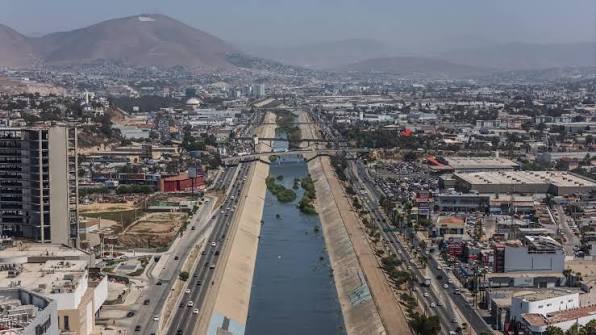

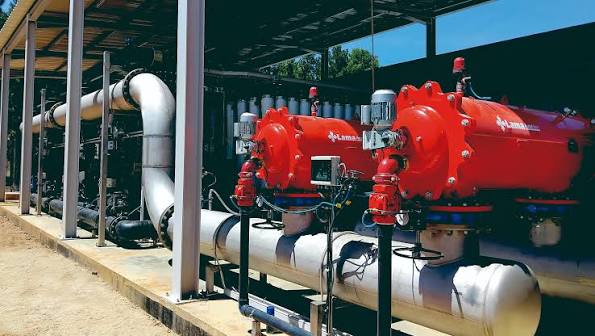
Spanish group Cox has been selected to deliver the first stage of the Playas de Rosarito desalination plant in Baja California, which Mexico's government describes as Latin America's largest facility for human consumption. The announced award covers an investment of $304 million, about €262 million, and a three-year construction period. Cox will handle engineering, specialized equipment and building; actual delivery to the system will also depend on conveyance, storage, testing and connection to local networks.
The first phase will have a nominal capacity of 2,200 litres per second, or about 190 million litres a day. Water is intended for Playas de Rosarito and south-western Tijuana, with roughly one million expected beneficiaries. The official project comprises the desalination and drinking-water plant, a conveyance line and a storage tank. In its announced final configuration, capacity could double to 4,400 litres per second and serve close to two million people.
The plant will use reverse osmosis, pushing seawater under pressure through membranes that remove salts and impurities. Its strategic value is a source complementary to the Colorado River, on which much of Baja California's supply depends and whose availability faces climate pressure and competing demand. Desalination cannot create rainfall or restore aquifers, but it can provide a more predictable urban flow if the infrastructure is operated, maintained and distributed equitably.
Public cost figures need careful reading. Cinco Días attributes $304 million to the construction awarded to Cox, while the federal Proyectos México registry estimated 12.8614 billion pesos in August for the first module and its components. Earlier government statements also separated federal plant funding from state distribution works. The amounts are not necessarily comparable: contracts, networks, taxes and stages may cover different scopes. A consolidated budget and milestone schedule would prevent misleading comparisons.
Water security must be assessed alongside the environmental footprint. Reverse osmosis uses electricity and produces a brine stream saltier than the source water. The location and design of the marine intake can affect organisms, while poorly diluted discharge can alter seabed conditions. Environmental review should disclose energy per cubic metre, electricity source, intake mortality, brine composition, diffuser performance and marine monitoring results before and throughout operations.
What happens beyond the plant matters too. Cutting leaks, reusing treated wastewater, protecting aquifers and managing demand are often cheaper and should proceed in parallel. Tariffs and subsidies must uphold the human right to water without concealing long-term operating costs. Public contracts and indicators for quality, interruptions, energy use and actual availability should be reported regularly. High nominal capacity alone does not ensure continuity in neighbourhoods with weak networks or access for vulnerable households.
The project could reshape the resilience of Baja California's coast if it meets deadlines and combines capacity with verifiable controls. Key milestones are physical progress, connection of state distribution works, final cost per cubic metre, energy performance, environmental compliance and the share of residents receiving continuous service. Diversifying away from the Colorado is a concrete advantage; turning it into lasting water security requires transparent governance, network efficiency and marine protection.