
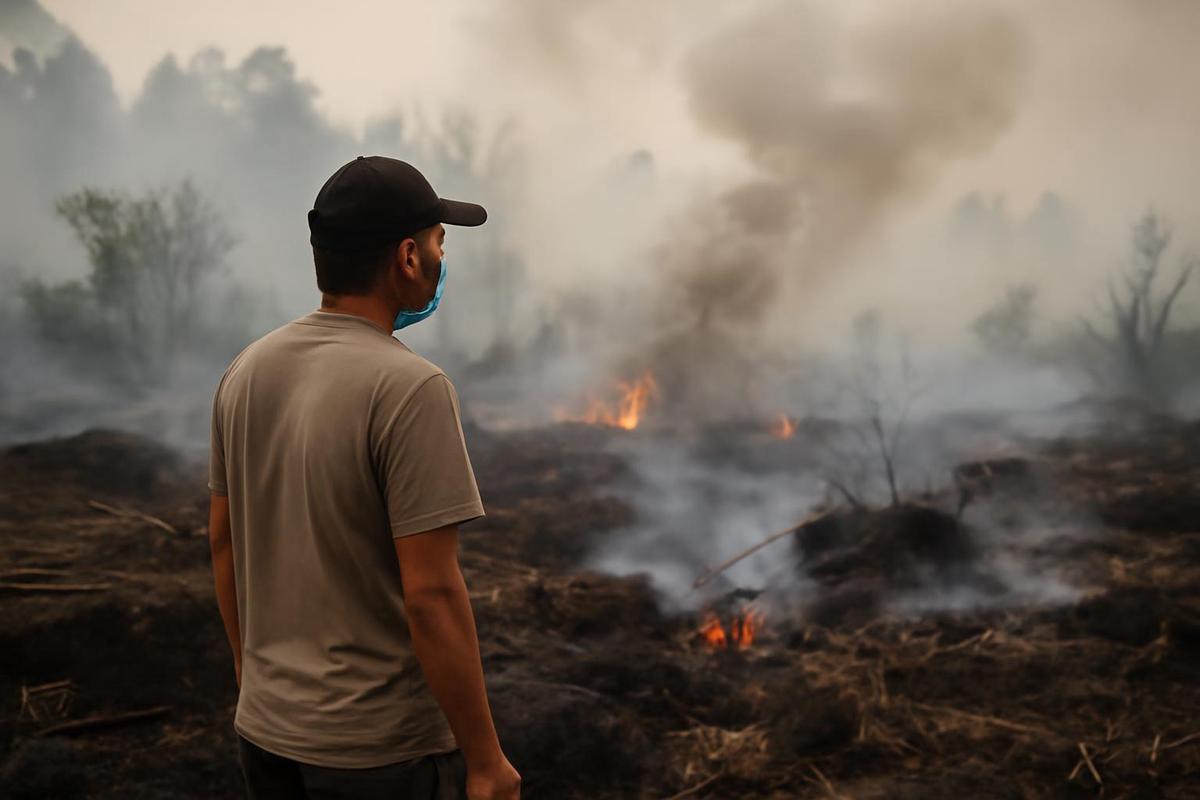
Fires burning for months across Borneo, Sumatra and other parts of Indonesia have turned smoke into a national and cross-border health emergency. At least 895,657 hectares have burned since January, according to Nusantara Atlas, 34% more than the comparable 2019 figure. The hardest-hit areas include Sumatra, Kalimantan and Papua.
Many fires begin as small burns, sometimes lit illegally to clear land for oil-palm plantations. Heat, low rainfall and wind let them escape control. On drained peatlands, fire moves below the surface, resurfaces elsewhere and can burn for weeks, producing more smoke and making suppression exceptionally difficult.
Health impacts rose rapidly. Wildfire-related respiratory cases in affected provinces increased from 50,891 on September 1 to 113,336 by September 9. Schools closed and emergency rooms took more patients, while families reported stinging eyes, dizziness and smoke entering homes through the night.
Air quality reached extreme levels. In Sampit, Central Kalimantan, it was rated hazardous every day in September and the index reached 1,142 on September 10, according to IQAir; anything above 300 is hazardous. Monsoon winds carried smoke into Malaysia, Singapore, Brunei and the Philippines.
Indonesian fire emissions reached 19.7 million metric tons in the first week of September, more than one third of the global total for that period, according to Copernicus. That figure measures fire emissions, not all pollution inhaled in each city. Exposure varies with particles, distance, wind, duration and local conditions.
The Environment Ministry is investigating 19 companies allegedly linked to fires, while police arrested 113 people suspected of setting them. The government deployed planes, helicopters, drones and the military. Malaysia and Japan sent assistance, and community brigades monitor land, discourage burning and distribute oxygen.
El Niño intensifies and prolongs drought but does not ignite fires by itself. It enables combustion across degraded landscapes and dried peat where human ignition remains necessary. The toll is still open and high risk may continue until rains begin, possibly in November. Lasting action requires suppression, health protection, enforcement and peatland rewetting.