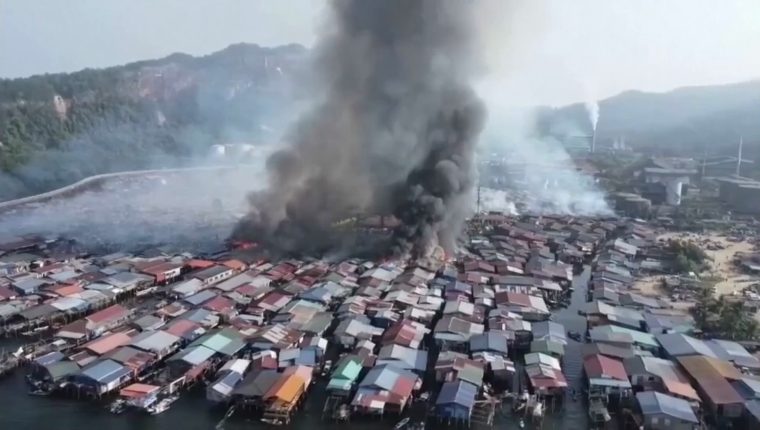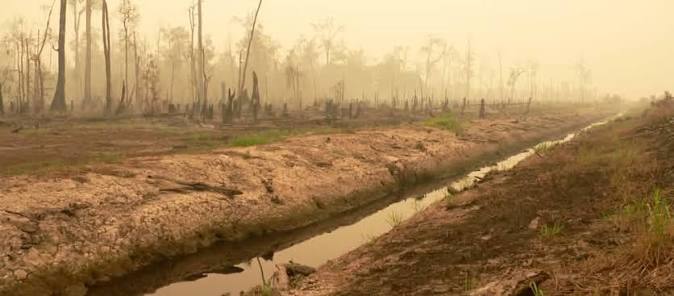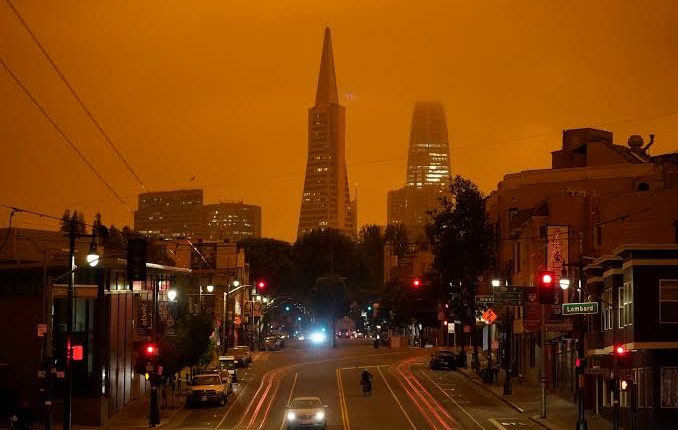

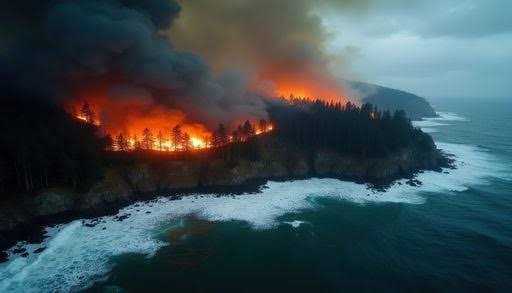
Wildfires across Boundary Waters and parts of Canada burned about 64,000 acres in the summer of 2026, forced Minnesota to close the wilderness for the second time in five years and carried smoke from the Midwest to New England. New research argues that global warming amplified the episode's most intense phase and the pollution inhaled by millions.
The University of California, Merced team focused on July 13-16, the four days of fastest fire growth. By comparing observed conditions with a simulation that removed human-caused warming, it estimated that nearly three times more land burned than in the counterfactual world. The result attributes added magnitude; it does not claim climate change was the sole cause of every ignition.
A larger burn produced more PM2.5, particles that penetrate deep into lungs and can enter the bloodstream. Using health-impact methods similar to federal practice, the authors estimated that additional exposure could contribute to nearly 500 more premature deaths in the United States and Canada than without the climate influence. This is an epidemiological estimate, not a roster of certified deaths.
Counterfactual modeling recreates the same event under alternative physical conditions and measures the difference. It does not say climate change struck a match; it assesses how warming altered heat, dryness, fire behavior and smoke. Its value is to examine a comparison that reality cannot supply, provided assumptions and sensitivity are transparent.
The study has not yet been peer reviewed and the authors plan to submit it to journals. Models also lose precision at local scales: many current systems operate over cells of roughly 4,900 square miles, too coarse to describe every lake, forest and community. Those limits do not erase the signal but make the figures provisional rather than county-level forecasts.
The season combined drought, a severe heat wave and forest fuels ready to burn. Climate attribution must sit alongside questions of ignition, land management, fuel loads, early detection and response capacity. Avoiding a false choice matters: cutting global emissions and improving local fire management are complementary strategies, not competing explanations.
The practical implications extend beyond acreage. Minnesota and Canadian provinces need coordinated smoke alerts, clean-air shelters, filtration in schools and health facilities, worker protection and epidemiological surveillance, alongside prevention and adaptive forest management. The study supports that planning, while its strongest conclusion remains probabilistic: warming can turn extreme episodes into much larger fires and health burdens.