
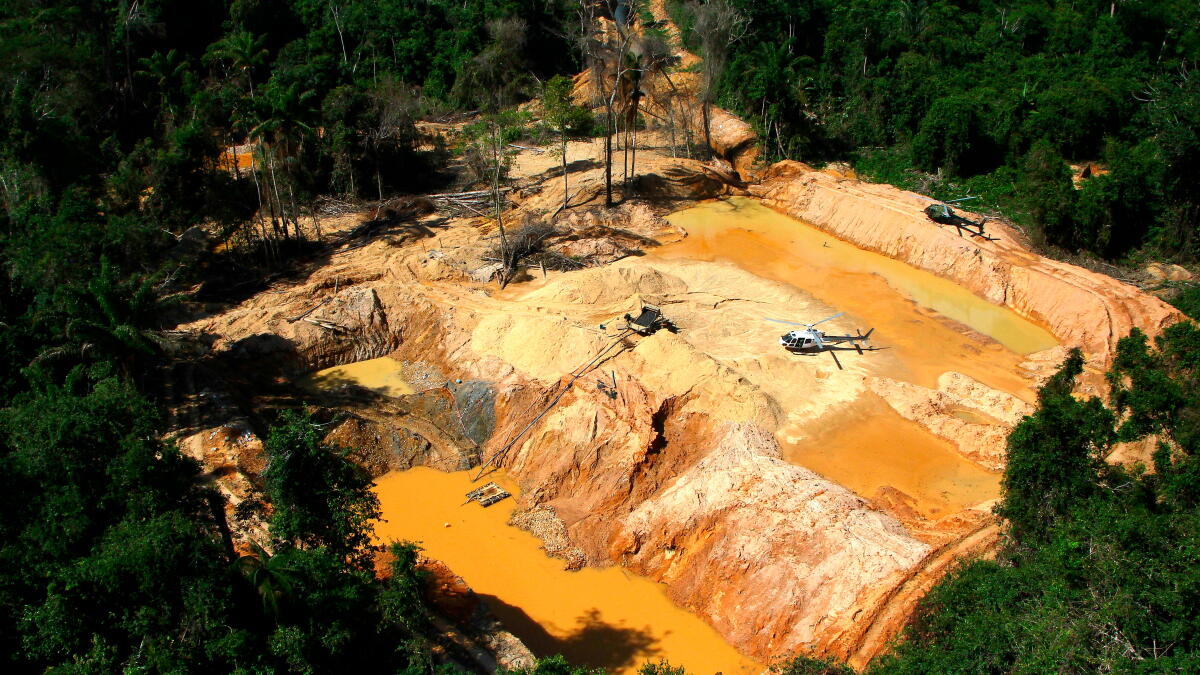
Illegal gold mining has cleared 7,901 hectares, nearly 19,500 acres, along the Pure-Purue watersheds on the Brazil-Colombia border, according to analysis by MAAP and the Field Museum. Satellite images show rapid expansion around remote rivers, protected land and territories of isolated peoples.
Brazil holds 92% of detected clearing. Mining first appears in the series in 2001 and affected about 980 hectares by 2021, but 88% of all loss happened from 2022 onward. In 2022-23 alone, 4,130 hectares were opened alongside dredges, camps and supply corridors.
Colombia accounts for 8%, but its expansion is recent. Patches below five hectares appeared in June 2024, reached 38 hectares by year-end, doubled early in 2025 and gained another 177 hectares from January to May 2026. All Colombian clearing lies inside Rio Pure National Park, where mining is prohibited.
Flights and observations found more than 50 dredges in the park in 2024-25. The area protects Yurí and Passé peoples in voluntary isolation. Miners create risks of violence, disease, mercury exposure, hunting, noise and disruption to movement and food systems.
Brazil and Colombia conducted seven operations since December 2023, four in Brazil and three joint. Dredges fell immediately in some places but later returned. Japura, Maraa and Jutai supply fuel, engines and transport, while gold can move toward Manaus; destroying equipment alone does not close finance and logistics.
The map is evidence of clearing and mining presence, not a judicial finding naming individual offenders. It also misses impacts hard to see from space: dissolved mercury, sediment, contaminated fish, violence and health. Mercury is banned in Colombian mining, yet illegal use persists across a connected river system.
A durable response needs permanent binational monitoring, rapid intelligence, controls on fuel and machinery, financial tracing and protection of isolated peoples without forced contact. Success should mean months without reactivation, safer territory and recovering rivers, not simply a count of short raids.