
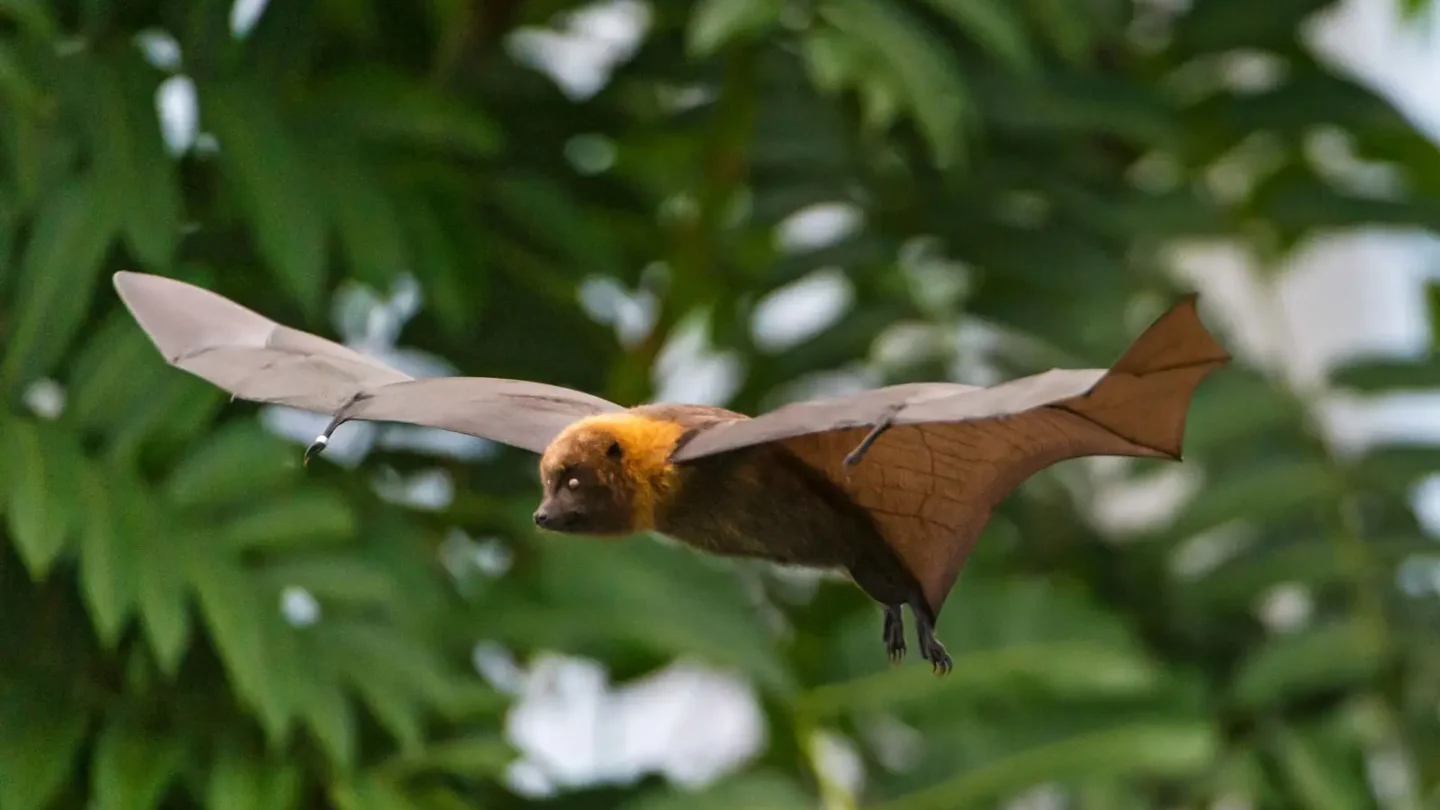
The Malagasy flying fox, Pteropus rufus, appears to be getting smaller. Field Museum researchers compared 121 specimens from nine collections spanning more than 150 years and found directional declines in several adult skull measurements. Pre-1980 skulls averaged about 3.6 millimetres, or 6%, longer.
The shift coincides with commercial hunting expansion from the 1980s into the mid-1990s. Madagascar permits hunting from May to September; nets support local consumption while shotguns can supply markets and restaurants. Larger animals yield more meat and may be easier targets.
Lead author Emily Cornelius Ruhs stresses that correlation is not definitive causation. Climate, habitat loss, nutrition and other pressures may contribute. Dental changes were less uniform, although multivariate results still showed temporal divergence independent of age structure.
The signal matters because reproduction is slow. Sexual maturity comes after two years and females produce one pup following a gestation longer than six months. Selectively removing medium and large adults can deplete breeders faster than replacement.
Pteropus rufus also pollinates plants and disperses seeds between forest fragments. Smaller bats may handle smaller fruit and seeds or move them differently. That ecological effect remains a testable hypothesis, not a measured outcome.
Conservation must recognise bushmeat as food and income. Blanket restrictions without alternatives can drive hunting underground; population estimates, harvest records, refuge protection, reproductive limits and community agreements are more durable tools.
Historical collections should now be combined with genetics, age, diet and live-colony tracking to separate hunting selection from environmental plasticity. Until then, observed shrinkage and low fecundity justify protecting breeding adults and monitoring recovery.