
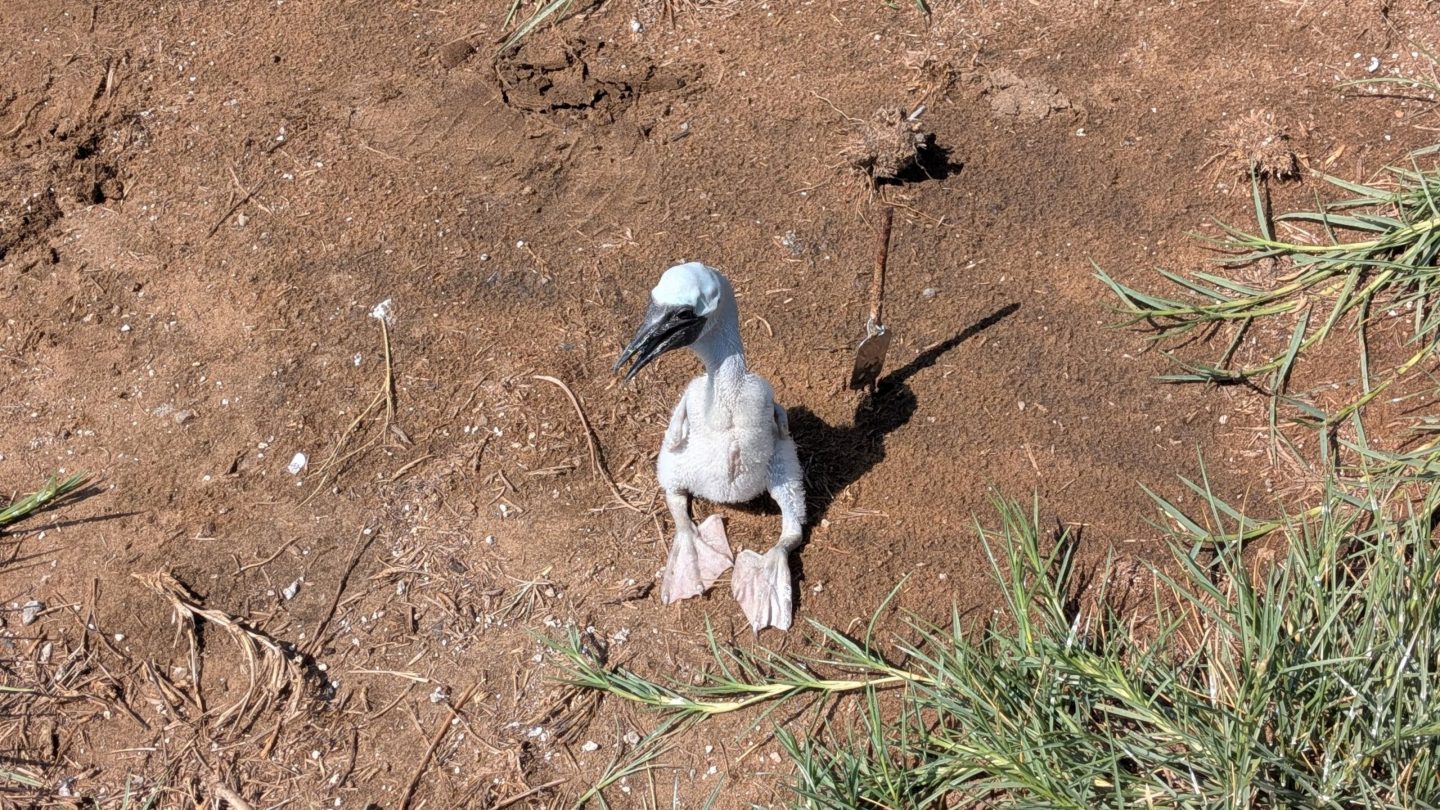
The Cocos booby colony on Isla Pajarera off Jalisco is enduring a critical breeding season. Researchers observed a 2026 maximum of about 220 nests, down from 9,524 in 1975; the long decline is clear, although one visit is not a perfect annual census.
Pacific warming intensified by El Niño shifts or reduces flying fish. Adults travel farther and sometimes both parents forage together, leaving eggs and chicks exposed to sun, predators and storms; neither adult returned to one monitored nest for two days.
Many nests held one egg rather than the two possible when food is abundant. Scientists also found weak chicks, skeletons and ten dead juvenile and adult birds on Peña Blanca, signs of stress that still require dietary, health and toxicology tests for attribution.
Heavy September rain may have washed away eggs and nests, a local mechanism distinct from ocean-scale food shortage. A 2012 die-off of roughly 1,900 birds was suspected to involve a harmful algal bloom, but its cause was never confirmed.
Two introduced plants have covered nesting ground. Open habitat on Isla Pajarera shrank from 14.4 hectares in 1975 to 1.2 in 2015; careful invasive control could restore space without damaging active nests or accelerating erosion.
Tourism is another manageable pressure. Visitors entering a colony on Isla Cocinas drove adults away and exposed eggs and chicks, making seasonal closures, guides, distance rules and enforcement practical tools even though they cannot cool the sea.
Recovery must be measured at several scales: invasive plants and disturbance locally, and sea temperature, fish, toxins and breeding success regionally. More nesting pairs, surviving chicks and sustained food availability—not one count—will show whether the colony rebounds.