
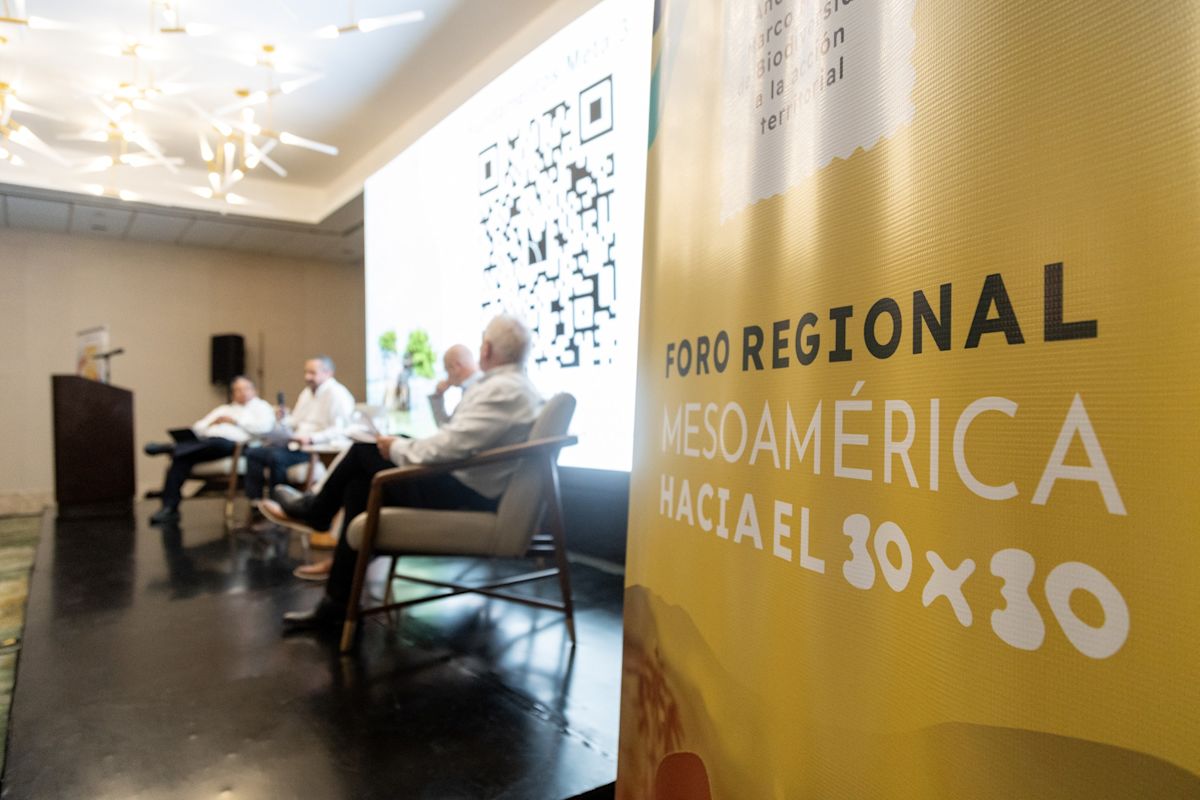
Mesoamerica has begun building a regional roadmap towards Target 3 of the Global Biodiversity Framework, which calls for conserving at least 30 per cent of land, inland waters and marine areas by 2030. The Mesoamerica towards 30x30 Regional Forum in Merida, Yucatan, brought together governments, international organisations, communities and business. It opened a coordination process; it did not itself create protected areas or binding duties.
The region starts with substantial but insufficient coverage. Inter-American Development Bank figures cited at the forum place terrestrial protection at 24.5 per cent and marine protection at 25.3 per cent. Closing the gap requires identifying ecological omissions and connecting ecosystems, but also budgets, personnel, enforcement and continuity. Declaring hectares without management capacity can leave protection nominal.
IUCN, Mexico’s Environment Ministry and the National Commission of Natural Protected Areas organised the meeting with support from GEF, KfW and Canada. Its agenda covered equitable governance, finance, sustainable production, connectivity, evidence, legal certainty and Indigenous participation. These elements turn 30x30 into a debate over who decides, pays and benefits, not merely a map.
The roadmap is intended to inform regional positions at CBD COP17 and the IUCN World Congress of Protected and Conserved Areas in Panama in 2027. Panama’s Deputy Environment Minister Oscar Vallarino warned that meeting a quota does not justify creating areas without resources. International ambition must therefore be translated into fiscal, legal and institutional design for each territory.
Indigenous Peoples and local communities are central. IUCN Indigenous councillor Onel Masardule noted that conservation already occurs in territories not always counted. Recognition requires respect for self-government, autonomy, territorial and collective rights, while preventing community knowledge from being subordinated to a single technical hierarchy.
The forum offered concrete signals. Monteverde Cloud Forest Biological Reserve joined the IUCN Green List, becoming Costa Rica’s first protected area to meet a standard assessing governance, management and outcomes. Yucatan proposed adding the Puuc Biocultural Reserve to the Great Maya Forest Biocultural Corridor. A proposal must still be distinguished from formal, operational integration.
Progress should be measured beyond declared area through species and habitat condition, connectivity, management effectiveness, stable budgets, participation, tenure security and community benefits. Environmental indicators must also enter public budgets, while scientific, economic and legal languages are aligned. The test of 30x30 is not a percentage alone, but durable and legitimate biodiversity conservation.