
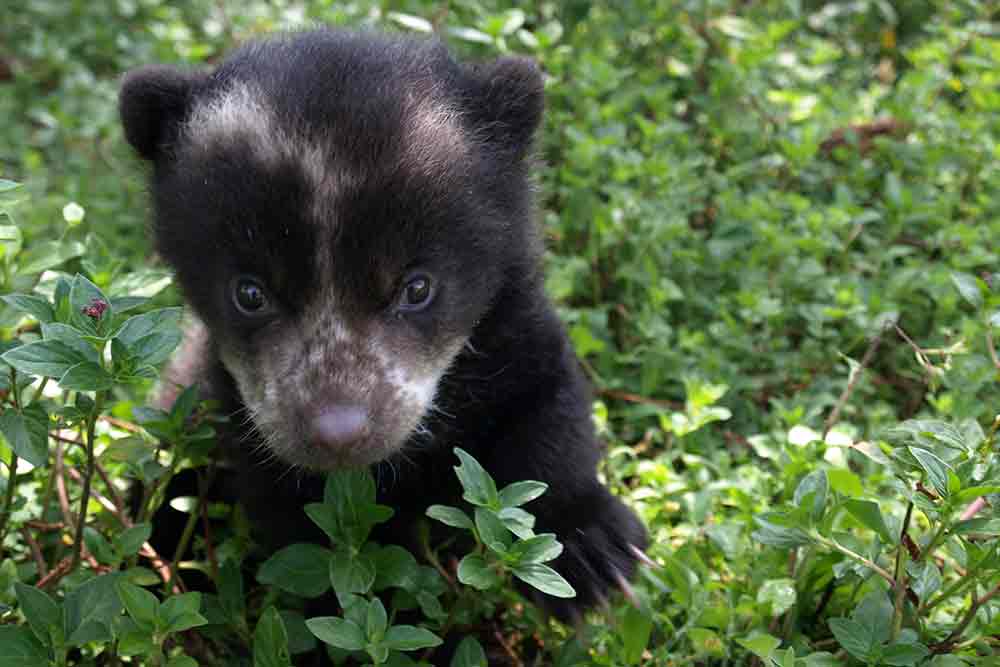
The birth and video recording of two Andean bear cubs in Peru has brought renewed attention to the need to protect cloud forests, biological corridors and mountain landscapes that sustain one of South America's most emblematic species.
The Andean bear, also known as the spectacled bear, is the only bear native to South America. Its presence is especially important because it acts as a key species for the health of Andean ecosystems: by eating fruit and moving across wide areas, it helps disperse seeds and support the natural regeneration of forests.
The recording of the cubs with their mother offers a rare view of a stage that is difficult to document in the wild. For conservation teams, this kind of evidence helps improve understanding of reproductive behavior, territorial use, maternal care and the habitat conditions that allow healthy populations to persist.
The good news does not remove the threats. Deforestation, agricultural expansion, habitat fragmentation and climate-related changes in food availability continue to pressure the species across different parts of the Andes. As habitats shrink or become disconnected, the risk of conflict between wildlife and human activities also increases.
For that reason, each reproduction record should be read as a management opportunity. Celebrating the birth is not enough: it is necessary to sustain monitoring, restore habitat, strengthen conservation areas, improve ecological connectivity and work with local communities so coexistence with wildlife can be possible over time.
The appearance of these two cubs shows that there are still environments capable of sustaining complete life cycles. It also reminds us that biodiversity conservation is not only about protecting one species, but about caring for the relationships that keep forests working: water, soil, vegetation, wildlife, climate and responsible human presence.