
Seamounts surrounding Chile's Juan Fernández Archipelago still bear the marks of bottom trawling more than 25 years after the activity ended in the area. The new research, published in Deep-Sea Research, provides Chile's first scientific assessment of how long this damage can persist in deep-sea ecosystems.
The team surveyed four seamounts during a 2024 expedition aboard the Schmidt Ocean Institute's R/V Falkor. Using the remotely operated vehicle SuBastian, researchers examined environments deeper than 700 meters and compared three seamounts with a history of trawling against Solito, an ecologically similar seamount where no evidence of that fishing practice was recorded.
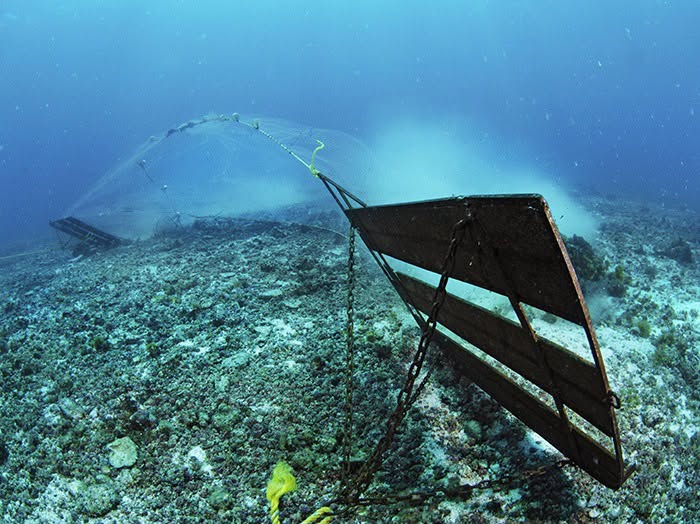
The contrast was pronounced. Solito retained deep-sea coral gardens, abundant sponges and a diverse invertebrate community, while the trawled seamounts showed less live coral cover, lower biodiversity, simplified habitat structure and linear disturbance marks across the seabed.
Recovery is exceptionally slow because many deep-sea corals grow over centuries and some can live for thousands of years. These colonies act as ecosystem engineers, creating shelter, feeding grounds and nursery areas that heavy gear can destroy in hours but that the ocean cannot rebuild within a human generation.
The degradation does not affect only rarely seen species. Living corals support invertebrate biomass and benefit commercially valuable crustaceans, including the Chilean golden crab and the Juan Fernández spiny lobster. Protecting seabed relief and complexity therefore also helps sustain the ecological foundation of artisanal fisheries.
Chile banned bottom trawling on 117 seamounts in 2012, but the practice continues elsewhere in its waters, targeting hake and crustaceans. The study shows that closing an area after severe damage does not ensure rapid repair: FAO guidelines regard impacts lasting five to 20 years as significant and adverse, while those at Juan Fernández have persisted for more than 25 years.
The next challenge is to turn this evidence into prevention, enforcement and long-term monitoring. Baselines are needed before activities are authorized on vulnerable seabeds, protected areas require effective control, and repeated surveys must determine whether recovery begins; where natural restoration may take centuries, preventing the first disturbance is far more effective than trying to repair it.