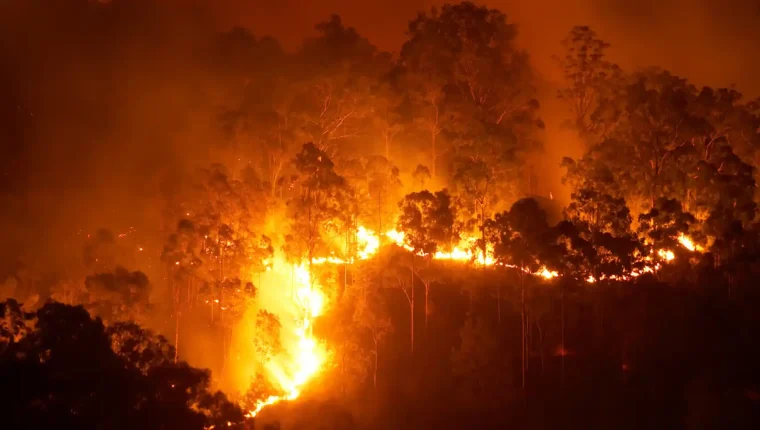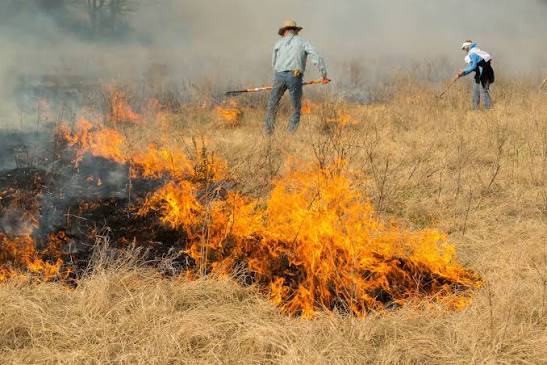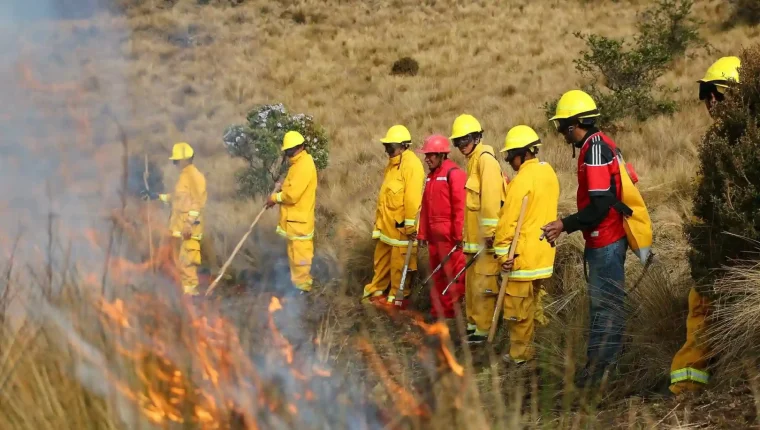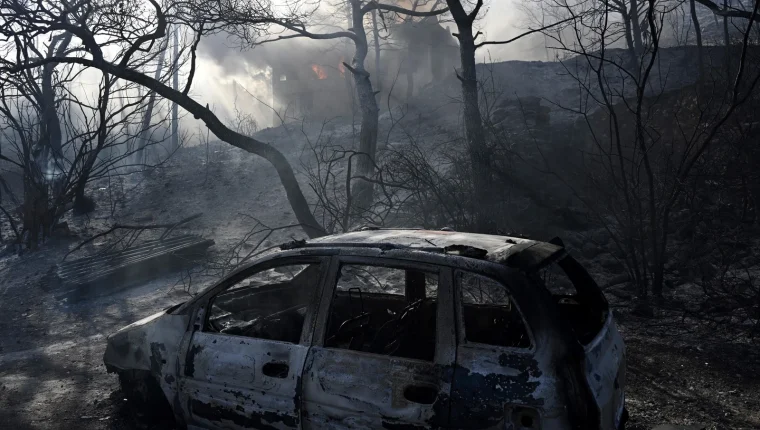

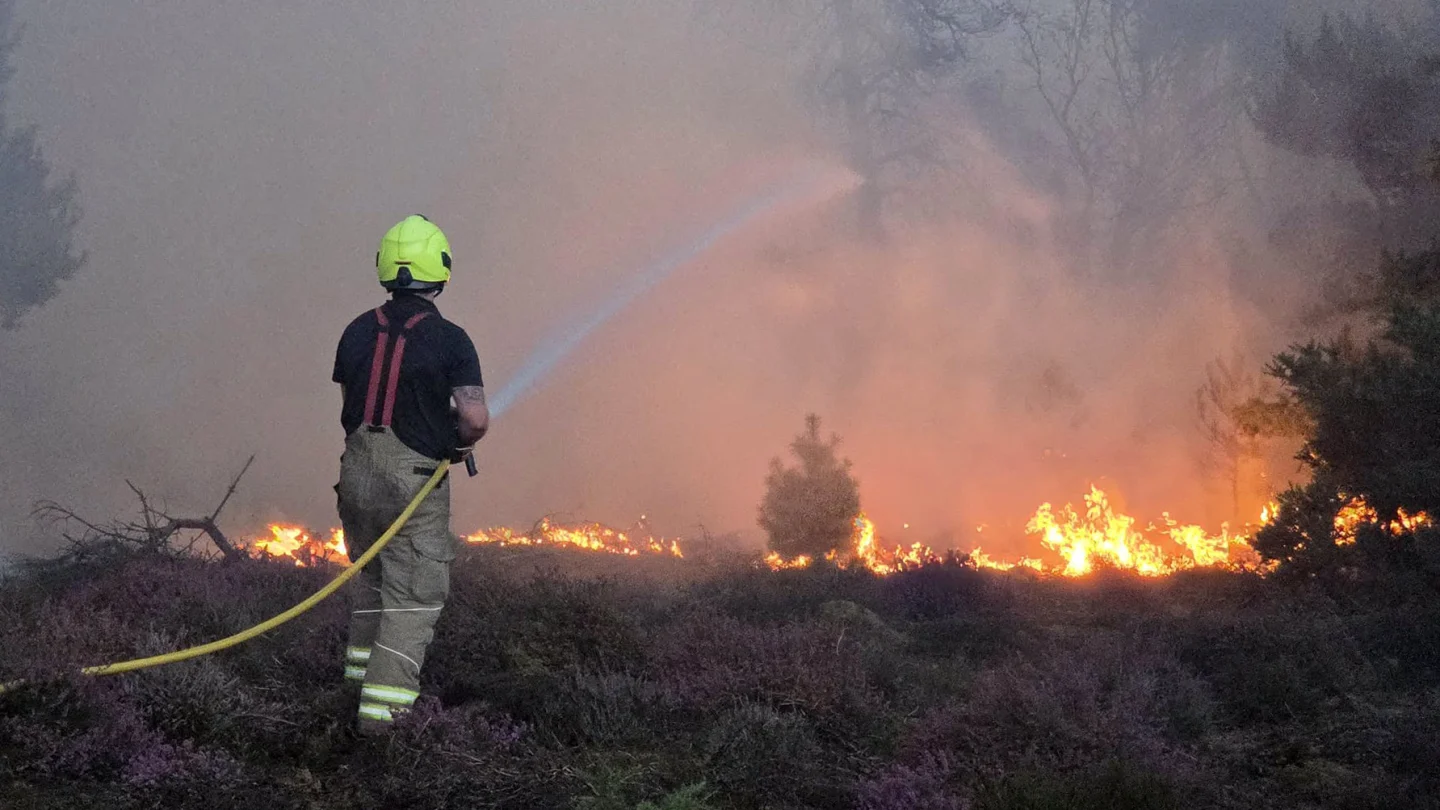
A wildfire burned about 150 hectares of vegetation and woodland across Dunwich Heath and Minsmere nature reserve on England's Suffolk coast. More than 100 firefighters worked from Wednesday evening, and by Friday the situation was beginning to stabilize, although it remained a major, changeable incident.
The response included a helicopter capable of dropping 1,000 liters of seawater per pass and six appliances sent from London. About 50 people were evacuated from homes and a holiday park, while a community hall in Westleton became a temporary rest center.
The burned area, equivalent to roughly 210 football pitches, crosses two protected sites. Dunwich preserves one of Britain's rare coastal lowland-heath landscapes, while Minsmere supports uncommon birds including nightjars, nightingales and Dartford warblers.
Losses do not end when the final flame is out. Conservation managers warned that vegetation may take decades to regain its previous structure and surviving birds face a shortage of feeding and breeding habitat. The National Trust launched an emergency appeal to restore the heath and improve resilience.
The fire was a few miles from Sizewell B nuclear station and the Sizewell C construction project. Emergency officials reported no immediate concern about spread toward the facilities, and EDF said Sizewell B was operating normally, under monitoring and not on alert.
The cause had not been established. The context was clear: Suffolk had received only 2% of its average July rainfall; half of England was officially in drought, and provisional data pointed to the driest July in England and Wales in almost two centuries of records. Extremely dry ground accelerated fire behavior.
Next steps combine investigation, hotspot monitoring and long-term recovery. Restoration must track soil, vegetation, birds and invertebrates for years, while prevention requires controls on disposable barbecues, cigarette butts and other human ignition sources, plus fire services prepared for a hotter and drier climate.