
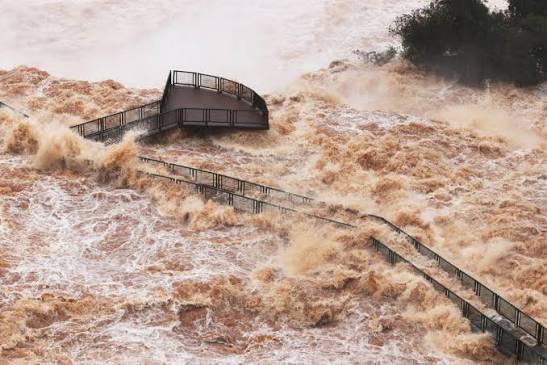
Access to the Devil's Throat circuit in Iguazú National Park will be suspended from August 3, 2026, for at least 40 days. The National Parks Administration and Iguazú Argentina S.A. ordered the measure so metal walkway components can be removed preventively in response to forecasts of high flows in the basin.
The closure is limited to the route leading to the overlook above the falls' most powerful section. The park will remain open and, subject to daily conditions, continue operating the Upper and Lower circuits, Green Trail, Macuco Trail, Yvyrá Retá Visitor Center and other services in the Falls Area.
The operation will progressively dismantle walkway floors and railings and move them to a safe location at Devil's Throat station. The 40 days are the estimated time for preventive work; reinstallation and reopening will then depend on river behavior allowing safe operations for visitors, workers and infrastructure.
The decision draws on climate and hydrological forecasts anticipating exceptional rain and floods associated with the development of El Niño in the coming months. This is a risk scenario, not certainty about each day's flow. The basin reacts quickly to intense rain, particularly in southern Brazil, making continuous monitoring essential.
The October 2023 event explains the strategy. A flow of about 24,000 cubic meters per second destroyed 79 sections, roughly a third of the walkways, and kept the circuit closed for nine months. Removing components before a peak is intended to reduce damage, rebuilding time and emergency-team exposure.
Accurate information is part of prevention for tourism management. The Ecological Jungle Train will run on available sections but will not complete the trip to the Devil's Throat overlook. Operators and visitors should check which circuits are open and avoid treating a sector-specific restriction as a full closure of the Falls.
Reopening will not depend only on the calendar. Authorities must assess flow, forecasts, structural condition and the safety of reinstallation. The operation shows how tourism infrastructure inside a dynamic river system can adapt in advance, maintaining activity where it is safe and temporarily withdrawing from the most exposed area.