The Galápagos Life Fund reported that it allocated $12.4 million to marine conservation and sustainable development in Ecuador's archipelago during 2025. The figure is not a new general pledge announced in August 2026, but an account of resources assigned through three specific channels: stronger public institutions, community projects and transitional assistance for artisanal fishing.
The largest block, $6 million, financed the first year of an interagency plan involving the Galápagos National Park Directorate, the Ecuadorian Navy and the Undersecretariat of Fisheries Resources. It seeks to improve control and surveillance across more than 203,000 square kilometers encompassing the Galápagos Marine Reserve and the Hermandad Marine Reserve, where operational capacity is critical against illegal fishing and other pressures.
Another $3.8 million was distributed through 18 grants to local organizations on the four inhabited islands. The projects combine environmental education, conservation and sustainable fishing. This component is intended to prevent funding from remaining concentrated in national agencies and to involve communities in managing ecosystems on which their economy, food security and tourism depend.
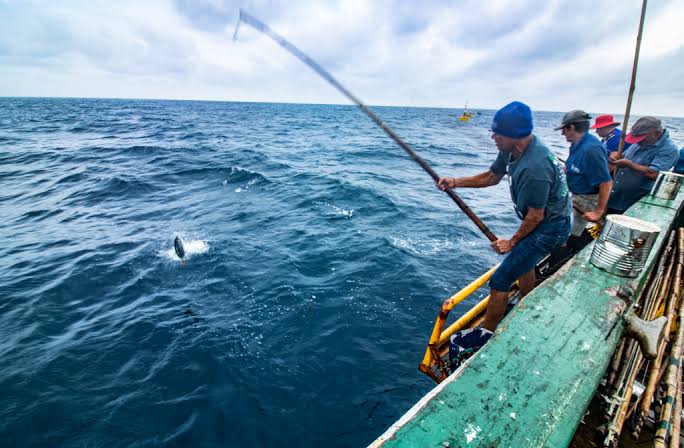
The third allocation, $2.6 million, supports the Hermandad Marine Reserve Transitional Assistance Plan. It targets mainland artisanal fishers who must adapt to new rules and protected areas through training, productive technologies and satellite-monitoring devices. The assistance aims to reconcile enforcement, traceability, safety at sea and the continuity of livelihoods.
The fund emerged from Ecuador's 2023 debt-for-nature conversion. The transaction replaced commercial debt with a lower-cost loan and established conservation funding flows for 18.5 years while capitalizing a permanent endowment. The design can mobilize long-term resources, but it also requires transparency on awards, outcomes, governance and compliance with linked environmental commitments.
Effective protection cannot be measured only by dollars allocated. For the government component, the relevant indicators will include actual patrol coverage, detection of illegal activity and coordination among authorities. Community work must be assessed through delivery of the 18 grants and verifiable benefits. In fisheries, the challenge is ensuring that monitoring and technology improve management without imposing disproportionate costs on artisanal workers.
The 2025 account shows that the mechanism has moved from financial architecture to identifiable spending. Its next test is to publish comparable progress and demonstrate that the $12.4 million produces sustained improvements in the reserves and communities. The money expands capacity but does not by itself guarantee less illegal fishing, ecological recovery or social adaptation; those outcomes require continuous evaluation and public data.