
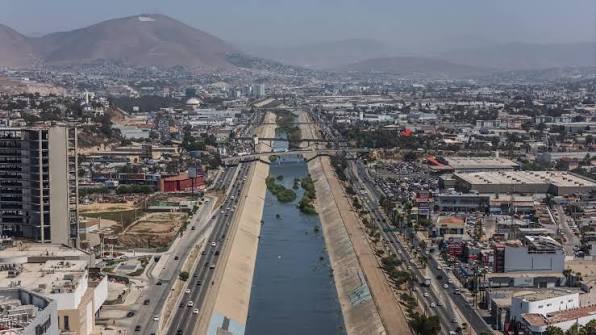
Mexico and the United States are assembling more than 9.45 billion pesos to restore infrastructure that prevents Tijuana sewage from reaching the river, crossing the border and entering the Pacific. The figure was reported by Mónica Vega, head of the Tijuana public-services commission. It combines funds from both governments, NADBank, Baja California through CESPT and a green bond; it is neither one disbursement nor proof that cleanup is complete.
The backlog grew as Tijuana and the coastal area expanded faster than sewage collection, pumping and treatment networks. A failure at any link releases untreated water and transfers effects to communities, beaches and ecosystems on both sides of the border. Cleanup therefore needs redundancy, reliable power, maintenance and coordinated operations as well as new facilities.
Minute 328 of the International Boundary and Water Commission established binational actions and includes 16 projects on the Mexican side. They cover rehabilitation and expansion of PB1 pumping station, the Oriente and International collectors, a parallel gravity line, the old pressure outfall, Los Laureles and the San Antonio de los Buenos treatment plant. Combined performance matters more than opening each component separately.
San Antonio de los Buenos was virtually out of service at the start of the current state administration and, after reconstruction, now treats 800 litres a second. Work is also advancing on the Insurgentes and Carranza collectors, Poniente and Oriente interceptors, treated-water conveyance, Tijuana River gates and piping of the PB1 canal. Mexico aims to complete its committed projects in 2027.
The United States committed to expand the South Bay International Wastewater Treatment Plant and double capacity from 1,100 to 2,200 litres a second. Balance is critical: if flows outgrow pumping, conveyance or treatment on either side, excess sewage emerges elsewhere. Load tests, effluent quality and performance during storms will be more revealing than nominal capacity.
A further stage includes the Cañón del Sainz-Arturo Herrera line, Los Laureles-El Matadero pumping station and backup energy for PB1. After Minute 328, the memorandum linked to Minute 333 seeks continuity and sustainability, assessment of a future San Antonio expansion and a strategy for the whole coastal zone. Its value depends on turning capital commitments into funded long-term operation and maintenance.
Decisive indicators will be collected and treated flow, hours offline, cross-border spills, microbiological and chemical quality, beach closures, odours and community exposure. Real-time publication and accountability audits would show whether projects reduce pollution rather than move discharges. The programme has unprecedented scale, but recovery will be proven by years of continuous performance.