
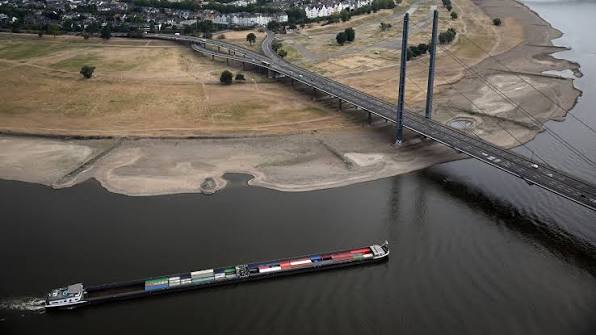
The Rhine has again exposed the climate vulnerability of one of Europe's main industrial arteries. Germany's inland navigation authority, WSV, said navigable depth at the critical Kaub passage near Koblenz fell to about 25 centimeters on Friday, matching the low recorded in 2018.
The reading does not mean the river is only 25 centimeters deep: the actual water column is roughly one meter deeper than the reference navigable depth. The indicator nevertheless governs how much vessels can carry safely. WSV forecast that a new low of 24 centimeters could be reached on Monday.
Shipping had not stopped, but operations had become inefficient. After a heatwave and prolonged lack of rain, many barges were moving at around 20% of capacity and could carry about 250 metric tons through Kaub. Cargo had to be divided among more vessels, with low-water surcharges passed to cargo owners.
The strain appeared immediately in prices. Tanker-barge transport from Rotterdam to Karlsruhe cost €150 to €155 per ton, up from €45 at the end of June. Industry sought road and rail alternatives, but those routes are also costly and cannot easily replace the Rhine's volume.
The corridor carries grain, minerals, ores, coal, fuels and other inputs for chemical, steel and energy plants. Low water is therefore more than a transport problem: it can disrupt inventories, deliveries and production schedules. In 2022, another drought caused bottlenecks and manufacturing difficulties in Germany.
The crisis combines an immediate hazard with a structural one. Rain may temporarily improve draft, but more intense heatwaves and droughts require changes to fleets, storage and supply chains. Low-draft vessels, raw-material stockpiles and alternative routes can reduce exposure, although they add costs and shift freight onto congested land networks.
Next steps depend on Kaub readings and weather forecasts, but the signal to companies and authorities is already clear: river-transport adaptation must move from emergency response to permanent planning. Industrial competitiveness will require earlier hydrological intelligence, multimodal infrastructure and emissions cuts that address the warming behind the growing risk.