

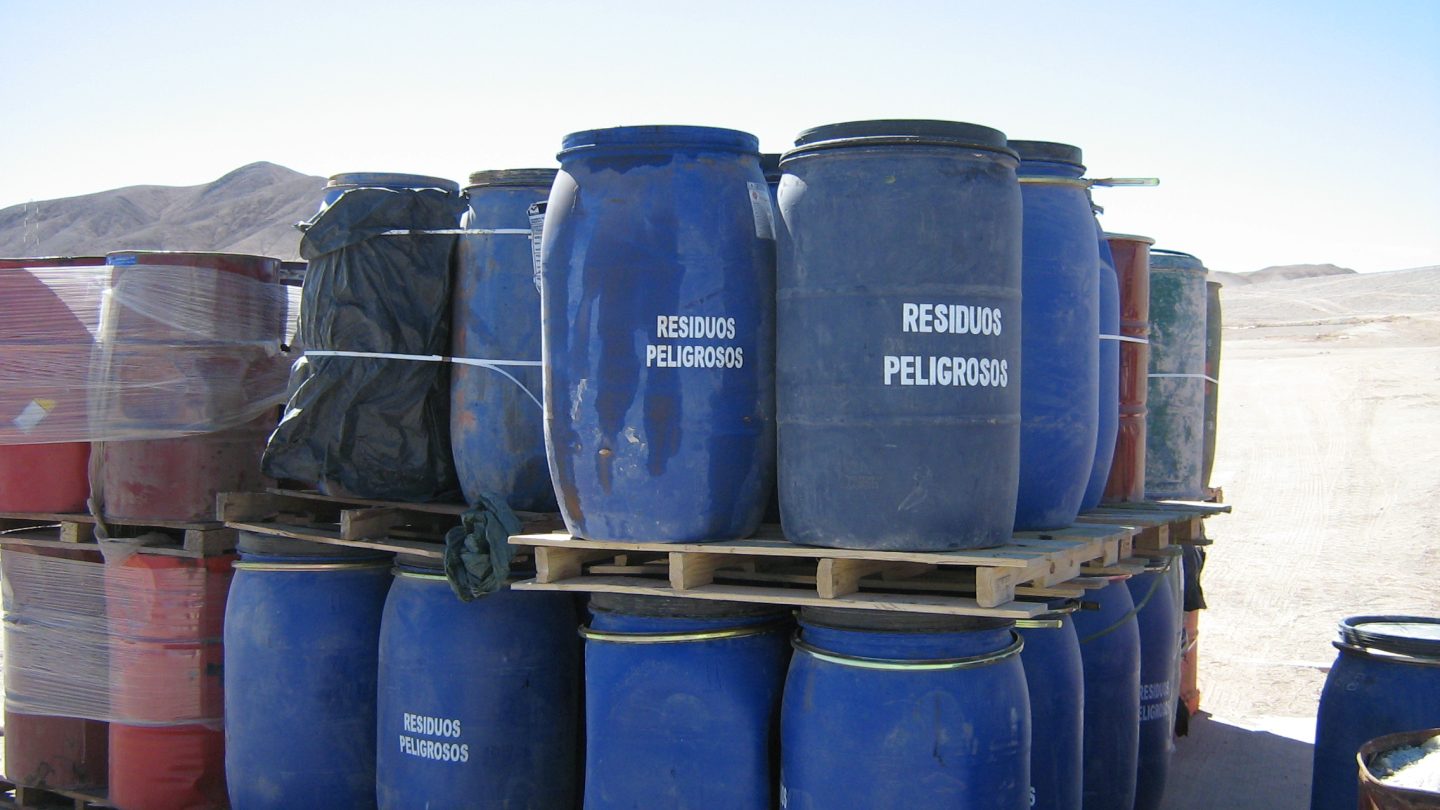
Only 7.23% of the industrial waste Argentina is projected to generate in 2026 will receive adequate treatment within the formal system, according to the first bimonthly report from the UBA–UNR Hazardous Waste Observatory. The estimate projects 12.7 million metric tons for the year and about 917,700 tons managed by specialized operators. The remaining 92.77% represents a treatment and traceability gap, not an individually verified final destination for every ton.
The rate is an improvement over the 5.57% estimated for 2025, but remains very low for the scale of the country's industrial activity. The survey also estimates 393,130 active waste-generating companies and only 33,183 using specialized services, equivalent to 8.44%. The difference between the share of companies and the share of volume shows that bringing generators into the system matters as much as expanding physical capacity for transport, recovery, treatment and safe disposal.
The Observatory was created in 2021 through an agreement among the National University of Rosario, the University of Buenos Aires Faculty of Economic Sciences, and the Catries and Caitpa industry chambers. It aims to fill a persistent gap: Argentina lacks homogeneous, consolidated national public statistics on how much industrial waste is generated, how hazardous it is, how it moves and where it ultimately ends up.
Its methodology surveys 37 companies affiliated with the two chambers each month, covering 47 plants across the country. Volumes reported through anonymous questionnaires are processed with a statistical model to estimate the national scale. The dataset provides a valuable periodic indicator but requires caution: it is an extrapolation from the surveyed formal system, not a complete census of all generators, operators or waste movements.
Nor can every material outside the measured system be assumed to have been illegally dumped. Some may be reused within production, stored, declared under other regimes or simply missed by the sample. Insufficient documentation nevertheless prevents those routes from being verified and leaves real exposure: discharge into waterways, pits and dumps, open burning, mixing with municipal waste and contamination of soil, air and groundwater.
Catries president Claudia Kalinec said the initial improvement does not change the scale of the challenge and called for stronger controls, traceability and inclusion of generators. Caitpa's Gustavo Solari said the series can identify trends and guide investment and technology. Matías De Bueno of UNR stressed the health and ecological risks of improper disposal. Their priorities converge on registering generators, digitizing manifests, inspecting transport and destinations, and strengthening authorized plants.
The necessary next step is to turn the estimate into a verifiable data policy. National and provincial governments should publish comparable indicators by jurisdiction, industry, waste type and treatment, while effectively regulating and enforcing existing rules. Upcoming bimonthly reports will show whether 7.23% was a sustainable improvement or a fluctuation. Without origin-to-destination traceability, Argentina will still not know precisely where most of its industrial liability ends up.