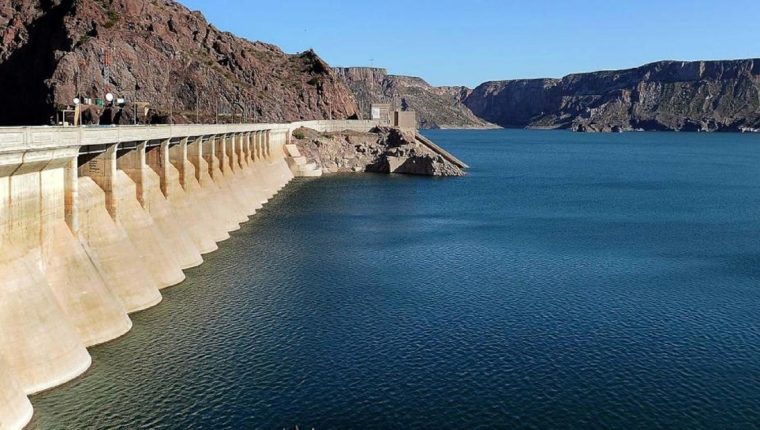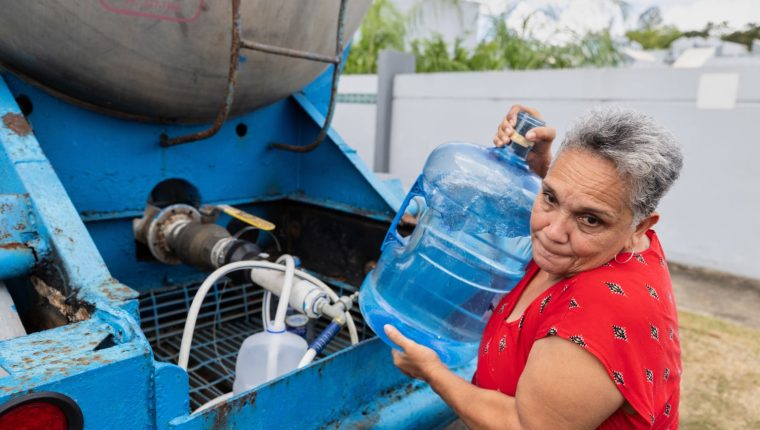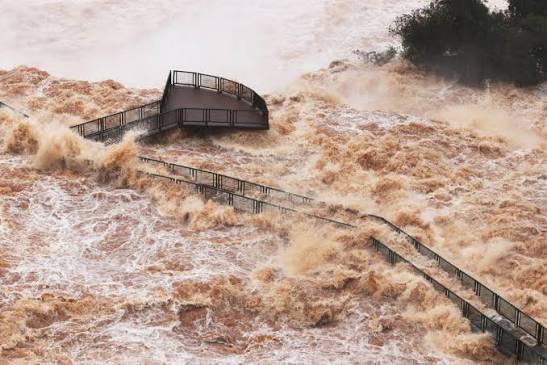

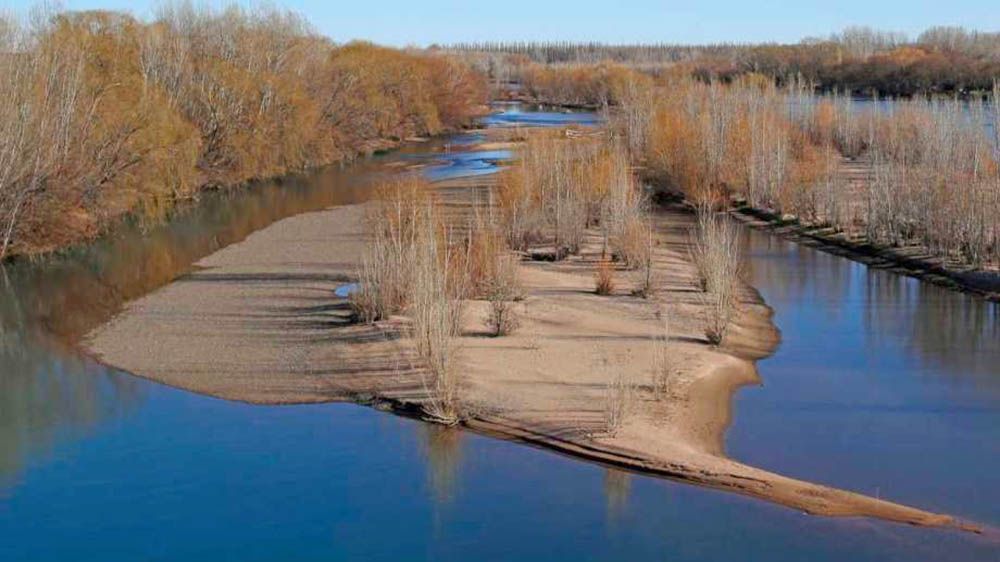
Chubut's legislature has declared a one-year water emergency, giving the provincial executive exceptional powers to respond to a problem that is no longer being treated as an isolated shortage: declining flows across provincial basins and growing pressure on drinking-water supply. The law was approved in Rawson during the ordinary session of Thursday, August 6, with 17 affirmative votes, and was framed as an institutional response to accelerate decisions in a territory where water conditions cities, producers, rural systems and basic infrastructure.
The measure authorizes the Provincial Water Institute and the Secretariat of Infrastructure, Energy and Planning to carry out urgent and immediate actions to confront the emergency. Operationally, the central provision is the authorization to use direct procurement for necessary services and works, a mechanism intended to shorten administrative timelines when supply security or water availability requires fast intervention. That makes the emergency a public-management instrument, not merely an environmental declaration.
The strategic rationale behind the government's push is that Chubut needs execution capacity before deteriorating flows translate into tougher restrictions, supply failures or conflicts among urban, productive and environmental uses. In Chubut, water governance cannot be separated from Patagonian geography: long distances, vulnerable intake systems, towns dependent on rivers and lakes, and a productive matrix that needs predictability to sustain farming, services and residential demand.
The legislative debate, however, exposed the other side of emergency powers: concentration of authority. Opposition lawmakers questioned whether the bill enables direct contracting without a sufficiently strong oversight framework and argued that part of the information supporting the initiative referred to 2024 data. Norma Arbilla, from the Arriba Chubut bloc, rejected the project after warning of inconsistencies, while Tatiana Goic, from Primero Chubut-CET, abstained because she said substantial information was missing, even as she acknowledged the seriousness of the water problem.
The institutional risk is real. A water emergency can unlock essential works, equipment purchases, repairs to intake systems and interventions on aqueducts, but it can also create opaque areas if priorities, budgets, contractors, deadlines and technical criteria are not made public. The actual tension is not between acting and doing nothing; it is between moving faster and preserving traceability. Mature environmental policy requires urgency to coexist with public data, periodic reporting and accountability mechanisms.
The next stage will be administrative and budgetary. The provincial executive must translate the law into decrees, files, specific works and emergency-based procurement decisions. The Provincial Water Institute will need to rank priorities according to basin criticality, urban supply, productive impact and infrastructure condition. The real next moves will be the publication of the first projects, the identification of critical areas and the way the legislature monitors the use of exceptional powers over the law's twelve-month term.