
La Pampa has put the Atuel River dispute back before Argentina's highest court. On the Day of the Struggle for the Atuel River, Governor Sergio Ziliotto filed a new prompt ruling request before the Supreme Court, asking it to enforce its own judgments and order an effective minimum permanent flow into La Pampa. The move seeks to turn final court rulings into actual water, a crucial distinction for communities and ecosystems that have lived for decades with the river channel interrupted or severely reduced.
The filing rests on an environmental history that La Pampa has turned into a state policy. The commemorative date recalls the telegram sent on August 6, 1947, by radio operator Angel Garay to President Juan Domingo Peron, denouncing Mendoza's cut of the Atuel River. Almost eighty years later, the case is no longer only about provincial memory. It now involves interjurisdictional water rights, environmental repair, access to information and the ability of Argentina's top court to enforce decisions it has already issued.
The immediate legal basis is found in Supreme Court rulings from 2017 and 2020. In December 2017, the court recognized the river's interjurisdictional character, declared the existence of environmental damage in northwestern La Pampa and ordered the parties to define a suitable flow to restore the affected ecosystem. In July 2020, after the provinces failed to agree, the court set an interim mandatory target of 3.2 cubic meters per second at the provincial border, together with works and monitoring. La Pampa says none of those obligations has been effectively fulfilled.
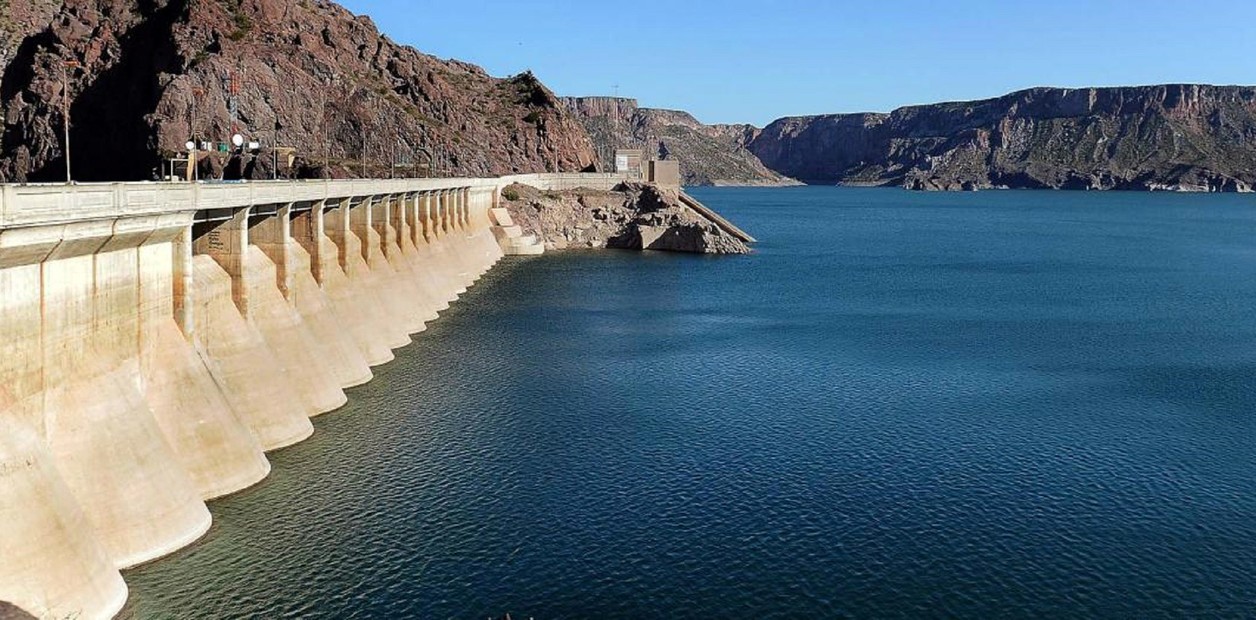
The political core of the new filing is that non-compliance is not explained by physical impossibility but by the way the resource is managed. The request cites recent statements by Mendoza water officials describing favorable prospects after winter snowfall, and contrasts them with practices La Pampa views as part of the problem: inefficient irrigation, overuse, reservoir accumulation and unilateral control of the system. Under that reading, the absence of flow is not only a climate consequence; it is the result of productive and territorial priorities that leave the La Pampa stretch without ecological recovery.
The environmental risk is cumulative. Without sufficient runoff, western La Pampa loses moisture, biodiversity, productivity and the social conditions that allow people to remain in place; soils degrade, rural activities become more fragile and repair becomes more expensive with every lost season. That is why the filing also invokes Argentina's General Environmental Law and the Escazu Agreement. The issue is not merely to comply with a water quota, but to halt ecological and social regression through public information, participation, oversight and state responsibility.
The next stage depends less on new evidence than on institutional execution. The Supreme Court can request further reports, order Mendoza to comply, impose enforcement measures, demand works schedules and strengthen flow monitoring at the provincial border. For La Pampa, the real next move must be a judicial decision that converts the ruling into verifiable water. For Mendoza, continued resistance carries political, environmental and legal costs, because the case has become a national test of water federalism and environmental compliance.