
Puerto Rico scheduled rotating rationing that will leave more than 180,000 people without running water for 48 hours at a time. The measure covers San Juan and selected neighborhoods in Carolina, Juncos, Gurabo, Trujillo Alto, Canóvanas and Loíza. The schedule was due to begin on Friday, August 7, and authorities set no end date.
Governor Jenniffer González-Colón warned that conditions could worsen and said the duration would depend on rainfall that is absent from the immediate forecast. The National Weather Service expected precipitation over the following two to three weeks to remain at least 50% below average. Specialists projected that the dry pattern could persist through September.
July was San Juan's driest month in more than 120 years of records and the capital's second-hottest July. The U.S. Drought Monitor classified almost one-quarter of Puerto Rico as being in severe drought and another 36% in moderate drought. A strengthening El Niño changes regional patterns, but it does not make every service interruption an exclusively meteorological effect.
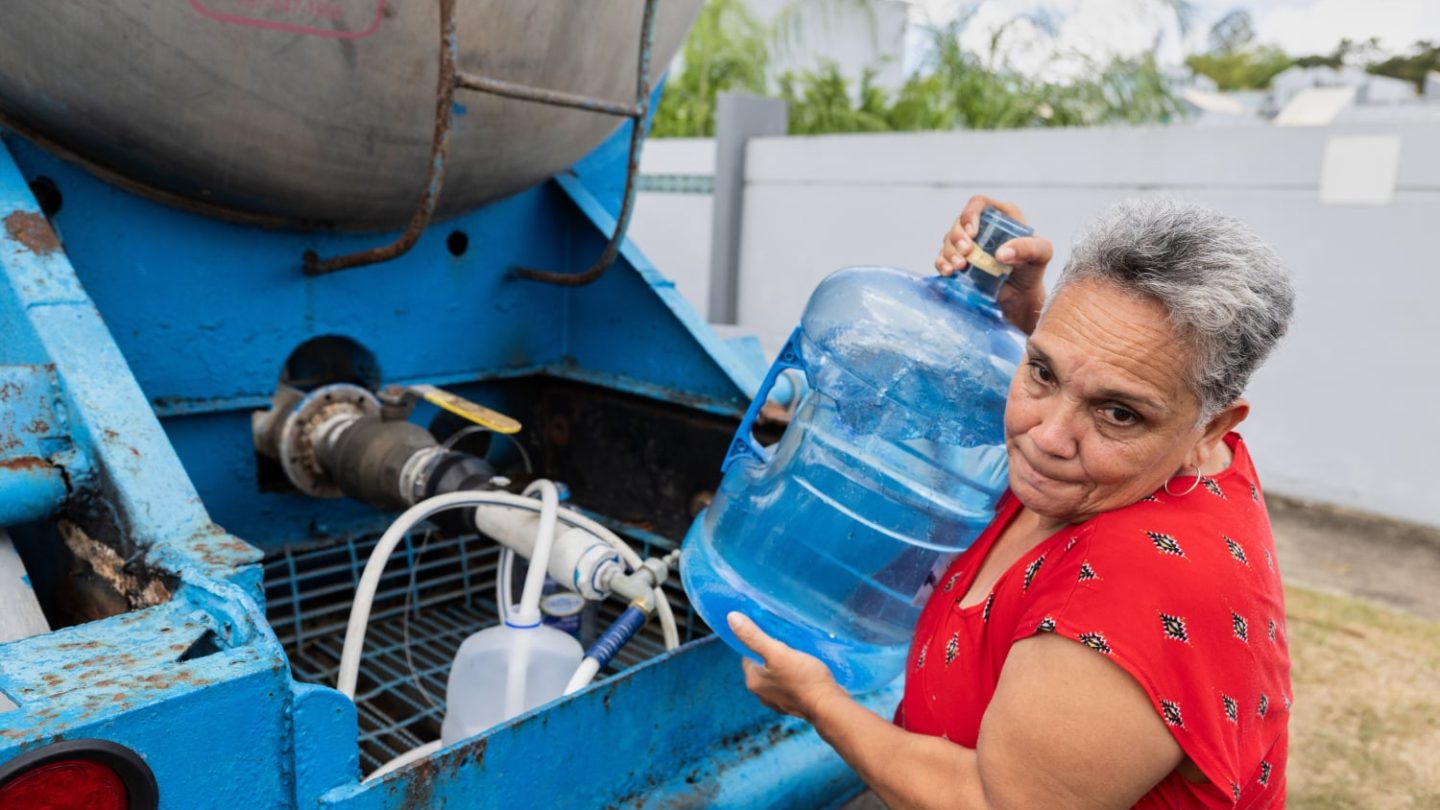
Puerto Rico's water and sewer authority announced potable-water tanker trucks, with hospitals and homes for older people receiving priority. Logistics are especially critical for bedridden and elderly people and residents without vehicles who cannot carry heavy containers. A 48-hour outage also requires safe storage, hygiene measures and continuity planning for health services.
The drought overlaps with structural failures. Some communities had already experienced interruptions for months and even up to a year before the new schedule. In May, San Juan's mayor sued the water authority over shortages he considered unrelated to the lack of rain. The governor herself acknowledged decades of insufficient investment and maintenance across the network.
Puerto Rico also imposed rationing in 2020 and 2015; during the latter event, about 400,000 customers received water only every third day. That experience shows that reducing consumption can protect reserves during an emergency, but prolonged schedules shift major costs to households, businesses, schools and health facilities when reliable networks and adequate support are absent.
The immediate indicators will be supply-source levels, actual rainfall and delivery by tanker trucks. Over the medium term, an assessment must distinguish how much of the deficit came from drought and how much from leakage, failures and insufficient capacity. Rationing manages current scarcity, but it does not replace capital works, maintenance, operational transparency or adaptation plans for more frequent or intense dry episodes.