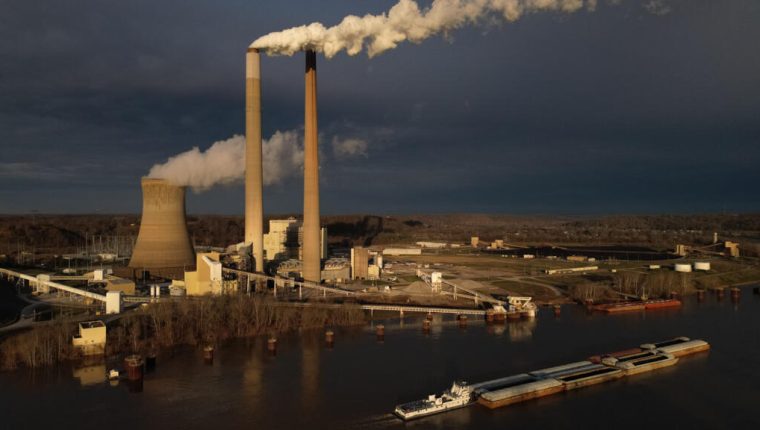

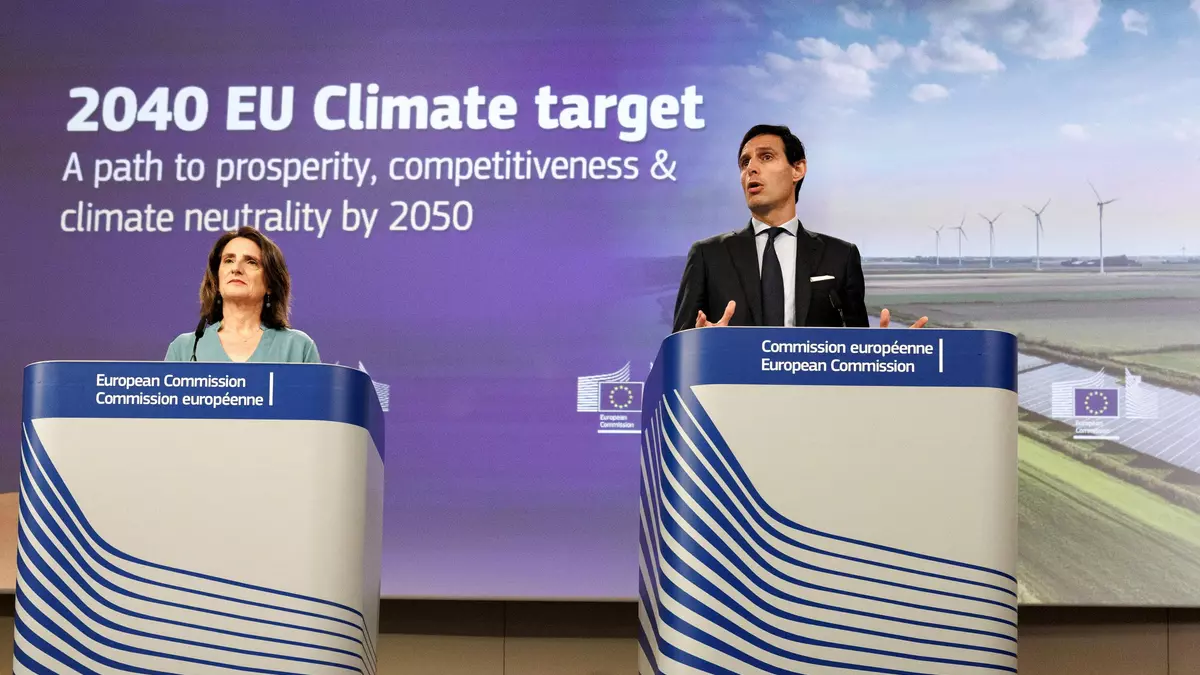
The European Union has once again placed the balance between environmental ambition, industrial competitiveness and social stability at the center of its climate policy. The European Commission presented a proposal to reform the Emissions Trading System, known as the ETS, which requires major industries, power plants and other regulated sectors to pay for every tonne of carbon dioxide they emit.
The ETS operates on a simple and demanding principle: there is a limited number of emission permits, and that cap falls year after year to drive decarbonization. The proposed reform keeps the current annual reduction until 2030, but sets out a more gradual path for the period that follows. From 2031, the linear reduction factor would fall to 3.7%, and from 2036 it would be reduced to 1.7%, compared with a stricter previous trajectory.
The decision responds to political and economic pressures within the bloc. Some governments and industries argue that cutting permits too quickly can raise costs, affect jobs, accelerate relocation and weaken energy-intensive sectors against foreign competitors with looser climate rules. Other states and environmental actors warn that softening the price signal may delay clean investments and reduce Europe’s climate credibility.
The Commission sought an intermediate formula. The proposal introduces greater flexibility, including the possibility of using high-quality international credits from 2036 within limits defined by the European Climate Law. It also provides for stronger free allocations to industries exposed to carbon leakage, although tied to decarbonization plans and to the effective execution of investments in verifiable cycles.
Another relevant point is the use of carbon market revenues. The ETS has generated tens of billions of euros annually for Member States, but only a limited share has gone directly to industrial decarbonization. The reform proposes that a larger proportion of those resources return to the sectors required to pay for their emissions, with a focus on energy, industry, maritime transport and aviation.
The discussion also broadens the scope of climate policy. The proposal would bring municipal waste incineration into the system from 2031, an important signal for reducing emissions associated with waste management and for encouraging recycling, treatment and the circular economy. The climate transition is not decided only at industrial smokestacks, but also in logistics, consumption, waste and material design.
For Latin America, the European debate offers a strategic lesson. Putting a price on carbon can guide investment and accelerate clean technologies, but it requires stable rules, transition mechanisms, financing, job protection and state capacity to prevent climate policy from becoming a cost without productive transformation. Decarbonization needs markets, but also public planning.
From Fundación Argentina ASE’s perspective, the European case shows that environment and development are not separate agendas. Emissions reductions must be supported by innovation, industry, clean energy, traceability and international cooperation. For emerging countries, the challenge is to build their own climate instruments, not to mechanically copy external models, but to connect competitiveness, social justice and ecosystem protection.