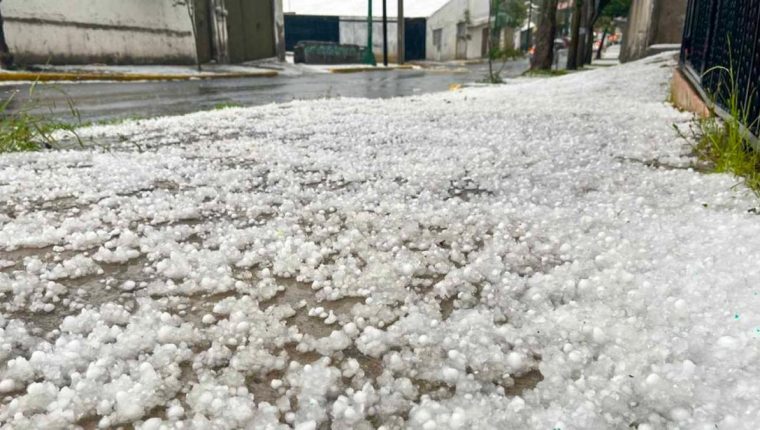

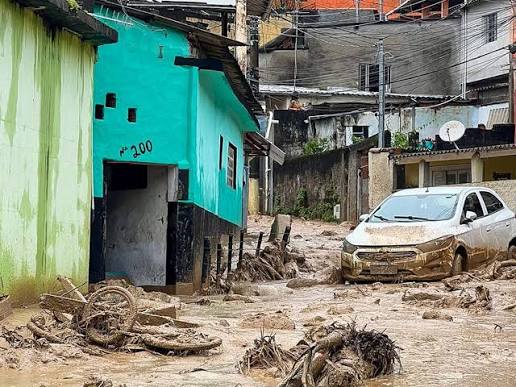
Modern public planning was built for decades on the assumption that historical series of rainfall, river flow and temperature offered a reasonable basis for the future. An analysis by environmental-management specialist José Luis Sampietro, published by la diaria, argues that this premise becomes less reliable as warming changes the climate system's operating conditions. The thesis is political: infrastructure and budgets must prepare for ranges that no longer fit past averages.
This does not mean meteorology has become useless or every event is unpredictable. It means a non-stationary climate changes the frequency, intensity and combination of hazards, requiring uncertainty to be made explicit in decisions. Forecasts, models and observations remain essential, but they need probabilistic scenarios, continual updating and safety margins that work when reality exceeds historical design.
Sampietro uses the March 2025 floods in Bahía Blanca and the 2024 floods in Valencia to show the gap between emerging risk and inherited infrastructure. For the Argentine city, he cites nearly 300 millimeters of rain in six hours and severe human and economic losses. The examples do not by themselves prove a global trend, but illustrate how an extreme can overwhelm drainage, risk maps, warnings and response capacity at the same time.
The article also cites the World Meteorological Organization's warning that temperatures will remain near or above recent records in the coming years. That outlook extends the issue beyond disasters to food security, water availability, energy, insurance, public finance and investment. Governing a changing climate requires treating uncertainty as a development cost, not only as an environmental externality.
Latin America combines heavy dependence on natural resources with adaptation gaps. The analysis notes that close to half of the region's electricity generation depends on water, while millions rely on agriculture and extensive infrastructure crosses exposed mountains, coasts and watersheds. Vulnerability comes not only from physical hazards but also from housing, land-use planning, maintenance, public information and fiscal capacity.
The author contrasts several international responses: making room for rivers in the Netherlands, embedding resilience in Japanese public infrastructure and combining sensors, artificial intelligence and nature-based solutions in Singapore. No model can be copied without local adaptation. The shared lesson is to design systems that preserve essential functions during failure rather than promise absolute protection against every extreme.
For the region, that shift means redundant power networks, scenario-based agriculture, drainage and infrastructure sized for variable conditions, accessible warnings and restored ecosystems that buffer floods and droughts. Adaptation does not replace mitigation: if emissions keep increasing warming, design ranges will continue to shift. The governance challenge is to reduce causes and exposure together, with decisions that can be revised as evidence changes.