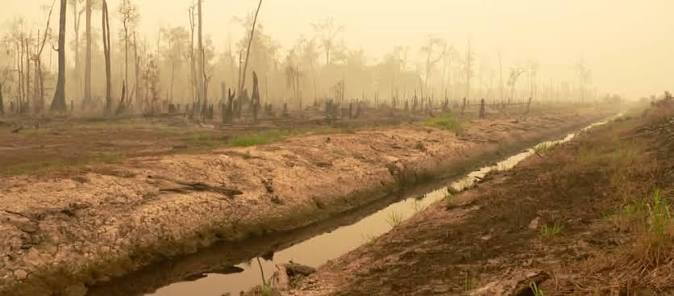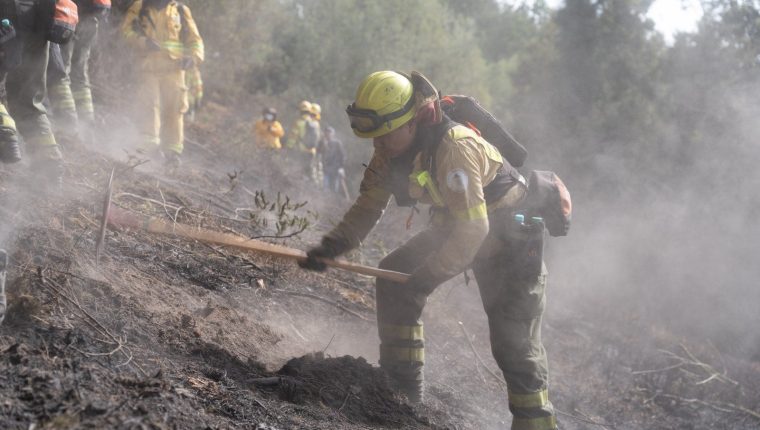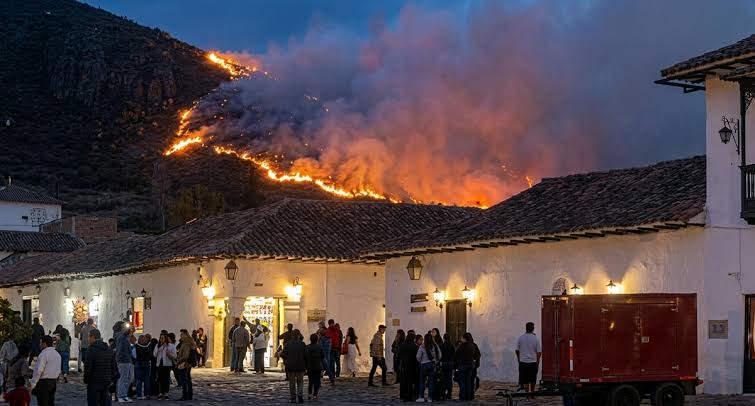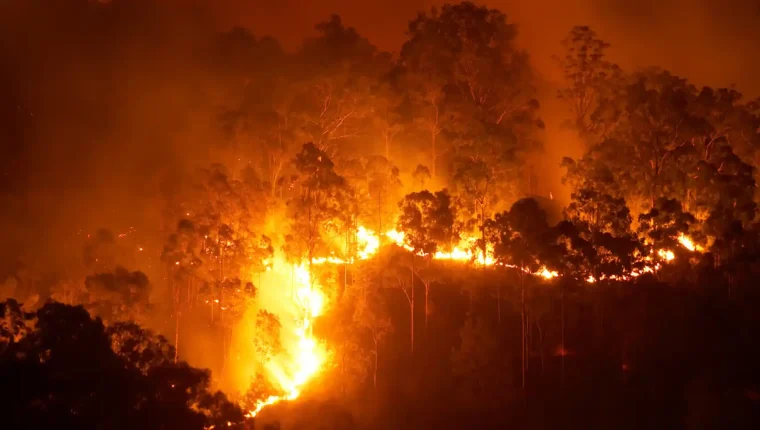

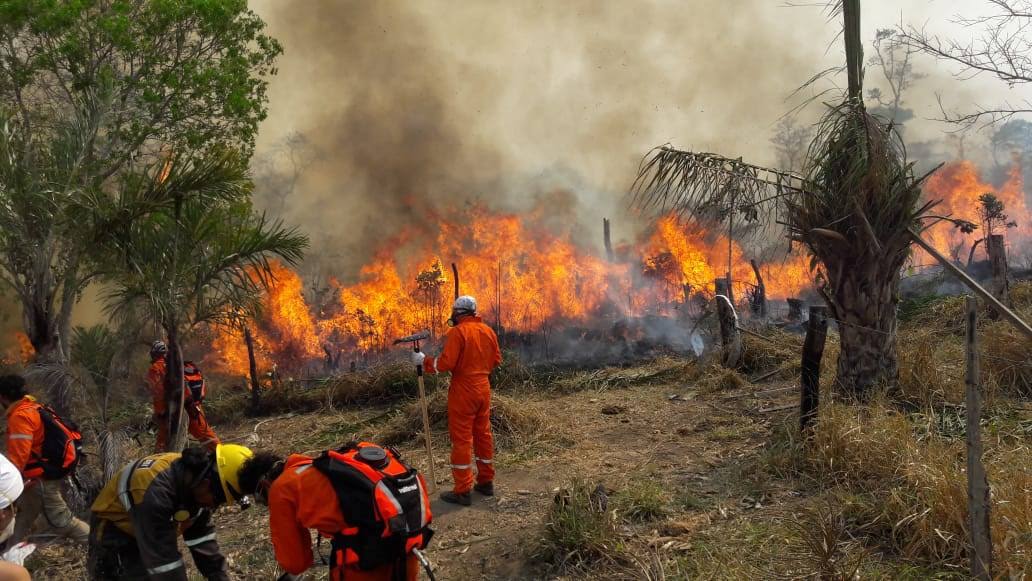
The forest fires affecting the Bolivian department of Tarija, in the south of the country, continue to spread for the fifth consecutive day and have reached communities near the capital, while strong winds hinder firefighting efforts and test the State's response capacity[reference:15].
One of the most critical fronts is in the community of Rincón de la Victoria, about 12 kilometers from the city, where the flames descended towards populated areas, while other hotspots remain active in communities such as Quirusillas, Erquiz Ceibal, Obrajes, Cadillar and La Victoria[reference:16]. The government deployed two helicopters from the Bolivian Air Force to drop water and reinforced operations with military and firefighters, but weather conditions have limited the effectiveness of the work[reference:17].
Winds of up to 70 km/h, mountainous terrain and drought have driven multiple fire hotspots and have forced resources to be distributed among different points[reference:18]. The fires in Tarija are part of a broader emergency that also affects the departments of Santa Cruz and Cochabamba, where high temperatures and low humidity favor the spread of fire[reference:19].
In Santa Cruz, the two fire hotspots are concentrated near the border with Brazil and more than 21 thousand hectares are estimated to be affected[reference:20]. At a meeting of the Departmental Emergency Operations Committee, Governor Juan Pablo Velasco questioned the financing scheme for the autonomies: "We cannot protect more than 15 million hectares of protected areas with such limited resources"[reference:21]. He explained that the Governor's Office receives 0.4% of the General State Budget, equivalent to 210 million dollars, of which it can decide about 70 million[reference:22].
In Cochabamba, a fire was reactivated in the community of Liriuni, 28 kilometers from the city, and more than 100 hectares of vegetation have been consumed[reference:23]. In the three regions, firefighters and volunteers face a series of difficulties that expose the State's limited response capacity, including lack of equipment and fuel to transport brigades to emergency zones[reference:24].
Over the last ten years, forest fires have become a recurring phenomenon in Bolivia during the dry season, especially between July and October, when high temperatures, low humidity and winds favor rapid fire spread[reference:25]. Various academic and environmental organization studies agree that most hotspots do not originate naturally, but from human activities[reference:26].
Among the main causes identified are the expansion of the agricultural and livestock frontier, as well as the distribution of land in forested areas that has favored sectoral interests and has coincided with processes of irregular land occupation[reference:27]. Investigations also indicate that land grabbing associated with illicit economies, such as drug trafficking and illegal mining, contribute to deforestation and the indiscriminate use of burning to consolidate territorial control[reference:28].
All of this occurs under a regulatory framework —locally known as "incendiary laws"— that has facilitated these practices through authorizations for deforestation and burning, while sanctions for illegal fires are lenient and their application tends to be deficient[reference:29]. The crisis in Tarija, Santa Cruz and Cochabamba highlights the need to strengthen institutional capacities, improve prevention mechanisms and review the policies that have allowed the uncontrolled expansion of the agricultural frontier in areas of high ecological value.